Does This Volatile Market Herald The End Of Long-term Freight Contracts?

By Mike Wackett 13/03/2020

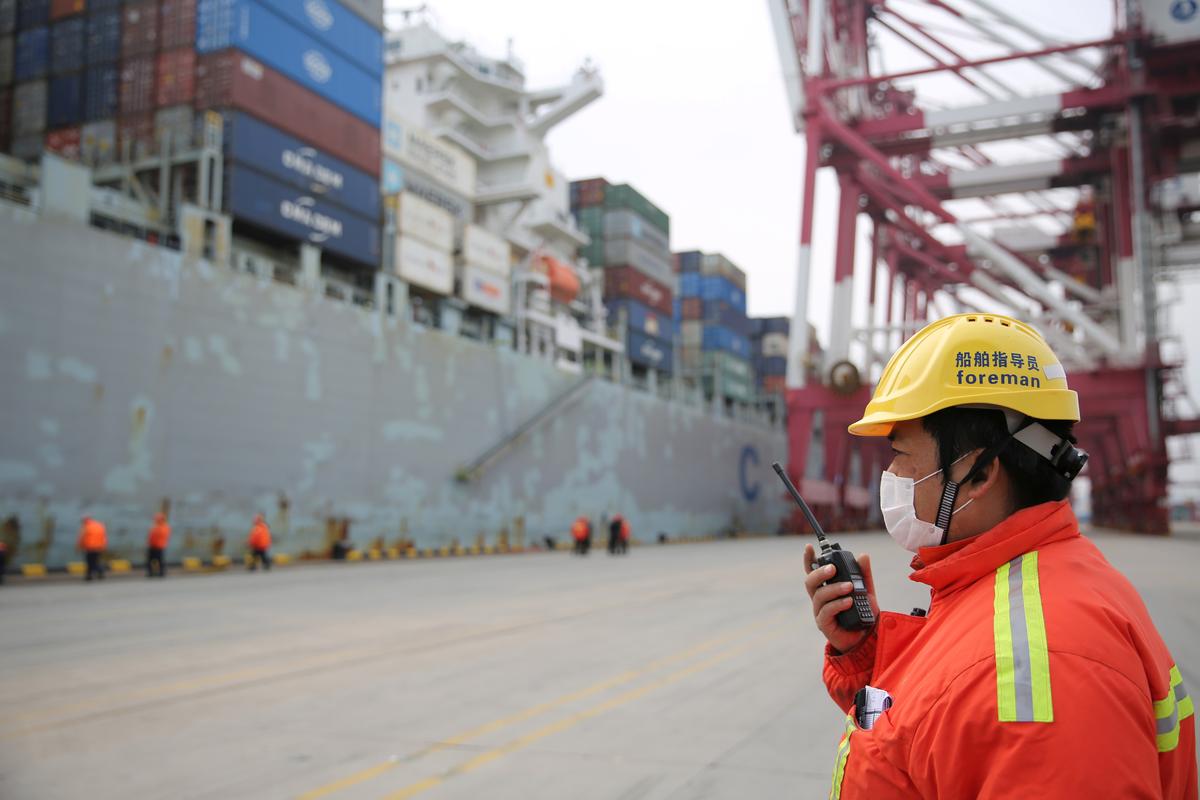
Shippers and BCOs are being advised against signing long-term contracts with ocean carriers, due to the “unprecedented uncertainty” in the liner industry.

Speaking via a webinar yesterday, organised in response to the coronavirus supply chain disruption, Patrik Berglund, chief executive of Oslo-based ocean freight benchmarking platform Xeneta, said shippers needed to “plan in flexibility” into their requests for quotes.

He recommended that even if shippers did negotiate a 12-month supply relationship with their carriers, they should desist from agreeing the same duration for rates.

“With so much flux, so much uncertainty in the market, you need to create flexibility and make sure you don’t have the same duration for the rate validity,” said Mr Berglund.

In the current climate, Xeneta is recommending that its customers negotiate rates on a quarterly basis.

Meanwhile, as Covid-19 evolves into a global pandemic, China is returning to near normal with newly reported cases of the virus in the low teens daily.

According to the Shanghai Containerized Freight Index (SCF) commentary, utilisation levels for loaders have improved to about 85% for Europe and 80% for the US, with some previously blanked sailings reinstated.

The unblocking of demand has stabilised spot rates for North Europe, which were virtually flat at $827 per teu, as recorded by today’s SCFI. For Mediterranean ports, spot rates edged down slightly by 1.3% on the week, to $903 per teu.

However, on the backhaul route from North Europe, the dearth of loaders, combined with an acute shortage of equipment at depots, saw spot rates to Asia spike to more than $1,000 per 40ft this week, with some carriers even adding a PSS (peak season surcharge) of up to $500 per box.

As one forwarder noted wryly to The Loadstar: “Like the virus itself, PSS is spreading quickly to all corners of the earth. The carriers could have been more imaginative with the name for the surcharge.”

On the transpacific, spot rates from Asia to the US west coast spiked by 18.3% this week, as recorded by the SCFI, to $1,610 per 40ft, buoyed by a mid-March GRI. For east coast ports, spot rates jumped by 8.7% to $2,912 per 40ft.

Carriers are being obliged to spend millions of dollars in vessel costs to reposition their empty equipment to demand points, after their container control systems were thrown completely out of kilter by the hundreds of blanked sailings caused by the lockdown in China.

It is an unwelcome extra cost for the container lines that they can ill-afford, having estimated to have lost more than $2bn in revenue during the virus outbreak in China.

Moreover, their hoped-for surge in exports from China to mitigate the damage to the bottom line of the carriers could be postponed, according SeaIntelligence Consulting’s Lars Jensen.

He warned that, with the pandemic rapidly escalating in Europe and the US, the industry was facing a contraction in demand “not seen since the financial crash of 2008”, when container volumes shrank by 10% annually, which, in today’s market, would equate to a decline of some 17m teu globally.

Sea Ingtelligence added: “The real underlying problem is the impact this will have in the longer term, in 2020 and possibly beyond, on not only consumer spending but also on the willingness of companies to order goods in the first place – as well as their ability to do so, as we are also seeing a possible financial liquidity problem begin to appear. This is also where there is a realistic risk of bankruptcies.”

However, it also noted silver linings in the shape of the collapse in oil prices, acting as a “short-term cash infusion”, and the capacity discipline carriers have shown which have kept rates relatively stable.

It concluded: “Finally, even if this negative scenario plays out fully, we also need to be prepared for the aftermath which will come in the shape of a sharp rebound where we will temporarily see capacity shortages and rocketing freight rates.”

By The Load Star

Fresh Produce Industry Events Cancelled Due To Coronavirus

As the coronavirus spreads around the world and movement is restricted and gatherings of large numbers of people are banned, a number of industry trade fairs have been postponed or cancelled.

Global Berry Congress postponed:
The Global Berry Congress has been moved to 22-24 June 2020 in response to the coronavirus outbreak.


FoodEx exhibition in Japan cancelled:
The FoodEx exhibition in Japan has been cancelled originally scheduled to be held at Makuhari Messe during 10th to 13th March 2020.

International Strawberry Symposium has been cancelled:
International Strawberry Symposium had been due to take place in May in Northern Italy and has been postponed until next year.

Tavola postponed by 6 months:
It will now take place from 13 to 15 September 2020. The decision was made after extensive discussion and evaluations.

Alimentaria Barcelona has been postponed:
Alimentaria Barcelona was due to take place 20-23 April, the event has been postponed until September 14-17.

CFIA Rennes postponed:
CFIA Rennes, initially planned for March 10-12th, has been postponed to May 26th-28th, 2020.

M.A.D.E. Paris:
M.A.D.E. Paris announced that its 2020 edition, initially planned for March 17th & 18th, has been postponed to May 13th & 14th, 2020.

Freskon in Greece has been cancelled:
Due to take place between 2-4 April Freskon, Greece has been cancelled and will be held 15-17 April 2021.

EMPACK 2020 has been postponed:
EMPACK which was due to be held between 31st March – 2nd April in Utrecht, The Netherlands has now been postponed until June. It will now take place between 23-25 June.

Macfrut has been postponed:
Macfrut was due to take place 5-7 May in Italy’s Emilia-Romagne region, the event will now take place 8-10 September.

Viva Fresh Expo postponed or possible cancellation:
Viva Fresh Expo was due to take place in Texas April 30 – May 2nd, it is not clear if it will be postponed or cancelled altogether.

PMA Fresh Connections has been been postponed:
PMA Fresh Connections was due to take place in Philadelphia from April 26-28 has now been postponed until further notice.

Woman’s Fresh Perspectives:
Woman’s Fresh Perspectives has been postponed until further notice, the event was due to take place in San Antonio between April 26-28.

Ag Day 2020 has been cancelled:
Ag Day 2020, which was scheduled for March 18 at the State Capitol, California has been cancelled until next year.

Horticultural Trade shows

Myplant & Garden postponed
Myplant & Garden Milan, Italy due to take place February 26-28, 2020
has now been postponed until September 21-23, 2020


Bahrain International Garden Show 
cancelled:Bahrain International Garden Show, Bahrain which was to take place March 3-7, 2020 has now been postponed until 2021


World Orchid Conference 
to be announced:World Orchid Conference was due to take place in Waipu, Taiwan
March 9-18, 2020 the new date for the event is still to be announced.


Flower Expo China 
has been postponed:Flower Expo China, Guangzhou, China was to take place between March-16-18, 2020 has now been postponed until May 11-13, 2020.


World Floral Expo 
has been postponed:World Floral Expo, New York, USA due to take place March 23-27, 2020 has been postponed until March 10-12, 2021.


GreenTech Americas 
has been postponed:GreenTech Americas, Queretaro, Mexico was due to take place March 24-26, 2020 has now been postponed until August 24 – 25 2020


California Spring Trials 
new date to be announced:California Spring Trials, California due to take place on March 28-April 1, 2020 has been cancelled and a new date is to be announced.

Flower Expo Ukraine has been postponed.
Flower Expo Ukraine, Kiev, Ukraine, was to take place between April 8-10 2020. The show has been postponed to May 26-28, 2020.


Hortiflorexpo IPM Beijing 
has been postponed:Hortiflorexpo IPM Beijing, Beijing, China was to take place between
April 20-22, 2020 has been postponed until September 17 – 19 2020.

Horti Asia has been postponed.
Horti Asia, Bangkok, Thailand, was to take place between May 5-7, 2020, has been postponed until October 14-16, 2020.


By Fresh Plaza

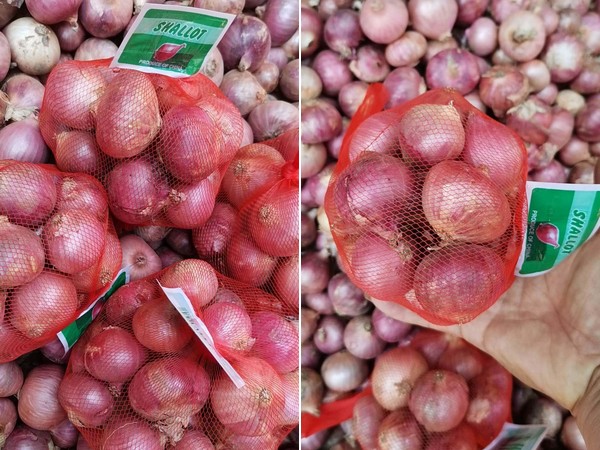
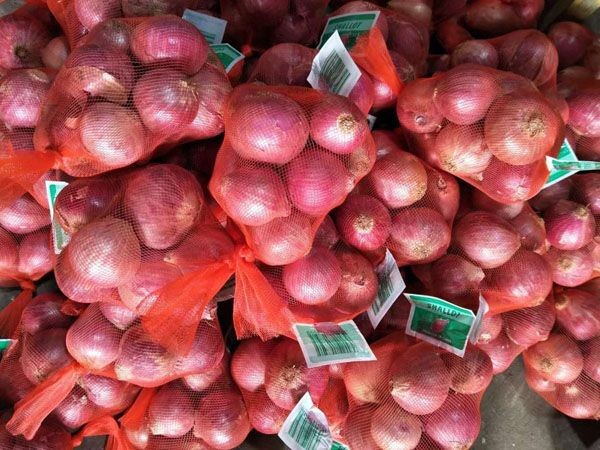
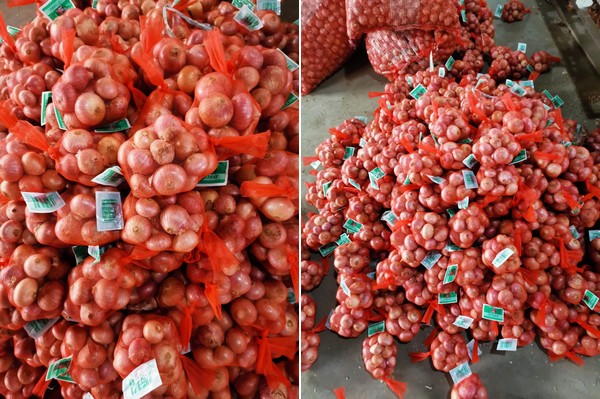
“Chinese Onion Price Is Currently Quite High”

India had an onion shortage last year because major production areas suffered from drought. Chinese onion export to India consequently increased. This year, however, the Chinese onion market looks completely different and the onion price shows an overall trend of decline.

Mr. Xue Cuncai of Jinxiang County Cuncai Agricultural Trade Co., Ltd. shared his insights into the current conditions of the Chinese onion market: “Chinese onion export is weak at the moment. Demand is not great and the price is falling. Onions from production areas in Yunnan enter the domestic market in large volumes. The overall production volume is more or less the same as last year. The price is around 2,100 yuan [300 USD] per ton. The price level around this time last year was 1,000 yuan [142 USD] per ton. The onion price is so much higher than last year because onion reserves from last production season are running out. Only production areas in Yunnan are still supplying new onions.”

Jinxiang County Cuncai Agriculture is a company specialized in global export. The company team is always looking for new markets and new business partners to supply with products.

Mr. Xue Cuncai also mentioned, “We export onions to the United States and Canada. The dried shallots we export to the USA come from Myanmar.”

“The new harvest of red onions is currently entering the market. We also export 3-5 cm onions to the USA. Their sales conditions are not bad at all. The export conditions of yellow onions are far less ideal. As the supply volume of onions on the market is growing, the price is coming down. In addition, the onions from Myanmar are quite small. These smaller onions are well-suited for high-end markets, and China does not have this type of onion during this season. Myanmar is quite close to Yunnan, and therefore conveniently located for transport to our company. Furthermore, US market demand is still quite strong. US farmers are not able to produce such small onions because the cost price is too high. Only the small onions imported from China are reasonably priced.”

“The new harvest season is about to start for many different varieties of Chinese onions and, according to Mr. Xue Cuncai: “The Chinese market will enjoy abundant supply of onions in all sizes from May onward. This is also the time of year when the onion export market enters the busiest sales season. As for market preferences, different cities have preferences for different sizes of onions and different varieties. In general, the onions of 7 cm and larger are popular in all cities throughout China. Cities in the northeast of China, Guangdong, and Guangxi, as well as Shanghai, and Beijing also enjoy the 3-5 cm onions. China has more than enough supply of large onions, but the smaller onions almost all come from Myanmar.”

By Fresh Plaza

OVERVIEW GLOBAL POTATO MARKET

The potato market in Europe is now clearly divided between north and south. In the countries where the Coronavirus / Covid-19 is around, the demand is rising, but especially for local products. For example, the demand in Italy has tripled for a short time at the start of the epidemic, and Spanish growers are barely able to keep up with the demand. In the Netherlands, Belgium and Germany, the market is quiet again, which means that prices are under pressure. Due to the recent rainfall, potatoes have yet to be planted in the Benelux.

In the North American market, there is mainly uncertainty about the availability of potatoes for the market, while in Oceania the weather conditions have resulted in a lower yield per hectare. Potato prices in China are high due to the limited supply and the fact that trade has been hampered by the coronavirus.

Netherlands: Quiet potato exports; prices are under pressure
Dutch potato exports are currently quiet. “The countries we normally serve have a sufficient supply,” says one exporter. “Every packer seems to be having a quiet time. Consumption has fallen and the coronavirus is not helping with that either. We have quite a few customers in the food service, catering and tourism sector and they are buying less because people are staying at home.”

This will put prices under pressure. “You can buy Agria potatoes for 19/20 cents, and potatoes for fresh consumption are even cheaper than that, with prices as low as 15 cents being accepted. The demand is simply not there and everyone is getting a bit nervous,” says the exporter.

“Imported potatoes are not putting any pressure on the market either. The first Egyptian ones are on the market, but the volumes are limited and those prices are also low. The wet conditions are not making things easy, in any case. Work often won’t start until April, but people are already planting in Eastern Europe.”

Belgium: Wet weather makes potato planting impossible
The potato market is quite calm at the moment. Prices are currently falling somewhat, as the demand seems to be falling. Due to the mild temperatures this winter, the demand lagged a bit. The quality of the potatoes is good, despite the dry summer. Due to the considerable amount of rain recorded in recent weeks, growers are not expected to be able to plant new potatoes for the time being. If it stays this wet, old potatoes may be needed for longer.

Germany: Start of the Egyptian season
The supply of domestic potatoes from storage is still keeping pace with the demand. Although sales are quiet, people are generally satisfied with the current market situation. In addition to the domestic potatoes from storage, the import season is also slowly starting. Italy, Cyprus, Israel and Egypt, among others, are the biggest suppliers at this time. “Until recently, Israel was the market leader; now Egypt has been able to achieve a good market position due to the good quality of its main variety: the Princess,” says an importer. Although German potatoes from storage are being offered for longer and early potatoes are coming on the market earlier, the small premium potatoes from Egypt are particularly popular in March and April.

Austria: Good sales on the domestic market
Domestic sales in Austria have stabilized somewhat. Exports, on the other hand, are very quiet. The supply in storage is abundant. Due to the rising temperatures, the potatoes in non-refrigerated storage can no longer be kept for too long.

France: Strong difference between French regions
The potato season in France has different schedules, depending on the region. The volumes and quality have been good this year in Champagne, but other regions had to deal with late harvests, which took a toll on the quality. For some growers, this season will be longer than the previous one.

Italy: Demand for potatoes tripled in the first few days of coronavirus epidemic
Potato sales have risen significantly in the retail and the demand from the processing industry has also grown. Sales for the wholesale markets have fallen, as has the demand from the catering industry.

“At the start of the coronavirus epidemic in Italy, especially in the early days, when people feared quarantines, panic led many to stock up on supplies,” said a trader in Northern Italy. “The demand from the retail tripled. The situation then normalized again. We are now back to the usual figures and have started our first exports to Switzerland.” Great efforts are being made to stop the virus, but for the companies it is business as usual. “We only feel the impact of the virus to a limited extent,” says the trader. “We can simply order packaging and other items without any problems and we continue to load and unload potatoes. We will continue to work to prevent shortages in the supermarkets. We are even talking to buyers on Sundays, because potatoes are a versatile product and are in great demand. 90% of consumers only buy potatoes in the last days of the week.”

In Sicily, the harvest of new potatoes around Syracuse started a week ago and sales had a good start. “In the last two days, however, our work has been limited,” says a grower. “The future doesn’t look very bright at the moment, and a lot is unclear.”

Spain: Demand for potatoes skyrockets
After two quiet months in January and February, the demand for potatoes in Spain increased following the detection of the coronavirus. According to one of the largest Spanish growers, it is almost impossible to meet all the demand.

So far, the potato season has been looking good in terms of prices. The average has risen from 28 to 35 cents per kilo at origin for the top qualities. Due to the good weather conditions and the mild temperatures, early potatoes from Murcia and Andalusia are expected earlier this year. Then it will be time for the harvest in the regions of Castile-La Mancha and Castile-León. At the moment, the potatoes on the Spanish market come from France (year-round supply), Egypt, Morocco and Algeria.

China: Higher prices due to small stocks and slow trade
At the moment, potato prices are high on the Chinese market. This is not only due to the coronavirus, which is making transport more difficult, therefore slowing down trade, but also because stocks are somewhat smaller this year. Therefore, a higher price is currently being paid for the new potatoes that are reaching the market. There are three areas in China where potatoes are produced. At the moment, the supply comes from southern China. In May, new supplies will come from the east.

Chinese potatoes are also exported, but trade is slowing down at the moment as a result of the coronavirus. Due to their high price, those potatoes are less attractive on the international market. In the coming months, the price will slowly fall again and exports are then expected to rise.

North America: Uncertainty about the availability of potatoes
Potato stocks in North America are tight, but it is unclear how tight. The supply has been limited since the beginning of the season. Frost in the spring of 2019 took a toll on the potatoes. The yields per hectare were significantly lower and the size of the potatoes was much smaller than normal. In October there was another frost in Idaho which affected 20-25% of the harvest and had a great impact on the supply.

At the moment, there is a lot of uncertainty about the availability of potatoes on the market and the quality of the potatoes in storage. This is having an impact on trade, as people in the sector also want to have products to sell by the end of the season. Uncertainty about the coronavirus is reinforcing that uncertainty. Given the volume of potatoes sold, there has been a switch in the retail in the last 30-90 days. Supermarkets only want to put potatoes on the shelves that will be quickly sold.

The supply of red potatoes is now small, but they have been on the market for longer than expected. New stocks of the yellow potatoes, which are the fastest-selling, are already available. The stock of white-fleshed potatoes will run out this month and make way for the first new harvest in North Florida. There is still a lot of uncertainty about the red-brown potatoes, although no shortages are expected until July. The price for the latter has risen by 15-20%.

Australia: Dry weather in Tasmania
In 2019, 50,005 tons of potatoes were exported, which is an increase of 10%, while the value of exports grew by 4%. However, growers in Tasmania are facing the driest potato planting period ever, while water management remains an ongoing problem. However, the potato planting is not being hindered.

New Zealand: Weather conditions lead to smaller yields this season.
The weather in New Zealand has so far been quite unusual this season and this is having an impact on potato yields. According to some experts, this is one of the most difficult periods in 10-15 years. The yields will be reduced mostly in Pukekohe, while the Manawatu region expects an average yield. Most of the production in Canterbury will be harvested this month after some extreme weather conditions earlier this season.

By Fresh Plaza

Difficult US Asparagus Market Due To Coronavirus

The US asparagus supply is currently coming from Caborca, Mexico. The Caborca season starts in late January and runs through part of April. While the volumes and quality coming out of Caborca are good, the market is experiencing difficulties.

Volumes destined for Asia redirected to US
Jeff Friedman, President of CarbAmericas, says: “Because of the issues surrounding the coronavirus, the buyers in Asia are buying a lot less asparagus than they usually do. There are customers there who usually buy around two loads a week who are now only taking ten pallets a week. With the reduced travelling, empty restaurants, and empty hotels, they just don’t need as much product as they usually do. And all of this asparagus is being redirected to the US.

On top of this, the Spanish asparagus season has started a bit earlier than usual, which means even more product is entering the markets. Friedman says: “The pricing is historically low right now, and anything that is being shipped off-contract is losing money. It’s unfortunate because the quality of the asparagus is really excellent – it is almost 100% green. The Caborca region is a great area and always produces high quality asparagus.”

Change in consumer buying habits
There has been increased movement for bagged produce programs, according to Friedman. “The consumers are currently often preferring bagged produce over the naked produce because they think it might be ‘cleaner.’ So, we have been seeing a change in consumer purchase habits. The majority of the asparagus is packaged with rubber bands, but we do offer some bagged organic, a 15 by 12 oz bag of organic asparagus and a 2-lb bag of conventional asparagus.”

“The retailers are evaluating what the best course of action will be – the hearty fruits and vegetables like apples, pears, broccoli, etc. continue to move but anything with a short shelf life is being reevaluated. Overall, it is a bit too early to make any conclusions. The retailers are closely monitoring the shopping habits and are using this to make plans, but it is still too soon to tell what the effects will be,” Friedman explains. 

California season uncertain
After the Caborca season ends, there is a window for Peru to enter production. “Normally California will begin around the end of the Caborca season, but because of the issues in the market it remains unsure what they will do. If the prices remain this low, it might be better to keep their fields closed. But this is still weeks away, and anything can happen before then,” Friedman concludes.

By Fresh Plaza

Citrus Flavonoid Could Cut Obesity

Study shows eating oranges and mandarins could help regulate weight

Canadian scientists have found a molecule in citrus that appears to drastically reduce obesity and reverse its negative effects.

Researchers at the Western University of Ontario say mice fed a high-fat and high-cholesterol diet that were given nobiletin, a flavonoid found in oranges and mandarins, were noticeably thinner and had reduced levels of insulin resistance and blood fats.

The study, published in the Journal of Lipid Research, found the beneficial compound also reduced the amount of plaque in arteries.

“We went on to show that we can also intervene with nobiletin,” said senior author Professor Murray Huff.

“We’ve shown that in mice that already have all the negative symptoms of obesity, we can use nobelitin to reverse those symptoms, and even start to regress plaque build-up in the arteries, known as atherosclerosis.”

Huff said the team had not yet been able to pinpoint exactly how nobiletin works.

One hypothesis is that the molecule acts on the pathway that regulates how fat is handled in the body. Called AMP-activated protein kinase (AMPK), this regulator turns on the mechanism in the body that burns fats to create energy, as well as blocking the manufacture of fats.

However, when the researchers looked at nobiletin’s effects on mice that had been genetically modified to remove AMPK, the effects were the same.

“This result told us that nobiletin is not acting on AMPK, and is bypassing this major regulator of how fat is used in the body. What it still leaves us with is the question — how is nobiletin doing this?” Huff said.


“The next step is to move these studies into humans to determine if nobiletin has the same positive metabolic effects in human trials.”


By Eurofruit

Air Freight Rates Soar: ‘It’s All About Deep Pockets And Whether Shippers Can Pay’

The “frenetic” air freight market has become “pay to play”, as prices soar.

“This is one of the fastest peak seasons ever,” said one air freight forwarder. “The market has got very f..ked up, very quickly.

“It’s becoming a pay-to-play market, and it’s all about deep pockets and whether shippers can afford to pay.”

While Chinese factories are still only about 60% operational, according to one source, one of the biggest issues is lack of raw materials for factories in South-east Asia.

“Air freight is more than tricky,” said one China-based forwarder. “Everyone wants to send raw material to South-east Asia, which is driving the air freight market more than crazy.”

Reduced passenger demand in Asia has led to capacity cuts of between 50% and 70%, according to one estimate.

“There are really limited air freight options,” said one forwarder.

And intra-Asia rates have hit an “unprecedented” high – with prices higher than to Europe, with rates at between $4.50 and $5 per kg from Shanghai to destinations such as Singapore, Bangkok and Yangon, according to forwarders.

“I’ve never seen such a rate in my life, so can you imagine the market?” said the Chinese forwarder.

For entry into Myanmar, he said, trucking was possible from Bangkok, but the air freight price to Bangkok was still too high. “It makes the total cost incredible.”

He added that the land border with Myanmar had been shut, and although it has just re-opened, trucks were taking two to three days longer than usual.

Italy has also been cut off by reduced capacity, with both Qatar and Turkish said to be cutting flights, and more belly capacity cuts expected.

Dachser said this morning it had a charter contingency plan out of Shanghai, “a robust and reliable premium flight service between China and the world”, and said more flights from Frankfurt were planned until the end of the month, with options from Europe, the US, and Latin America also being considered.

However, other forwarders noted the extraordinary prices for charters, citing $600,000 per freighter to Europe – or $6 per kg.

“The charter companies are the ones who can profiteer right now,” said a forwarder. “They can make a fortune.” But he added that it was very hard to get charters.

“Scheduled freighter services are fully absorbed, while some Chinese charter airlines don’t have the rights to fly into Europe. We have definitely noticed the lack of freighters, following the closure of Cargologicair,” he added.

Many freighters are also busy with relief flights, he pointed out.

The Chinese forwarder added: “In theory, charter is possible, but again it’s too expensive.”

Sea-air is a strong option for shippers, he said, and rail could also take some of the strain, although prices could rise there too.

Forwarders were at pains to note that they themselves were not taking additional margins from the high prices.

“We won’t make a margin,” said one. “Forwarders will be looking after their established clients, and most won’t penalise their customers – although some will.

“It’s the carriers that are chasing the market up, but they haven’t moved freight for six or seven weeks, so they want a bit of clawback from the prices they are getting now. The airlines have to make back that six-week hole in their finances.

“Some forwarders will rip off clients, others won’t and will want to be part of the solution, not the problem.”

Rates started to rise about a week ago, with China-Europe gaining 3% and mainland China-US up between 12% and 19% to some $3 per kg, according to Freight Investor Services and the TAC Index. Hong Kong-US rose more than 5% to $3.20.

FIS noted: “Capacity still remains low, passenger traffic has yet to resume, however full freighter schedules have restarted with a number of notable airlines (Lufthansa, Qatar, Emirates, Cargolux to name a few).”

It pointed out that last week’s prices, while rising, were still “nowhere near even 2019 levels ($3.40 this time last year) at normal volumes”.

“Although supply disruption is providing healthy load factors ex-Asia for freighter operators, the core business airlines rely on still remains under significant pressure,” it added.

By The Load Star

Historic Capacity Crunch Looms As More Europe-Asia Sailings Are Blanked

Freight forwarders sending goods out of Europe to Asia face one of the tightest capacity crunches in living memory over the next few weeks.

CMA CGM is set to blank 23 North Europe-Asia sailings from now until 2 June, after last week announcing three further deepsea sailings in the middle of this month had been cancelled, “due to recent demand slowdown in the context of the coronavirus situation”.

This month alone, 15 eastbound sailings will not take place as scheduled, and the line said the cancellations were affecting its north-south services that relay cargo across Mediterranean hubs.

“Please note that these blank sailings also affect space on our Med, North Africa, East Africa, Middle East, Oceania and India subcontinent trades,” it said.

As a result, it has today introduced an emergency space surcharge of €50 per 20ft and €100 per 40ft for all shipments from North Europe, UK and Scandinavian ports to all Mediterranean and North African ports.

The Loadstar understands that the French carrier has now declared the situation as a force majeure, and that the strategy of blanking sailings would likely continue “for the foreseeable future, pending the return to normalcy of trade with China, Chinese production facilities and other countries impacted by the outbreak”.

Meanwhile, the build-up of reefer boxes in Shanghai, appears to have worsened, according to Maersk.

It has expanded its $1,000 per reefer container congestion surcharge to include the neighbouring port of Ningbo, effective immediately, for cargo brought in on non-FMC trades, with a 22 March implementation date for FMC-governed trades.

“The plug shortage in Shanghai and Xingang has not improved in the latest weeks and, indeed, it has been worsening also in surrounding ports. For that reason, we will be expanding the scope of the congestion, adding also Ningbo,” it said in a customer advisory.

“We recommend customers, when possible, to ship to other Chinese destinations or other markets in order to avoid the congested ports. This recommendation is in particular for transit time-sensitive, perishable, chilled commodities with a limited/short shelf-life, eg fruit/vegetables and frozen meat,” it added.

The move comes despite a reported decision by Ningbo port to reduce its reefer tariff by 50% “until the end of the virus”.

By The Load Star

FoodEx Japan 2020 Canceled Due To Corona Virus

The FoodEx exhibition in Japan has been canceled, after the Japanese government requested all major events to be be canceled in order to prevent infection from Coronavirus. The Japan Management Association informed exhibitors and visitors alike:

“Japan Management Association, the organiser of FOODEX JAPAN 2020, has officially taken the decision to cancel the event, originally scheduled to be held at Makuhari Messe during 10th to 13th March 2020.”

“This decision has been made based on the announcement of Japanese government on February 26th at 1pm, which requests event organizers to cancel huge events held in Japan to prevent infection from Coronavirus (COVID-19). We appreciate your support and understanding with our decision.”

More information should come in shortly, but the cancelation is final.

For more information:
www.jma.or.jp/foodex/en

By Fresh Plaza

OVERVIEW GLOBAL MELON MARKET

The situation in the melon market currently depends on the variety. There are enough Cantaloupe melons available in North America and Europe, but little demand for them. Meanwhile, the demand for watermelons is also low, but there are nevertheless shortages on the market because the volumes are very limited due to the weather conditions in the production countries. Traders don’t expect this to change soon. Costa Rica is mostly the one dealing with shortages, but the volume in Guatemala has also been picking up slowly in the first month and a half of the season. Morocco and Senegal are also currently on the market in Europe. The prospects for the Italian season at the end of March are currently positive.

Germany: Difficult season due to storms and protests
As has been the case with other overseas products, the stormy weather in combination with the protests in various ports in recent weeks has had an impact on trade. This has often caused considerable delays. Galia melons and watermelons are in great demand, partly due to the warm weather of recent weeks. There are therefore hopes for a successful end to the overseas melon season.

Switzerland: Limited demand and supply
In Switzerland, melons currently play a limited role in the market. Only small batches of Galia and Charentais melons are available, mainly from Brazil, Costa Rica and Honduras. The price is acceptable, in line with the limited demand, and almost at the same level as last year’s. “In contrast to last year, we now have Galia melons, mainly from Brazil. This is a direct result of the investments in new plantations and new varieties in Brazil,” says an importer.

France: There is mostly demand for quality
There are melons from many different origins on the Rungis wholesale market sold for very different prices. The green Charentais melon from Morocco (650 – 800 grams) is sold for € 2.40 per kilo, while Senegalese melons (950 – 1150 grams) cost between € 2.60 and € 3.00 per kilo. In general, the demand for melons is low in winter and there is only room on the market for good quality melons. This has a direct impact on the supply.

Italy: Season to probably start 10 days earlier this year
At the moment, the melons in Italy come from Morocco and some other countries. A trader from Northern Italy is satisfied with the quality of this Cantaloupe, partly due to the high Brix. The price at the moment stands at around € 3.00 / kg.

In Sicily, there are good prospects for the harvest due to the high temperatures and the sunshine. This has facilitated the early cultivation of Cantaloupe melons under tunnels and in greenhouses. The first melons are expected around 20 March in Licata, Agrigento. Other varieties will follow later, all arriving around 10 days earlier than normal. In May, the watermelons from Marsala and Pachina will follow, and the yellow melons from Marsala and Licata will arrive around May 15. The New Delhi virus that spread in Sicily has done little damage this year. There is uncertainty about the availability of water for open ground cultivation and the impact of the Coronavirus in Europe.

“The planting of melons and watermelons has been on-going since December,” says an Italian organization of growers which is investing on melon cultivation in 2020. “The first melons could be harvested in mid-April. The mild weather has accelerated the vegetative development and that is giving all varieties a boost.”

The Netherlands: Watermelons and Galia in short supply; selling Cantaloupe and yellow melons is challenging
There is currently a dichotomy on the melon market. “Watermelons and Galias are in short supply, but the sale of Cantaloupe and yellow melons is a bit more challenging,” says a Dutch importer. He expects this situation to continue for a while. “My impression is that there are many more melons on the way. Costa Rica currently has too small a volume to meet the demand, and the Panamanian season has not yet started. Therefore, seedless watermelons currently cost between 1.20 and 1.30 Euro, and the Quetzali are a little cheaper. Galia melons are sold for between 9 and 10 Euro. The price of Cantaloupe melons is considerably lower, with market prices of between 5 and 6 Euro. The yellow melons are sold for 8-8.50 Euro, while they should actually cost 10. The reason is that Brazil is still shipping and the first containers from Costa Rica were hampered by some quality issues. In addition, the delays in recent weeks, partly due to the various storms, have also taken a toll on trade.

Guatemala: Supply on the rise again due to warm and dry weather
This Central American country is mostly devoted to the cultivation of Cantaloupe and honey melons, mainly for the US market. The season started slowly and also later. In the first month and a half, the volumes were therefore lower than usual due to the cold weather. The volumes available have recently increased again. The weather has been dry and warm, which is good for melon cultivation. The quality of the fruit is good, with a high Brix. There are good stocks of calibers 9 and higher.

Mexico: Tropical storm puts an end to watermelon season in the north
The weather conditions at the start of the season had an impact on the melon harvest in Mexico. In the north, the season ended in December, while other regions started delivering their productions in January. Regarding watermelons, the season in the north finished sooner than normal due to the impact of the tropical storm Lorena. Honey melons were still available, but with a smaller volume, causing shortages in the United States.

China: Substantial import decline due to the Coronavirus
It is currently quiet on the Chinese melon market. In China, there are only a few areas able to produce out of season, such as Yunnan and Hainan. Currently, most melons come from Hainan, and since there is not much supply, the price is somewhat higher than normal. The melon season in other production areas will kick off in May. Most of the supply will then hit the market, which will again lead to price falls.

Around this time, there are usually a lot of imports from Myanmar, but due to the current Coronavirus crisis, imports have dropped considerably. Less trade is currently allowed at the border between Myanmar and China in order to prevent the virus from spreading further.

South Africa: Finally rainfall in Limpopo
There are two major production regions in South Africa: the Eastern Cape and Limpopo. In Limpopo, there are a number of large melon growers in the far north of the province, on the border with Zimbabwe. However, the last four years have been extremely dry; even the rivers have dried up. In the last two weeks, a grower there was forced to discard a huge amount of melons due to the consistent pressure from insects and diseases.

Nevertheless, this grower is willing to have this loss in exchange for the rainfall that has been recorded. Better yields, larger sizes and better quality are now expected for the new season. Many growers who had previously stopped due to the extreme drought are now planting melons and other crops. Yet a grower also sees the disadvantages of rainfall. “The rain and melons don’t go well with one another. The increased moisture can lead to the appearance of other diseases.”

United States: Shortage of watermelons, but enough Cantaloupe
The supply of melons on the North American market is currently tight to average. The watermelon market is very tight due to the weather conditions in Mexico. The shortages have been driving prices up in the last month and a half, and things are expected to get worse, as a number of regions in Mexico are stopping, with the consequent gap in the season. The demand for watermelons is normally low around this time of the year, but there is an even greater shortage. Watermelon prices amount to around 0.36 $ / carton and no price increase is expected. Only when the volumes pick up again can the price drop to $ 0.20 / carton.

The prices and stocks of honey melons from Mexico are more reasonable. The price is slightly higher than last week, but people do not expect a gap in the supply because these melons are easier to keep in stock than watermelons. The price now fluctuates between 8 and 10 $ / carton. For the Cantaloupe, there are clearly no shortages in the market and imports come from Honduras and Guatemala. However, the demand is limited. Due to the stable supply of the Cantaloupe, prices have fallen by 0.25 to 0.50 $ in the last week. Not much of an improvement is expected with the arrival of melons from the second harvest cycle in Central America.

Canada: Limited stocks, but also limited demand for watermelons
Watermelon prices stand at the same level as last year. Both the demand and supply are low. A trader expects the market to remain slow. Still, there is hope for later in the year, because Florida is likely to hit the market earlier and the yields per hectare are looking good. The season is expected to start here in the first week of April.

Australia: New Zealand closes market to Australian melons from Queensland
With the discovery of the Cucumber Greening Mottle Mosaic Virus (CGMMV) in watermelons from the Australian state of Queensland, New Zealand has closed its borders to products from this region, which is normally a “CGMMV-free zone” (suspended after the discovery). This has been done despite the fact that 97% of the import watermelons in New Zealand come from this region. At present, no restrictions have yet been imposed on the melons from New South Wales and Victoria, but controls are planned to be enforced for both regions.

In any case, the consumption of melons has decreased due to the listeria outbreak at the start of 2018. 43% of buyers only buy watermelons.

By Fresh Plaza

South Korean Shipping Sector ‘Heading For Disaster’ As Virus Crisis Hits Industry

As volumes plunge amid the coronavirus crisis, South Korea’s shipping industry is “heading for disaster”. Other than cancelled passenger flights, so far there has been limited impact on cargo operations from the outbreak within Korea, and ports and airports function mostly as normal. But with Korea’s trade so closely linked to China, vast swathes of the shipping sector are suffering from the factory and transport disruption there.

According to HG Jung, commercial director of Korean heavylift carrier Chung Yang Shipping, volumes between the two countries have plummeted. “In terms of container logistics flow, Incheon port has been the most directly affected,” he told The Loadstar. “Import containers entering China from Incheon dropped by nearly 60%.” Incheon handles around 3m teu a year, but Korea’s main port, Busan, handles some 21m teu.

Mr Jung said import and export cargo at Busan had fallen more than 10% since the crisis began, but transhipment cargo had “flocked” to the hub. “Busan port normally has a 60-70% container stack ratio, but it’s reached more than 80% due to the coronavirus. They have secured an alternative storage field in case the situation worsens,” Mr Jung noted. He claimed the crisis had created the “worst ever” slack season for the shipping industry.

“Four weeks after the Chinese New Year, the whole shipping industry in Korea is heading toward disaster. “Never before have all the shipping sectors been ‘frozen’ together – just like Princess Elsa waved her dress turning the whole world into ice.”

The shutdown in China has also had a huge impact on Korea’s automotive manufacturers, which have struggled to keep just-in-time supply chains flowing. “This led Korean OEMs to reduce production in February and is highly likely to affect production in March as well,” one Korean ro-ro carrier exec told The Loadstar.

“This, of course, affects shipping companies like us. In February alone, the volume is expected to drop approximately 35% from the initial production forecast,” she added. There were already some automotive plant closures in Korea linked to the supply chain disruption, and reports today claim a Hyundai plant in Ulsan, close to the outbreak epicentre in Daegu, has halted production due to a worker testing positive for the virus.

In another development, Korean carrier SM Lines is set to cut its executives’ salaries in response to plummeting revenues, as a direct result of the coronavirus, according to a report in Splash247.

Meanwhile, Korean Air has announced a cut in US routes next month and 50 countries have banned or restricted the entry of travellers from South Korea, indicating additional belly capacity cuts to follow from both Korean and international airlines.

The number of reported virus cases in the country reached 2,337 today, with 13 deaths.

By The Load Star

China to Exclude 301 Tariffs for Oranges

The break the US citrus industry was waiting for is likely to come soon as China announced the tariff exemption process that will be effective March 2, 2020.

The high tariffs going into China had been a significant impediment for exports, as well as further creating an oversupply situation on the domestic market. Up until a recent 5% reduction, citrus was facing additional tariffs of 50% going into China.

The exclusion will allow importers relief on the 301 portion of the tariffs, which amounted to 35% of the additional tariff that was in place on September 1, 2019. After the exclusion process, the tariff going into China will amount to 26% plus the Value Added Tax (VAT), which is 9%.

With a major portion of the retaliatory tariffs removed for citrus and the Phase One commitment to purchase additional agricultural products, the remainder of the citrus season should see significant improvement. The major impediment to moving citrus to China will shift from the trade dispute to the coronavirus outbreak in China.

By Fresh Plaza

Melbourne Preparing to Host World-leading Phytosanitary Irradiation Forum

Australia is gearing up to host the world-leading Chapman Phytosanitary Irradiation Forum, in Melbourne next month.

It is the only global gathering for all phytosanitary irradiation stakeholders, and a representative of the local hosts, Steritech says a range of growers, researchers, exporters and service and technology providers will be in attendance.

“It’s a tremendous opportunity whether you are in the Australian industry or global industry to attend this event,” Steritech’s Fresh Produce Business Manager, Ben Reilly said. “It’s a great chance to meet many of the industry experts that have been working within the industry for decades. It’s a great opportunity, while the industry is still small enough to fit into one room, to meet everyone as it continues to grow.”

The event is a joint partnership between Chapman University, International Irradiation Association (IIA), and the International Atomic Energy Agency (IAEA), and Steritech is a Diamond Sponsor.

Anuradha Prakash, from Chapman University, says there have been two objectives since its inception in 2010.

“The first, to increase understanding and use of irradiation as a phytosanitary treatment to enhance global trade and prevent invasive pests,” she said. “The second, to foster dialogue between traders from different countries.”

Last year in Thailand, there were 110 attendees from 30 countries, to learn about the benefits and opportunities for growing fresh produce trade. The 9th Chapman Phytosanitary Irradiation Forum is again expected to be well represented.

“It’s incredibly valuable for global development,” Mr Reilly said. “We had people from North-East Asia, South-East Asia, Australia, New Zealand, United States, Europe, Central America and this year we are expecting South America to join. There will be researchers from China and Japan, and it is really about the betterment of phytosanitary irradiation for the benefit of international multilateral trade, and environmentally-friendly solutions for biosecurity controls.”

He added that Australia’s exports have been growing at a rate higher than 25 per cent per annum, for the past four years, so growth is significant.

“That’s a natural growth in existing markets as well as new markets,” Mr Reilly said. “We are seeing increasing acceptance of phytosanitary irradiation globally, recognising its benefits and reliability for the regulator, and its commercial benefits with quality and shelf-life through the cold-chain friendly process.”

The forum will coincide with a tour of Steritech’s second fresh produce irradiation facility, which opened in January. Mr Reilly says it has proven to be a huge success in the few weeks that it has been operational.

“It has been feeding exports to New Zealand,” he said. “Retailers have commented that the shelf-life and quality of the fruit have been excellent. We have treated over 600 tonnes in the first six weeks of the programm. What is exciting is that it is being used in conjunction with a six-day sea freight voyage to deliver high volumes of the freshest table grapes. On average it is 10 days fresher than the cold disinfestation pathway.”

Mr Reilly says there are currently a number of protocols under negotiation phase that will use irradiation into significant South-East Asia markets.

“We constantly aspire to work with North Asian trade partners to ensure this technology works to benefits two-way trade between our nations,” he said. “We are also supportive of multilateral arrangements that not just see the benefits between Australia and our trade partner, but also their broader trade partners. So, there are greater export opportunities for everyone. We are focused on bringing security and consistency to trade and biosecurity alike, by offering a simpler broad-spectrum solution for all fruits and insects.”

By Fresh Plaza

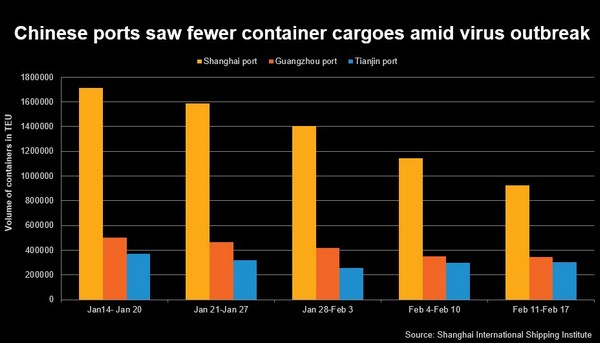
China’s Top container Ports See Backlog Unclogging

According to a reuters.com article, China’s top container ports are loosening the backlog of cargoes on their docks as workers return to their posts after coronavirus travel curbs that kept them away and jammed up global supply chains have been eased.

The flu-like epidemic has killed more that 2,700 and infected over 78,000 in China alone, and caused massive port congestion due to labor shortages caused by city lockdowns across the country.

China is the largest container cargo handler – processing around 30% of global traffic or around 715,000 containers a day in 2019 – and the virus clampdown impacted supply chains of everything.

But turnaround times at Zhoushan and other ports are starting to improve as more container crane operators, customs officers, tugboat pilots and other key logistics links slot back into place.

“The turning point has arrived… We are seeing that port congestion has eased and logistics start to revive,” said Xu Kai, director of the Shipping Information Research Institute at SISI.

By Fresh Plaza

China to Cut Tariffs on U.S. Fruit but Virus Worries Escalate

China will allow its importers to apply for substantial tariff relief on U.S. fruit starting in early March.

Even so, worries about the effect of the expanding coronavirus are taking off some of the shine from that report.

“The latest that we have heard is that the import tariffs for all U.S. fruits will be reduced to 25%, starting from March 2,” said Rebecca Lyons, international marketing director for the Washington Apple Commission, Wenatchee, Wash. Chinese importers have to apply online for the tariff exclusion, she said.

That reduction of tariffs on U.S. fruit is less than half of Chinese retaliatory tariffs at their peak of 60%, but still higher than in early 2018 when the U.S.-China trade war began.

“It is certainly good news,” Lyons said, “We won’t be down to the original 10% but it is better to be at 25% than 60%.”

The U.S. Department of Agriculture has not yet confirmed China’s tariff reduction; news so far has come from the commission’s Chinese marketing representatives, she said.

Lyons said the spread of the coronavirus has caused some retailers in Taiwan to pull back from in-store promotions.

“As you can imagine, stores are saying (they) don’t want to do any sampling,” Lyons said.

In response, Lyons said the apple commission is increasing consumer advertising rather than face-to-face activities.

“We’re having to be very flexible and nimble when we look at our promotional program and how we how we react to the latest news out of out of China,” she said.

In general, U.S. export apple promotions in China are beginning to wind down as the Southern Hemisphere export season draws closer.

Apple exports to China so far this year, Lyons said, are down 21% compared with a year ago and off 50% from two years ago.

Orange sunshine


The same good news-bad news dynamic was at play for California orange exporters, said Casey Creamer, president and CEO of California Citrus Mutual, Exeter.

California Citrus Mutual reported on its website that China’s tariffs on U.S. oranges on Sept. 1 of last year totaled 70%, but after the pending March 2 tariff exclusion, those tariffs are expected to fall to 35%.

But Creamer said Feb. 25 that Chinese importers were still unclear on some aspects of the program, and citrus handlers were hoping that the March 2 exclusion would be followed by removal of the remaining retaliatory tariff.

Coronavirus concern

Creamer said there is a lot of uncertainty in China regarding the coronavirus, and that’s affected the supply chain.

“(Chinese officials) have instructed their people to stay indoors,” he said, adding that the lack of port workers and shipping containers has caused cargo disruptions.

The coronavirus comes at a bad time for California citrus exporters, he said. 

“If we don’t get this thing straightened out in the next 30 days, we’re missing our major window for export,” he said. “We’re getting excited about regaining some market share, but the coronavirus is holding us back at this time.”

Creamer said the livelihood of growers depends on better days.

“Unfortunately, if it doesn’t correct itself here very soon, and you’re going to start seeing a lot more properties going up for sale and people getting out of the business.”

Potato chip breakthrough 

As part of the U.S.-China Phase One Economic and Trade Agreement, the USDA said China will allow imports of U.S. fresh chipping potatoes from Washington, Oregon, and Idaho. It’s the first time fresh U.S. potatoes have been allowed into China, albeit for the processing market.

In a news release, National Potato Council vice president of trade affairs Jared Balcom thanked the USDA’s Animal and Plant Health Inspection Service, Foreign Agricultural Service and the U.S. Trade Representative’s office.

“Today’s announcement is 20 years in the making and will allow Chinese consumers for the first time to enjoy potato chips sourced from high-quality U.S. fresh potatoes.”


The NPC said China is top 10 export market for U.S. potatoes and could grow substantially with better market access.

By The Packer

Significant Price Changes to Fresh Produce as a Direct Result of the Coronavirus’ Impact on Trade

Tridge, a global sourcing and market intelligence hub for food buyers and suppliers, has reported the first impacts of Coronavirus on food prices across the globe. This data indicates significant price changes to fresh produce items caused by the virus, between its outbreak in early January and the middle of February

According to Tridge, the biggest wholesale price fluctuations so far include: Thai red flesh dragon fruit, down in price by 85%, South African citrus fruit, down by 37% and Indonesian garlic increasing by 24%.

With the spread of the virus considered a global health emergency, international supply routes have experienced significant disruption. Many countries such as Russia, Indonesia and Australia have either closed their borders to China, or implemented policies that temporarily stop the import of food and agricultural commodities.

Tridge anticipates that Coronavirus will continue impacting food prices and markets across the globe as the number of cases spreads. Its top trade impacts so far, observed between 27th January and 7th February, are:

South African citrus fruit down by 37.8%
China has gradually become one of the major destinations for South African citrus fruit suppliers and today it is the second largest importer of grapefruit and oranges from the region. However, China’s plans to shut down two-thirds of its economy in order to curb the spread of the virus, is already impacting demand for South Africa’s produce.

Vietnam dragon fruit (red flesh) down by 85.7%
Closure of the export gate to China has seriously affected the price of Vietnamese dragon fruit. Red flesh dragon fruit, which has a short shelf life and is completely dependent on the Chinese market, has reduced sharply in price from an average of VND 35,000/kg (USD 1.51/kg) to as little as VND 5000/kg (USD 0.22/kg); white flesh dragon fruit has also suffered with a price drop of around 10,000 VND/kg (USD 0.43/kg), however this is still available for sale in the domestic market.

Indonesian garlic up by 24.2%
The Indonesian Ministry of Trade has recently issued a policy to temporarily stop importing food and agricultural products from China. With the Indonesian market reliant on China for 90% of its garlic imports, this is expected to heavily impact supply, meaning garlic will have to be sourced from other countries such as Spain and Argentina.

Hoshik Shin, founder and CEO at Tridge said: “We have already started to see significant impact from Coronavirus on various food and agricultural markets, which has caused price fluctuations globally due to sudden imbalances in supply and demand.

“With so many factors impacting the prices of food ingredients, such as climate change and human or animal diseases, both buyers and suppliers need to be constantly vigilant and keep a close eye on the market.”

By Fresh Plaza

Yntze Buitenwerf, Seatrade Reefer Chartering “Congestion in reefer containers will remain on the world market for months to come”

The congestion of reefer containers in China continues to increase due to the impact of the Corona virus. The bottleneck is mainly in the Chinese ports of, among others, Shanghai, Xingang, Tianjin and Ningbo. The ports report a full capacity that no reefer container can access anymore and therefore advise the shipping companies to unload their cargo elsewhere. Due to the rising extra costs, shipping companies are introducing a congestion tax for reefer transport to China with prices that fluctuate between 1,000 and 1,250 dollars per reefer container.

“The congestion of reefer containers is not only noticeable in the Chinese ports but also in the neighboring countries,” says Yntze Buitenwerf of Seatrade. “Obtaining information about the situation in Asia is not always easy and we have to keep a tight grip on it, but also in Hong Kong there is no longer any reefer plugs available. Container ships must pass through full terminals to other ports and dump their containers in the region including Hong Kong, Vietnam, Malaysia, Taiwan, etc. The containers then remain at those terminals for weeks before feeder ships are given slots to be able to deliver the containers to the correct destination. “

The containers that are now stuck at the terminals in East Asia are leading to a shortage of reefers elsewhere. “In Chile, fruit exports to China are stagnating because there are hardly any refrigerated containers left. Container ships from China have little or no empty containers on their ships. And that despite the swine flu, there was already a great shortage of reefers on the market in China. This has led to an increasing export of meat from Europe and South America to China. The corona virus increases this effect considerably, since in China there is no longer any transport from the ports to the destination in the hinterland and the port personnel remain at home and cannot unload the ships. “

Yntze does not see any rapid improvement in the situation on the market yet. “Imagine if you could find a drug against Corona tomorrow, then this logistical catastrophe would be on the world market still for months to come. Imagine if all ports in China are full of reefer containers, we are talking about 120,000 reefer containers, while the total number of reefer containers worldwide is around 1.5 to 1.6 million. This means that based on these figures, around 8% of refrigerated containers have disappeared from the market due to the blockage. This while the cargo, e.g. Fruit and vegetables, often still in the container. “

Circumstances are increasing the demand for additional cold stores in Europe and for cooling ships. “But our fleet is already sailing with a capacity of 90 to 95%,” says Yntze. “In addition, there is insufficient capacity in the cold stores to deal with the shortage of reefers. In recent years, the trade has simply been handled too easily and too quickly in containers.”

By Fresh Plaza

Port Headaches for RSA Citrus

The South African citrus sector wants to know how the government will resolve chaos at the country’s ports

As if current events in China are not enough to concern South African shippers, the country’s citrus Industry has pointed out that ongoing export infrastructure problems are proving a nightmare for exporters.

These problems include aging and out-of-service facilities, staff shortages, prolonged industrial strike action and unnecessary red tape at national ports.

The industry has now asked the country’s president Cyril Ramaphosa to deal with the government’s efforts to address these challenges in this week’s State of the Nation address.

This action follows commitments the president made at a Durban Chamber of Commerce and Industry business meeting last October.

“On that occasion, he said that he would meet with Transnet executives on a monthly basis to monitor what was being done to improve the dire situation at many of the country’s ports,” an industry statement read.  

The CGA said that the industry exported 126m cartons of citrus to over 100 countries in 2019, returning more than R20bn in export revenue and supporting 120,000 jobs in South Africa.

“While the industry expects another bumper year in 2020, it is highly likely that citrus export volumes will be negatively impacted if the current problems at our ports persist,” the body continued. “This will inevitably result in reduced revenue for South African growers and exporters. And – over the medium to longer term – this will translate into job losses for the citrus industry and other sectors that rely heavily on the efficiency of our ports.”

The CGA has been actively engaging with new management at Transnet and welcomed recent steps taken by the company to address some issues, such as procuring new equipment for Port Elizabeth and Durban.

“However, we understand that some of this equipment will only be delivered in a few months’ time, which means that infrastructure challenges are likely to continue hampering productivity at these ports,” the CGA noted.

“It is estimated that inefficiencies at the Port of Durban alone are costing the economy R6m on an average per day, reaching a high of R10m on a bad day. It is clear that we need immediate action from government if we hope to turn around the current situation at our ports, so that we prevent further job and revenue losses.

“We therefore call on president Ramaphosa to use his address as an opportunity to provide an update on his engagements with Transnet executives and to present constructive solutions to overcome the challenges at our ports,” the statement concluded.

Just where the citrus industry’s problems with the ports will be prioritised by the President against the background of even greater challenges elsewhere, is to be seen.

The country’s airline, South African Airways, survives only on billions of Rands of handouts by the government, while the energy supplier, Eskom, is basically bankrupt. The airline is in business rescue and Eskom’s failing infrastructure is resulting in electricity black-outs which is causing the economy, including the fruit sector, great losses.

Despite all this, the CGA said it remained committed to working with the government to expand market access and to drive increased agricultural exports as outlined by minister of finance, Tito Mboweni, in his national economic strategy.

By Eurofruit

SATI Postpones China Promotion

Trading conditions in China are not currently conducive to proceeding with the first South African table grape campaign

The South African table grape industry says it has regrettably had to postpone its first table grape trade promotion in China until next year.

“The result of the spread of the coronavirus has created conditions where we think it is best to delay the implementation of this campaign until next year,” says SATI spokesman Clayton Swart.

Swart states that the South African industry has great sympathy with the Chinese people for the loss of life and disruption caused by the virus.

“We hope that the situation will be normalised soon and that normal trade will resume,” Swart continues. “We regard China as an essential part of our future plans and have been building strong relations with the Chinese trade. We have great sympathy for what the Chinese people are going through.”

SATI’s first trade promotion across three regions in China was due to begin in early in March and, if successful, would have been the start of an extend promotion programme in the years ahead.

South African table grape exporters say they have cut back shipments to China and transshipped, where possible, to other destinations in the east where it has become impossible to service customers in China. “It would be irresponsible to continue with normal shipments under these circumstances,” they say.

The South African apple and pear industry says it hopes the situation will return to normal soon ahead of the start of the season.

One consequence of the effects of coronavirus is that the long-awaited new protocol for access of South African pears to China will probably not be signed in early March.

“It was going to be the final act with South Africa and China meeting next month to sign off on what we have been waiting for for a number of years,” says Jacques du Preez of Hortgro.

He says South African exporters have been planning to start shipments this year and South African pears would have been launched next month during a special ceremony in China.

“We now do not know when this will be finalised and we do not know to what extend we will be able to enter the market this year.”

Justin Chadwick of the Citrus Growers Association (CGA) has told citrus growers that there has been a lot of discussion at Fruit Logistica in Berlin on how the virus will impact the 2020 South African citrus season.

“With 140,000 tonnes of South African citrus exported to China in recent years, it would be devastating if buyers in China reduced orders as a result of the risk of low consumption,” he says.

“Consumers in many parts of China find it difficult to get around, impacting on sales rates and the operation of markets. There are reports of thousands of containers being held up in ports as trade falters. A further consequence of this is the positioning of empty containers, and the availability of equipment.”

Chadwick says that the first South African citrus estimate will be finalised in meetings with growers. “Generally, traders indicated that Southern Hemisphere citrus exports should enter an empty market, as many Northern Hemisphere producers are run short,” he concludes.

By Eurofruit

Cautious Return for Shanghai Market

More than half of the businesses in Shanghai Huizhan Wholesale Market have reportedly resumed operations

Shanghai Huizhan Fruit and Vegetable Wholesale Market is slowly returning to business under stricter than usual management to combat the coronavirus, with only the main entrance open and retail stalls staying closed. 

Huizhan market, which is the most important trading centre in Shanghai and East China, resumed business on 26 January, straight after Chinese New Year – in keeping with previous years.

In the wake of the coronavirus outbreak, however, the market management has implemented protection measures and tighter controls on operations. 

“To better manage personnel entry to the market, Huizhan has currently opened only the main road, with the rest of entrances fully closed. We also closed all the retail stalls in the market, to reduce the flow of people gathering,” a spokesperson for the market management told Asiafruit.

While acknowledging that daily trading in most of the major fruit and vegetable wholesale markets in the country has been affected by the coronavirus, he said e-tail orders were generating business, and trading in market had enjoyed a visible rebound in recent days.

Shanghai and neighbouring regions still have significant demand for fresh fruit, and inside Huizhan market, more than half of the resident fruit companies have gradually resumed business, with the vast majority of  wholesale stalls having reopened. At the same time, there is strict screening in place for personnel entering the market.  

“We arrange for each person to come in via a sentry box where we can check and report their temperature,” said the official. “No personnel who have been on leave before the Spring Festival are allowed to come back to work before 10 February; personnel who recently returned to Shanghai from other parts of China must provide proof of a 14-day self-quarantine issued by their local residential committee. At the same time, we insist that all businesses wear masks and keep a one to two-metre distance from each other when doing business.” 

Operational restrictions aside, a slowdown in import clearance at Shanghai port is also having a big impact on the overall trade. 

“Clearance since the outbreak has been affected by many aspects: restricted working hours in shipping companies and forwarding companies, and logistics companies delaying documents, which results in goods not getting checked,” said a spokesperson for Huizhan International Trade, the customs clearance arm of the market management. “The epidemic has also affected the shipping times and capacity for imported goods coming in. But we believe that once the [coronavirus] situation is stable, things will return to normal.”

By Eurofruit

close
Loading…