Heat Continues To Stress Lettuce Supplies

The September heat wave in California is causing quality problems for most lettuce varieties.

That, in turn, is causing high prices to remain, and they may be headed up as fall begins and growers start the transition from Central California to the Yuma, AZ area.

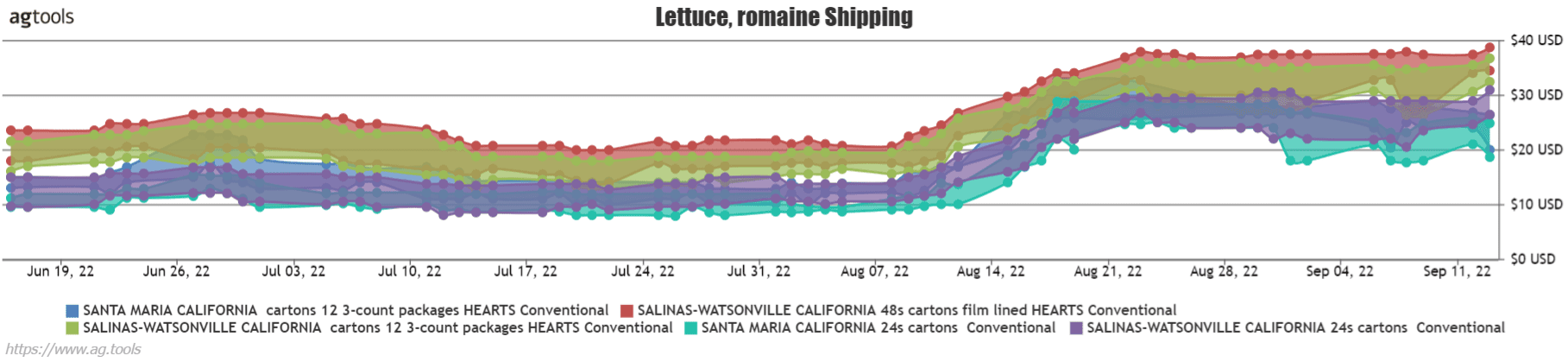
romaine 9-14-22
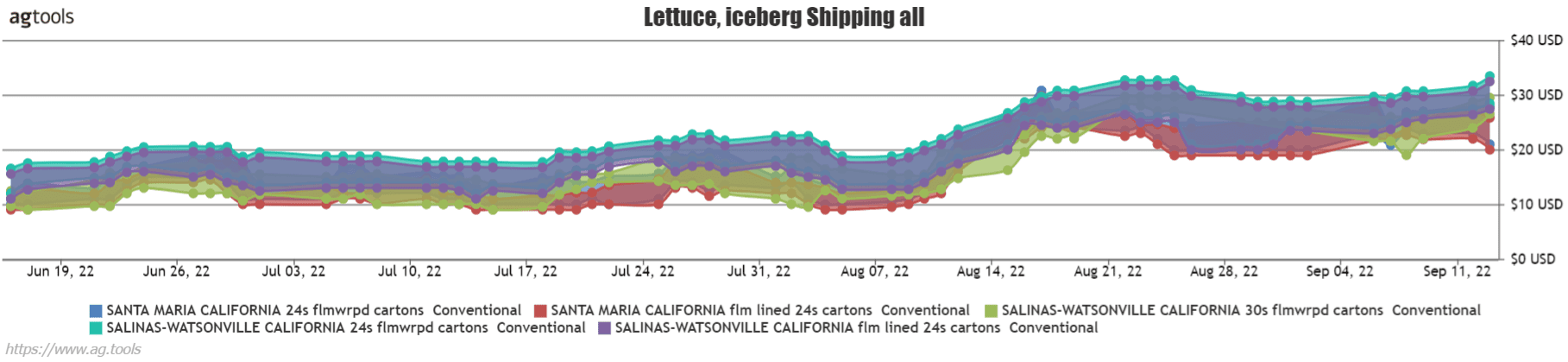
iceberg 9-14-22

In a crop update September 13, Markon Cooperative BB #:123315 alerted buyers to the market conditions.

California green leaf, iceberg, and romaine supplies have been impacted by disease pressure and higher-than-normal temperatures. Prices continue to climb.

Markon First Crop (MFC) Premium Iceberg, Romaine, and Green Leaf are available; Markon Best Available (MBA) is being substituted due to low case weights and quality concerns.

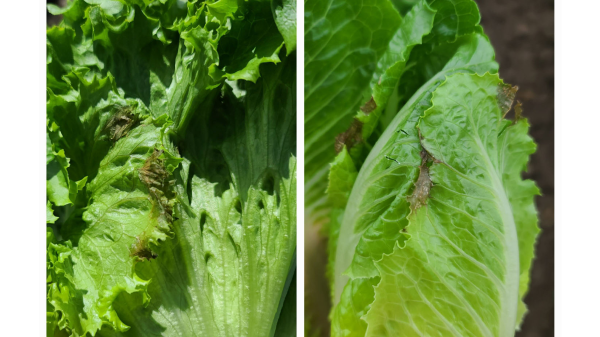
Abnormally high temperatures last week are causing varying levels of internal burn, sun scald, growth crack, seeder core, weak tip, and salt and pepper; mildew and thrip damage are also prevalent due to persistently warm soil temperatures.

INSV and Sclerotia are of special concern and have forced suppliers to cut ahead of their scheduled harvests, affecting Romaine Hearts markets/availability.

Romaine prices will remain elevated through September and the Yuma transition.

Iceberg markets remain elevated; low case weights are a result of internal burn forcing suppliers to harvest more immature heads.

Markets are rising; expect elevated markets through the Yuma transition.

Warm weather has resulted in dense heads, fringe burn, pest pressure, and weak tip, reducing harvestable yields and shelf-life.

Mildew, among other pest and disease pressures like INSV, has forced suppliers to cut ahead of their scheduled harvests, lowering case weights and field level yields.

Markets are forecast to climb over the next five to seven days and will remain elevated through Yuma transition.

From Produce Blue Book

Volume Pressure Sharpens As Produce Inflation Climbs In August

“Inflation has been accelerating since early fall 2021, drought conditions are severe, consumer confidence is low and grocery patterns are switching very rapidly. IRI, 210 Analytics and IFPA remain committed to bringing the industry the latest analysis in fresh produce,” said Joe Watson, VP, retail, foodservice and wholesale for IFThe August marketplace.

Food inflation remains extremely high and consumers are feeling the pain. They are making changes to their restaurant engagement as well as their grocery purchases, according to the August IRI survey of primary grocery shoppers.

  • 81 percent of American households bought at least one restaurant meal in August, with the highest restaurant penetration among Gen X, at 85 percent.
  • 54 percent have ordered meals to go. Half of American households have eaten restaurant food on premise. Additionally, 20 percent have ordered from a restaurant for home delivery. “Home delivery is much more popular among Gen Z and younger Millennials, at 31 percent,” said Jonna Parker, team lead fresh at IRI.
  • When purchasing groceries, 85 percent of consumers shopped in person. Online shopping was near equally divided between click-and-collect (nine percent) and home delivery (six percent). Delivery is more prevalent among Gen Z and younger Millennials, at 13 percent.
  • Spending continues to be affected by out-of-stocks.

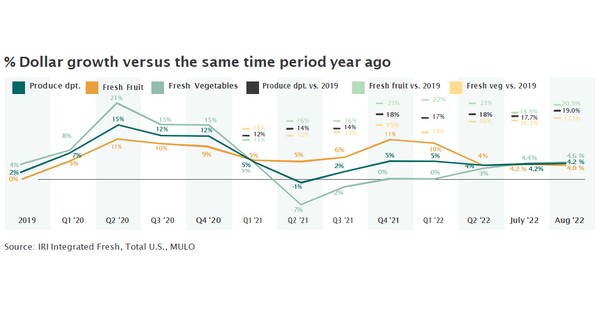
August 2022 fresh produce sales reached $5.9 billion, surpassing the record set the prior year by +4.2 percent.

“In the fourth quarter of 2021 and the first quarter of 2022, fruit grew much faster than vegetables,” explained Parker. “In July, fruit and vegetables came in at +4 percent dollar growth, each. In August, vegetable growth moved ahead of fruit once more.”

“The year-on-year growth in fresh produce (+4.2 percent) was far below the growth seen in shelf-stable and frozen fruits and vegetables in August,” said Watson. “This could be one of the signs of consumers moving into recessionary spending.”

“The overall volume pressure in fruit is echoed by nearly all the big sellers,” Parker said. “Berries, that have been an incredible pandemic powerhouse, fell 5.6 percent behind year-ago levels. The deepest volume declines among the top 10 players were measured among mixed fruit and mandarins, but avocados and melons also backslid significantly.”

“August’s vegetable performance was mixed,” said Watson. “While most top sellers increased dollar sales, only cucumbers experienced an increase in volume.”

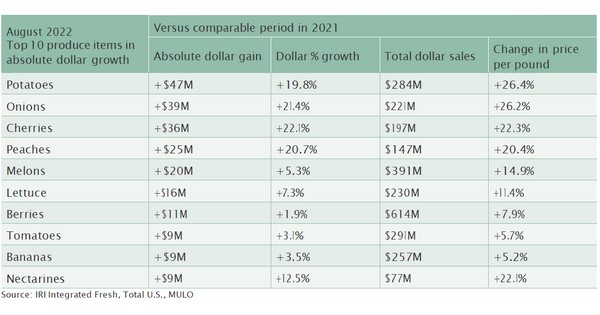
In August, fresh fruit added $119 million in sales and vegetables added $120 million when compared to August 2021. Potatoes, onions, cherries, peaches and nectarines each had inflation of 20 percent or more compared with the average price per pound in August 2021. Berries, tomatoes and bananas had inflation below the rate for total food and beverages and demand remained strong.

From Fresh Plaza

Initial 2021-22 California Navel Orange Forecast Down 14% To 70 Million Cartons

The initial 2021-22 California Navel orange forecast is 70.0 million cartons, down 14% from the previous year. Of the total Navel orange forecast, 67.0 million cartons are estimated to be in the Central Valley. Cara Cara variety Navel orange production in the Central Valley is forecast at 6.0 million cartons.

These forecasts are based on the results of the 2021-22 Navel Orange Objective Measurement (O.M.) Survey, which was conducted from June 15 to September 1, 2021. Estimated fruit set per tree, fruit diameter, trees per acre, bearing acreage, and oranges per box were used in the statistical models estimating production.

This forecast includes production of conventional, organic, and specialty Navel oranges (including Cara Cara and Blood orange varieties). Survey data indicated a fruit set per tree of 239, down 25% from the previous year and below the five-year average of 344.

From Fresh Plaza

Market and Crop Update for Onions

MARKET
Organic Onions:
Brad Sumner with Pacific Coast Trading Co. in Portland, OR, said on Sept. 14 that his company is shipping out of California and Washington now, and he added, “Demand is steady, and medium yellows still a short item with extra demand.” The market, he said, is “steady, with jumbo yellows slightly weaker.” Brad also said, “Quality remains good but will get better as we move out of transplants and intermediate varieties into long days.” And he noted, “After some organic crop was coming off late due to a cool growing season, now some recent rain has further delayed harvest for some growers. Supply should increase over the next few weeks.”

Washington/Idaho:
John Vlahandreas with Wada Farms in Salem, OR, reported in on Sept. 14. “Demand has been good this week,” he said. “Jumbo yellows are the hot ticket item right now. Overall the demand has been good enough to keep the market up, and that’s important.” John added, “We do need to keep in mind that more areas are coming on, but truthfully it’s going to be another three to four weeks before we really know what the availability is going to look like for the season, and then we’ll be able to access where the market is going. Plus, we’ll see what Mexico, Texas, and the Imperial Valley will do as far as planting goes.” He continued, “I don’t know all the ins and outs of the California water issue, but I do know that may have an impact on what the Imperial Valley does for planting. So what happens in the next month or so really does have an effect on how 2023 will work out onion-wise. I would hate to see some U.S. onion areas decline in planting so we are forced to take in more product from across the border, which has can translate to lower food safety standards, and the list goes on. What happens this fall determines a lot going forward.” John noted that the onion quality has been good. “We have been really pleased with the quality coming out of both areas we are shipping out of, so no issues there. On the other hand, the railroad strike is something to watch. All I know is, I wouldn’t be loading any rail cars right now, that’s for sure.”

Washington/Rocky Ford, CO/Ulysses, KS:
Trent Faulkner with L&M Cos. in Raleigh, NC, told us on Sept. 14 that L&M’s shipping areas are moving all colors. “We are shipping all colors from our Warden, WA, areas as well as out of our Rocky Ford and Ulysses operations,” he said. “We will be gapping on whites out of Warden for a couple of weeks, and the onions coming out of Colorado and Kansas are leaning to smaller sizing, but we have availability in all colors and sizes depending on where we are shipping from.” Trent continued, “Demand is very good for jumbos in all colors, and if that was all we were making, we wouldn’t have any onions on the floor. Overall, demand is steady for the availability, and we really have no complaints there.” He also said, “As far as the market goes, it is super-hot for larger sizes, and we see a trend upward there. The market remains steady on smaller stuff, but I wouldn’t say it is moving north right now.” Trent said L&M has been pleased with quality. “Overall, we have been very happy with the quality coming from all operations, and I should add that the yellows we are shipping are absolutely gorgeous.” On transportation, Trent said it’s better than it has been over the last two years. “Don’t get me wrong – rates aren’t as good as there were four or five years ago, but comparing the last two years, we are definitely in a better spot for freight. Trucks seem to be more available, more lanes have opened up and the rates seem to have come off over this time last year. At L&M we work to secure freight contracts so we can be confident the onions are shipping, and that process has gone smoothly this year,” he said.

Idaho-E. Oregon/Washington:
Jason Pearson with Eagle Produce in Nyssa, OR, told us on Sept.14 that demand is slightly slower this week. “Demand has come off a little this week,” he said. “That works for us because it allows us to focus more on harvest and getting the onions in. On the demand that we have this week, yellows and reds are doing well, but we do have some demand for whites.” Jason added, “Buyers are looking for larger sizes. I will say there are plenty of medium yellows out there. Medium reds do seem to be a hot ticket item.” Jason noted the market has dipped. “The market has dipped a little, which is totally unnecessary. Based on the onion availability and growers trying to get through harvest, it makes no sense to drop pricing. If everyone stuck to the same price, the onions would move regardless, and this time of year everyone is working to get through harvest, so it seems like we should be holding and taking care of harvest at this time.” On quality, Jason said, “We have been really happy with quality! The onions are looking great!” Jason did mention the looming rail strike. “Transportation seems to be a little tighter this week. We do want to keep an eye on the potential rail strike. If that happens, we will be in a tough situation with onions that are bound for rail moving to the truck freight side.”

Idaho-E. Oregon:
Steve Baker with Baker & Murakami Produce in Ontario, OR, told us on Sept. 14 demand has dipped some. “Demand this week is down from the previous few weeks,” he said. “Shipments last week were fairly high, which is contributing to the slower demand this week.” Steve said the operation is shipping mostly yellows and reds “with a few whites mixed in,” and he said, “I would say demand is even across the board on all sizes and colors.” The market, he said, “has leveled off from last week’s price increases.” Steve also said, “The quality has been very nice. The yellow onions are starting to get more color as we are finishing up green top onions.” Also, he said transportation has been good. “Transportation at this time has not been an issue. We have plenty of trucks/truck brokers calling looking for loads.”

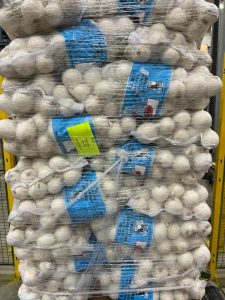
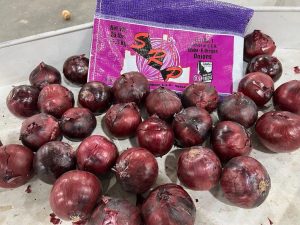
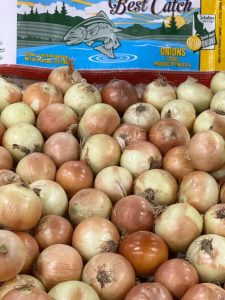
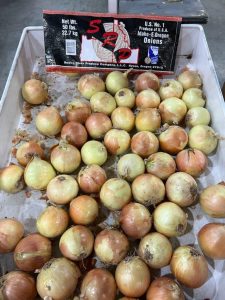
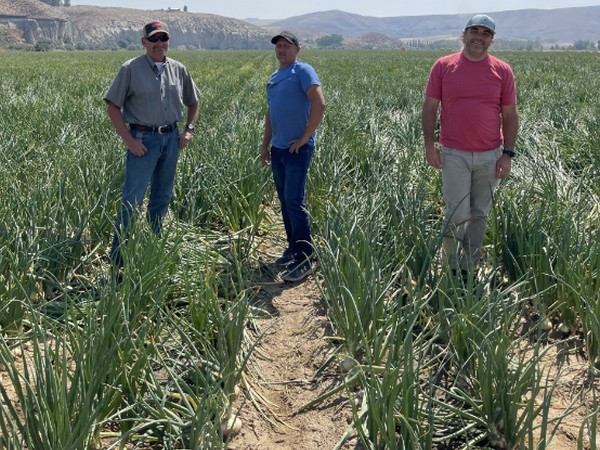
Josh Frederick with Snake River Produce in Nyssa, OR, shared some numbers with us on Sept. 14, saying that jumbo yellows counting 56-58, black Snake River Produce label; medium yellows counting 110-115, Best Catch label; 25# jumbo reds counting 30, and Josh said SRP can pack 50# with notice; 50# jumbo whites counting 55 to 57; and 50# medium whites counting 113-115. He said, “Harvest is going good, and the crop so far has been decent. The cooler temps now sure make it nice, and we were able to get about 80 percent of our crop lifted and will finish Friday/Saturday. We are bringing in all three colors, and the demand has been steady.” Josh added “Market has been holding good for the most part. I believe we will see business continue to be steady, and then once things are put in storage, everyone will evaluate their yields and what they will have for production this season.” Our thanks to Josh for the photos this week as well. 


Colorado Western Slope:
David DeBerry with Southwest Onion Growers in McAllen, TX, told us on Sept. 14 that his Delta, CO, deal had kicked off over the previous weekend and is now shipping all three colors in all sizes. Quality is excellent, he said, and transportation has not been a major issue. David said onions will start shipping from storage in four to six weeks.

Don Ed Holmes with The Onion House in Weslaco, TX. said on Sept. 14 that business has been good for his Montrose deal. The Olathe shed started shipping last week with yellows and reds, and all colors are shipping now. He added, “Trucks are tough, and labor is short.”

From Onion Business

California Grapes Contend With Surprise Showers And A Heat Wave

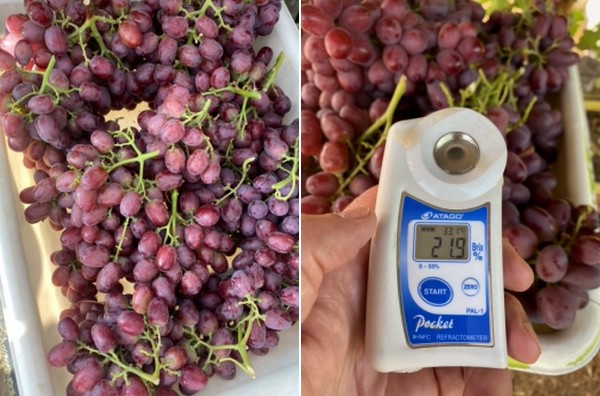
California grape growers and shippers are waiting to find out how recent weather events will affect the current California grape crop. “We had a few surprise rainstorms go through the valley and we’re facing a pretty massive heatwave right now. We’ve had occasional heat throughout the summer in spurts but right now there are temperatures over 110 degrees,” says Mike Asdoorian of DLJ Produce.

He does note though that there is still plenty of fruit available and to promote. “If anything, it’s potentially shortened up the back end of the crop. As an industry we have to assess where total crop volume is going to finish out and it may be more of a question of what’s going to happen in November and December,” says Asdoorian.

Overall the California grape volume is down this year. Approximately 95 million packages were anticipated this year which is a slight decrease from last year–about a 10 percent drop off. “This is because of a freeze earlier in the season in the bloom stages of the vine,” says Asdoorian. “Initially that lower crop volume was around bloom set and the freeze and now the current weather conditions are taking their toll on the total volume already out there.”

Varietal notes
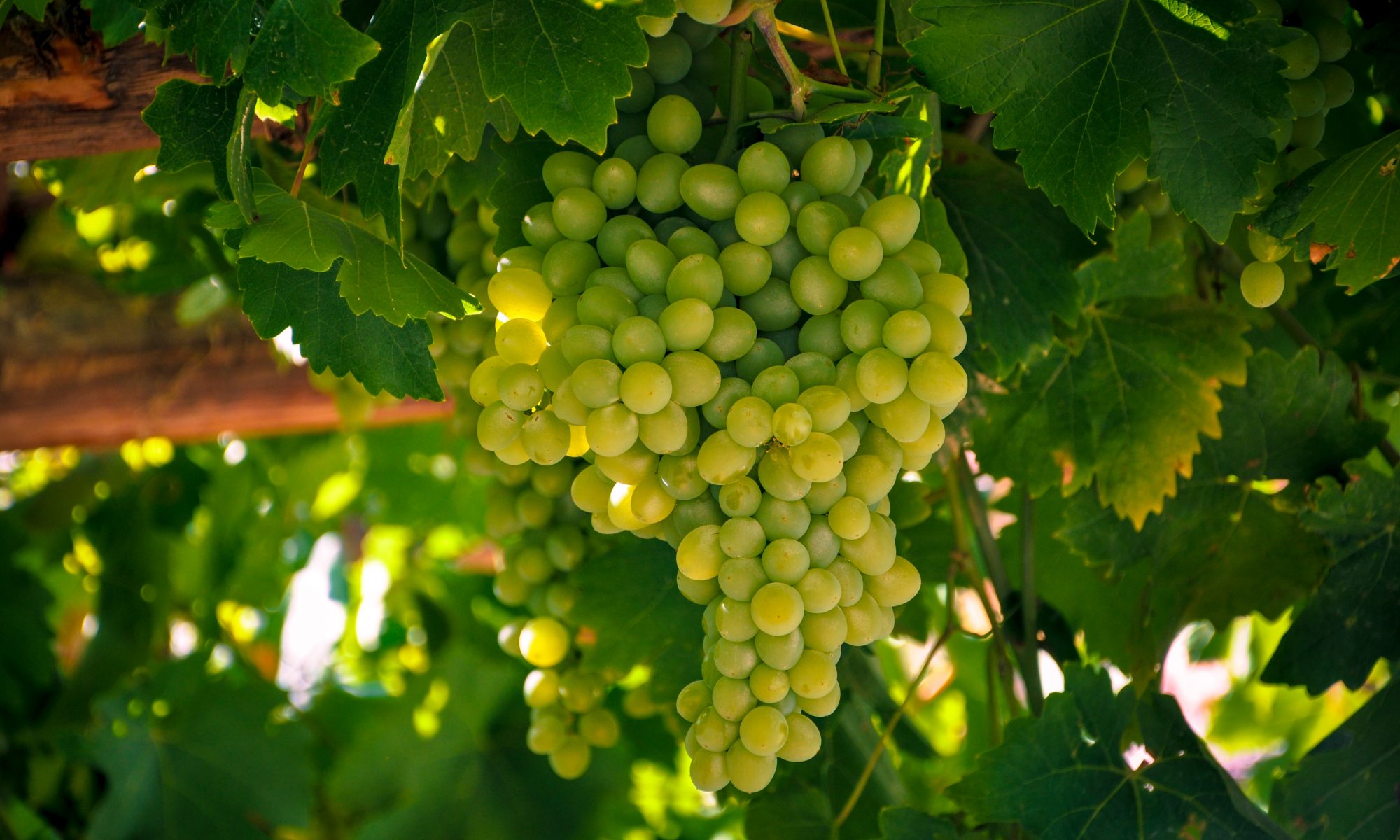
In varieties, Scarlet Royals are now coming on after a slower start because of the heat. “There are a lot of Scarlet Royals and that will be the majority of volume in red seedless grapes,” says Asdoorian. In addition, there are proprietary varieties such as IFG’s Sweet Celebration and Jack Salutes. Krissys have already finished. Green grapes are transitioning between varieties with Ivory, Valley Pearls and Great Greens finishing and most growers are going into Sweet Globe and Autumn Kings are already being picked. “They’re a little early this year. There’s also Autumn Crisp and that’s a favorite for export demand. The late side of the deal will be mostly Autumn King and Autumn Crisp once we get through the current green mix of varieties, so starting in October through December.” DLJ is also packing its Razzle Dazzle variety of grapes.

Following slower demand in the early part of August, demand has more recently picked up. “It was slow because some varieties, especially in green seedless, were on top of each other and inventories got a little heavy,” says Asdoorian.

A closer eye on quality
The challenge now is continually assessing this current crop contending with the weather conditions. “We’re working really hard to be out in the field and watching what’s going on. I think there’s going to be some damage done and the industry has to do a good job of packing good fruit so we don’t see a two-tier market,” says Asdoorian.

It’s also already time to consider what to do for the import season. “California could possibly come up light in December. If that’s the case, then we need to allow everybody to react and decide when we need to start seeing the first imported fruit,” he adds.

He notes while it’s packing its domestic Razzle Dazzle supplies, DLJ is already projecting the import season and determining when to bring in the first of its imported Razzle Dazzle grapes from Peru to avoid any potential gap in supplies. “Peru is going to have a good crop of grapes this year so they’ll have enough fruit to fill the pipeline,” says Asdoorian.

From Fresh Plaza

US Dollar Soars To 24-year High Versus Japanese Yen

Yesterday, the US dollar surged to a 24-year peak against the yen and a 37-year high versus sterling. Japan’s dovish monetary policy and Europe’s economic problems are now contrasting with a relatively stronger US economy and a hawkish Federal Reserve determined to bring down inflation to its 2% inflation target.

The US currency soared as high as 144.99 yen , hitting the level for the first time since August 1998. It is now within a large leap of its 1998 high of 147.43. The dollar was last up 0.9% at 144.09 yen. Against sterling , the dollar hit $1.1407, the lowest since 1985 and last down 0.1% at $1.1509.

At current dollar/yen levels, speculation is also growing that Japan could intervene to prop up the currency.

From Fresh Plaza

Empty Container Problem Intensifies, Reports Sea-Intelligence

Sea-Intelligence revisited its analysis of the eventual normalisation of supply chains and the potential impact on empty container flows.

The underlying data for this model comes from the Flexport Ocean Timeliness Indicator (OTI) data, which measures the time it takes from when the cargo is ready at the exporter to the importer’s delivery.

“Pre-pandemic, the transportation time was 45 days on average, peaking at a transportation time of 112 days in February 2022, which has since been reduced to 88 days, as per the measurement on 26 August 2022,” pointed out Alan Murphy, CEO of Sea-Intelligence.

As transit times lengthened, containers became tied up in the longer supply chain, which caused the initial increases in freight rates in the second half of 2020, as not enough empty containers could be moved to Asia in time. With a huge shortage of empty boxes, shippers had to order new containers to be built in Asia and then fed into the extended supply chains, according to the report.

As transit time is now reduced, these additional containers will again be released from the supply chain and begin to accumulate, mainly in Europe and the US. Sea-Intelligence predicted this development in February 2022 and this week analysed whether its prediction was on track.

Source: Sea-Intelligence.com, Sunday Spotlight, issue 580

The blue line in the figure shows the company’s current forecast of excess empty containers to be released in North America, just from the Transpacific trade, and the orange line shows its projection from February 2022.

“If transportation time is back to ‘normal’ by early next year, we will see the release of 4.3 million TEU of excess containers into North America, which cannot be expatriated, within the planned network operations. This will potentially overwhelm empty container depots in the US, an issue which is already beginning to materialise,” noted Murphy.

From Container News

Los Angeles Port Receives US$20 Million Grant To Improve Cargo Flow

The Port of Los Angeles (POLA) has received a US$20 million federal RAISE infrastructure grant for a critical road-railway grade separation project to facilitate faster cargo movement.

The Californian port said the new roadway configuration will streamline truck access to an important container and chassis-access facility on the Port’s Terminal Island, reducing traffic delays, truck dwell times and greenhouse gas emissions from idling vehicles.

US Transportation Secretary, Pete Buttigieg said, “We are delighted to formally celebrate the award of US$20 million to the Port of Los Angeles to reduce trucking delays and allow freight trains to move goods more rapidly, reducing shipping costs as part of the fight against inflation.”

Los Angeles Mayor, Eric Garcetti pointed out that when the project is completed, “this roadway made possible by the Bipartisan Infrastructure Law and Secretary Buttigieg’s leadership will help our port move cargo more efficiently and meet our most critical sustainability goals.”

The project will entail the construction of a four-lane, rail-roadway grade separation, which will allow unimpeded truck access to an 80-acre marine support facility (MSF) on Terminal Island, a central location serving all terminals in the San Pedro Bay port complex, according to a statement.

Currently, access to this facility for chassis and empty shipping container storage is impeded by several heavily used rail tracks and a tunnel with low vertical clearance, both of which are expected to be addressed by the project.

When completed, the new rail-roadway will connect trucks directly to the highway system in two directions, resulting in a reduction of 2,500 truck-hour delays daily; a decrease of more than 3,000 metric tons of emissions per year; and a reduction of 1,200 truck miles traveled per day, which will also decrease accident potential in the area.

The US$20 million award comes from the US Department of Transportation (DOT) Rebuilding American Infrastructure with Sustainability and Equity (RAISE) discretionary grant programme, which received more funding under the Infrastructure Investment and Jobs Act passed by Congress in 2021.

From Container News

Peruvian Grape And Blueberry Exports To Exceed $1 Billion

Peruvian agricultural exports are expected to reach $9.7 billion this year, an increase of almost 10 percent when compared to last year, according Agraria, using data from the Association of Agricultural Produces Guilds of Peru (AGAP).

Gabriel Amaro, executive director of AGAP, said in the category of fruits and vegetables, exports will go from $4.97 billion last year to $5.4 billion this year. With grape and blueberry exports continuing to be at the top once again exceeding $1 billion, while avocados would miss the $1 billion mark this season.

“Weather conditions are positive, but the issue is the cost overruns. The freights are 4 to 5 times more; in labor, raising the minimum wage for a sector that paid bonuses for productivity does not make sense, among others,” Amaro said.

Avocados finished their season in August, and while last year $1.049 billion worth of the fruit was exported, it would not reach the $1 billion mark this year.

Amaro went on to say that “the price of avocado is very low in the world. It is trading in the world at less than $2 during this period. This has made it so many of the offers made cannot be sent. Prices go down [and] under normal conditions sometimes it can be absorbed, but now all the cost overruns and the Peruvian policy, which is not competitive, this is not possible.”

From Produce Blue Book

GLOBAL MARKET OVERVIEW APPLES

As a staple fruit, apples remain ever popular in households worldwide. Many production areas, however, have been affected by unusual weather conditions during the growing season this year. In the UK, recent warm weather pushed the season forward by more than week for some varieties, whilst the same heat in France and Italy has caused a drop in production in these countries. The frosty spell in the spring in Spain and Serbia has also caused losses, whilst in North America similar conditions have caused fruits of differing maturity on the same tree, making harvest more challenging than usual.

Netherlands: Good demand for Elstar, not yet for Jonagold
Due to the warm weather, the estimated Dutch apple harvest of 245,000 tonnes will be lower anyway, according to specialists in the Dutch hard fruit market. The sun and heat have affected growth and quality, making hardiness and colour a problem this year. The quality of apples from the most watered plots looks good, but where it has not been possible to irrigate, the fruit is more difficult to size and the damage caused by sunburn is considerable. Elstar is enjoying structurally good demand. On the wood, Elstar was sold this year for 45-50 cents and that price remains fairly stable. However, there is little or no demand for the Jonagold-like varieties. This has everything to do with the available harvest of last season and the harvest in Poland that is getting underway.

Germany: European fruit from the 2022 crop year dominated the market
Supply from the old harvest has almost completely disappeared from the German market. European fruit from the 2022 crop year dominated, according to statistics. The presence of Delbarestivale and Jonagold expanded strongly, with Elstar also gaining in importance. From Italy, Royal Gala and Golden Delicious were increasingly supplied. From France came mainly Granny Smith; Akane were too small-fruited in Munich and therefore generated little attention. French Jerseymac supplemented the range, as did Spanish Granny Smiths. Supplies from Poland and the Netherlands completed the scene. From time to time, inflows were too large and demand too weak, which meant the traders could hardly avoid reductions in price. Price increases were very rare. The situation was similar for imports from overseas. New Zealand and Chilean items dominated in this sector. Their relevance was limited, but this did not have any fundamental impact on valuations.

UK: Early start to UK apple season
The British apple season started 7–10 days earlier than last year on most varieties. This is not unusual, as last season was late. That said growers are seeing an acceleration of maturity due to the warm weather. “It is clear that there is some effect from the drought and heat. The earlier nature of the season is predominantly down to the timing of flowering in the spring, rather than the sustained hot weather now, although this is a factor in accelerating maturity. This varies from variety to variety and orchard to orchard,” said an English grower.

Colour looks to be developing well, better than last season. This is in part due to the higher light levels, but also the difference in night and daytime temperatures, which with the very high day time temperatures has meant a good difference between day and night even if the nights have been warm. Fruit size in some cases appears to have been restricted through lack of water where irrigation is not available, or soil type does not hold ground water so well. Sunburn on some varieties will reduce quality. Other varieties, such as Bramley in some locations was affected by a long flowering period so has a wide variation in fruit size, this will affect grade-out. Where size has not developed growers will thin off smaller fruit, reducing yield. Cox, although in decline is the first significant volume harvested, followed by Gala. Varieties such as Discovery are in rapid decline and no longer significant.


The contrast between this year and last is remarkable, last year it was very wet and this year has been extremely hot and dry.

According to the grower some retailers have very much understood the inflation growers and suppliers have faced, and although perhaps not accepted the full extent of this, have increased prices to reflect a sensible share of the inflation faced by growers. He appreciates that other retailers find the marketplace more competitive and like growers have responsibility to consumers to maintain affordability, but said that increases in retail prices on the supermarket shelf need to be fed down to the grower.

France: Lower forecasts and a calm market  
In many regions of France, the apple harvest started early due to different climatic events. Early varieties have been particularly affected by the drought. Last week, an industry body indicated a re-evaluation of the harvest forecasts downwards: between 1,300,000 and 1,350,000 tonnes, that is to say 4 % less than last year’s harvest. A re-evaluation that particularly affects the Gala “especially if we talk about marketable crop in fresh because the hot temperatures affect the colouring. There will therefore be a higher than usual proportion of Gala destined for processing and consequently a lower fresh market. If the harvests are lower, the sugar levels are, on the other hand, very high.”

On the production side, the sector, already strongly impacted by the generalized increase in costs, denounces the explosion of the wholesale price of electricity (an increase of 1000% in two years) and warns: “if nothing is done, this situation will lead to the economic death of a third of French arboriculturists.”

In terms of marketing, the market is calm: “We have arrived on a market not yet fully developed. We arrived on a market not yet empty. There are still apples from the southern hemisphere and in some countries apples from the old harvest. And with the heat all over Europe, there is more demand for summer fruit than for apples,” said one operator this week.

Belgium: Belgian apples do not enter a clean market
With the picking of the Flemish top fruit in full swing, many growers and traders are already looking at the coming season with a slanted eye, which will again present the necessary uncertainties and challenges. “With the apples, the course of the season will depend greatly on how many growers will place in the fridges. There is some damage to the apples, but it is not that bad,” says a Belgian trader. “Around the period when the temperature was around 38 degrees, we had to deal with some sunburn damage, but it is less serious than two years ago. With the Elstar and Cox I estimate it at about 10 percent of the harvest and with the Jonagold it will be about 5 percent. Fortunately, the most dangerous period is over now that the sun is less in the sky and the temperatures are dropping.”

Incidentally, unlike the pears, the apples do not end up on a clean market. “There are still quite a few old apples on the market. They will undoubtedly try to sell them, which will soon lead to a crowded market. With the sharply increased storage costs, many traders will probably choose to use the new harvest for the industry. As I said, for both pears and apples, a great deal will depend on what will be placed in the fridges. In that respect, it is of course always uncertain what will actually happen, but let me state first that I hope that we can have a good year.”

Italy: Hesitant start to apple season expected
The 2022/23 Italian apple season is on the starting blocks. Production is expected to decrease slightly, with an increase in more innovative varieties and organic apples. After last year’s slightly lower sizes, there will be a return to medium to large standard levels, which should better meet the demands of some markets than in the previous campaign.

In South Tyrol and Trentino, as well as in Piedmont, the harvest of the Gala variety started in mid-August. In South Tyrol, a significant decrease is expected, due to the strong spring drop, but also to the extreme heat waves of the last few months, which have impacted, in some cases, the colour of the fruit, creating more waste. Sales also started on 29 August for the club cultivar SweeTango™, an apple that has been harvested since mid-August and has a very fresh, crisp and juicy taste, which has all the attributes for a good season.

In general, a hesitant start to the apple season is expected, according to the Italian consortia and cooperatives. At least for the first few months, a balance will have to be sought. At the moment, for example, temperatures are still very high and there is a heavy supply of apples on the markets that are struggling to sell because there is still summer fruit available.

In terms of the harvest, quality, size and assortment of apples are the strong points to face the current context. Indeed, the sector is concerned about increases in energy and raw material costs, which can hardly be fully absorbed at the production level. Moreover, product management, in the light of climate change, will be the new unknown of the future.

In Campania, this is a poorer year than the previous one: in fact, in the province of Caserta alone, in terms of production, they are at -30% compared to last year. The quality is not the best due to the excessive drought of the past months. As for summer apples, the volumes are -15% of last year’s.

Spain: 16% drop in production expected due to frosts
The apple harvest has begun in Girona, one of the most important production areas in Spain, where 20% of the production has already been harvested. At the moment it is the Royal Gala variety that is being harvested, earlier than usual due to the high temperatures, although this is also giving fruit higher sugar levels. As a whole, Spain expects a drop in production of 16% compared to the average of the last 3 years, due to the effects of the frosts in April.

At the moment, the forecasts point to a production similar to last year’s in Girona, something that can already be seen in the Gala variety, although growers are waiting to see how production evolves in the following varieties and if there could be a slight reduction due to the heat waves. The drought and the high temperatures are causing a lack of caliber throughout Europe, as well as the difficulty in obtaining colour in Gala apples, which is leading to a considerable commercial decrease, which could benefit the Catalan apples.

Although apple prices have been ruinous in a commercially difficult year, prices of the new harvest are around 15 cents higher given the exorbitant increase in production costs.

Serbia: 10% lower yield expected
Serbia annually produces more than 500,000 tons of apples, with a total acreage of ​​around 27,000ha. However, this season the country expects a yield around 10 per cent lower, due to the frost that Serbia experienced during the spring period. In the previous season, a total of around 160,000 tonnes of apples were exported from Serbia.


For conventional apples, such as Royal Gala, Granny Smith and Red Delicious, Serbia’s main markets will be the Middle and Far East, together with the United Kingdom, which is the second largest market in Europe for Serbian apples, after Russia.

The war in Ukraine brought Serbian apple exporters many uncertainties. In the first place, the supply chain was damaged and the costs of transport to Moscow tripled. Currency exchange rates remain unstable, which was heavily influencing the import-export activities. Additionally, there have been many situations where the transfer of money took much longer than usual.

Poland: Volume of apples up 10%, but growers face labour issues
Poland will have a good volume of apples this season, up to 10 per cent more apples compared to last year, and good quality fruits. With no frost in spring, a mild summer and only few hailstorms, crops will be good. Total apple volume in Poland is estimated at 4.5 million tons, which is double the amount compared to France or Italy. Polish exporters are seeing larger volumes of Gala, Golden and Red Delicious varieties this season as well. Obtaining all the required labour is challenging. Prices for workers are high and labour is hard to find. Not impossible, but the search for workers is a hard one.

Turkey: Excellent quality for Turkish apple harvest
The Turkish apple harvest has started, with Gala being the earliest variety. Weather conditions were good, there was sufficient water for apples and the Turkish exporters expect very good quality apples this upcoming harvest. One exporter stated this might be the best quality of apples that Turkish growers have seen for the past ten years. Harvest is expected to finish in October with the latest varieties. 

South Africa: Exports to US up 140%
Domestically, class 1 apples in South Africa are currently selling for R7.65 (0.45 euro) on the municipal markets.

Apple exports have shown some interesting trends this season, with a 140% increase to the USA and Canada (from a low base), a 42% growth in apple exports to the Middle East and a rise in 18% to the Far East and Asia by the end of week 34, compared to last year.

By contrast, apple exports to the UK are down by 13% and exports to Russia by 15% reduced so far this year, but traders note that exports to China in particular went very well this year.

“We had a very good year on apples to China which had a short domestic supply. There’s quite a big of opportunity for us. We sold a lot directly to retailers who, due to lockdowns, who were able to pivot to online.”

Export inspections of new South African variety Bigbucks (sold as Flash Gala) increased by 121%, while Pink Lady inspections are up by 10% while Golden delicious export inspections are the only apple category to have dropped, by 17%.

Overall, apple export estimate for 2022 is 1% higher than last year and exports will continue to the end of the year.

It is wintertime in the Cape, the rain season which has been late and rainfall is thus far lower than hoped-for. In the Ceres Valley, major apple production area, growers are already in drought mode and drilling more boreholes. “We are 30% behind on water where we want to be for the dams to be full,” a grower says, noting that after the recent serious drought, apple growers are very quick to heed early warnings. The Western Cape is about to experience a general drying, climatologists say.

North America: Positive outlook for apples despite challenging growing season
According to the U.S. Apple Association, there’s an almost two percent decline in total apple production this fall. (Though it’s a 3.5 percent increase over the five percent average.)

In Washington, the apple crop is a difficult one to predict. “The initial estimate is for 108 million cartons. That seems to be within the range of what the field staff is thinking,” says one grower-shipper.

The challenge comes following cold weather and snow that occurred during bloom earlier this year. As she notes, on the same tree there is fruit that was pollinated before the freeze/snow and there’s also fruit that bloomed out 10 days later when things warmed up again. “This is going to create some challenges with maturity, picking, etc. In addition to that, we had a cold spring and a hot summer,” she says.

Collectively, this has also pushed back the start of the crop by about two weeks. The combination of warm days and nights have slowed the color development growers look for. “Also, at this point, the fruit looks smaller than normal. However, as we are two weeks behind, all these things may change in the next couple of weeks,” the grower-shipper adds.

In terms of varieties, Wildfire Gala apples have just started being harvested and packed, and Premier Honeycrisp will start in another week or so. Regular Gala apples will start, at the earliest, towards the end of next week. “We are also coming off a short crop from last season and with the two week delay, we are seeing some varieties with gaps– Fuji, Golden and Pink Lady in particular,” she says.

At the same time, on the other side of the country, there are reports that both Michigan and New York states have good apple crops for the 2022-2023 season. Michigan apple growers predict they are going to produce their best harvest in three years with a forecast of nearly 30 million bushels–that is almost twice the size of last year.

Other regions such as Pennsylvania, and Canada (the provinces of British Columbia, Ontario and Quebec specifically) are also producing apples. “Movement on apples has been very good this month,” says the grower-shipper. “With the high cost of freight, we will see some buyers shift to these local production areas in order to keep costs down.”

As for pricing, the gap on some varieties is behind the strong pricing on those particular varieties given there’s high demand and little supply at this point.

Chile: Area of apples falls in the main producing regions
In its semi-annual report on Chilean deciduous fruit published last June, the USDA estimated the production of Chilean apples in the period 2021/22 at 1,036,000 tons, which would represent a decrease of 4 .8% compared to 2020/21 as a result of a decrease in the area planted in the country, which the US agency calculates at 4.2% for a total of 30,097 hectares.

The Maule and O’Higgins regions, in the centre-south of the country, represent 63.4% and 20.6% of the planted area, respectively, together accounting for 84% of the total apple production area. “However, as fruit growers continue to switch to more profitable crops, such as cherries or walnuts, the area planted in the Maule and O’Higgins regions has decreased in the last three seasons,” the USDA details in its report; in fact, according to Odepa data, they registered decreases of 11% and 17.4% respectively.

The USDA projected last June that exports should amount to a total of 610,000 tons in that period, contracting 5.2% compared to the same period of 2020/21. And although the data up to March reported a 24.1% decrease in Chilean apple exports compared to the same month of the 2020/21 period, totalling 45,552 tons, apple exports should have taken a greater boost near the peak months of export of May, June and July.

“At the beginning of the analysed period in 2021/22, one of the main problems in the Chilean fresh fruit export industry was the increase in freight costs and the high demand in Chilean ports, which caused delays in exports,” explained the USDA.

Although delays were not only a waste of time. From a survey carried out by a Chilean industry body about the impact of the logistics crisis and rising costs in the fruit growers’ season, it was concluded that 9 out of 10 growers believed they would not be able to afford the upcoming work of the next campaign 2022-2023.

“The situation shows a very severe lack of financing, and many producers do not have a way to start the 2022-2023 campaign, because they have not received the expected income before this entire crisis,” said an industry body representative. “Since March we have been warning about the impact of logistical delays, and the consultation we carried out revealed that 64% of the producers saw the condition of their fruit seriously compromised due to delays in reaching the destination ports.” In fact, half of the producers had between 30% and 60% loss of condition in their production to be sold.

However, the USDA notes, one of the main advantages apple exporters have over other fruit exporters is that apples can withstand longer storage times than other fruits; thus, exporters can store their fruit and wait for better market or logistical conditions.

Chile exports apples to 70 different markets. In 2020/21 Chile sent 74,348 tons of apples to Colombia, which represented 11.5% of total apple exports. Colombia has historically been a main market for Chilean apples and in 2021/22 (with data up to March) everything indicates that it will remain in that position.

The United States was the second destination for Chilean apples in the 2020/21 season, acquiring 60,496 tons, which represented 9.4% of total exports. India was in third place with the receipt of 56,297 tons, which represented 8.7% of exports, registering a remarkable growth of 172.7% compared to the same months of 2019/20; however, in the first quarter of 2022 shipments would have fallen by -82.3%.

China: Lower yields, higher prices
China’s well-known apple producing region, LuoChuan, in Shaanxi is facing a decline of 20% to 40% of this year’s apple harvest, mainly due to poor weather conditions. In addition, production is also gradually declining because growers are exchanging apple trees for other agricultural crops. Other large apple regions in China including Gansu and Shandong also expecting a drop in apple production. LuoChuan’s apple industry suffered from hail and frost damage in early spring.

As a result of the decline in production volume, prices are expected to rise in comparison to last season. Prices are currently 65% higher for LuoChuan apples than this time last year, according to a regional trader. In addition, production quality and flavor is also higher as the reduced number of apples on the trees led to better nutrition distribution among the remaining apples.

From Fresh Plaza

Washington Pear Harvest Sees Later Start To Season

Like apples in Washington, pear harvest is also delayed. “We’re just getting rolling. Typically we would have been going for a couple of weeks. But with the springtime cold weather, everything is delayed,” says Dan Davis with Starr Ranch Growers. “So supplies of pears are a little tight to start.”

However, the transition from California pear production to Washington looks to be a smooth one. “They’ve pushed through their product relatively quickly and we’ll get into ours right about the time they’re ready to hand the market to us,” says Davis.

While pear quality looks good, sizing is still developing. “A few weeks ago, it looked like the crop was going to be a bit more size-challenged from a fruit size perspective,” says Davis. “But now that we’re actually at harvest, we don’t think we’ll be as size challenged as we thought. Maybe half a size off of what we were last year.”

Overall the size of the crop is slightly down this year. However, it’s one with ample availability and promotional opportunities.

Organic Bartletts supplies up
On varieties, overall organic production is up–specifically organic Bartlett. Conventional Bartlett volume has dipped somewhat but Red d’Anjou looks to have good supplies.

To meet this crop is, for now, flat domestic demand and that’s something Starr Ranch looks to change. To help move product, it’s turning to more packaging this year such as fruit in bags, fixed-weight retail packaging and more. “We’re also looking for more display opportunities and a move closer to the front of the store to increase awareness of pears. They’ve been at the back of the produce department for the last several years so we’re trying to invigorate the category and get them merchandised in a more appropriate spot,” says Davis.

At the same time, processing demand for Bartlett pears is high–a trend seen in California as well. Davis says this will help alleviate supplies of smaller or lower grade pears.

All of this leaves pricing slightly stronger this year, though not enough to offset the increased input costs growers and shippers have been absorbing such as freight, packaging, supplies and more. “I think pricing will stay where it is,” says Davis. “Once the pipeline is full, it’ll hang a little above normal. With all the inflationary effects hitting us factored in, it has to stay a little higher.”

From Fresh Plaza

Iceberg Lettuce Pricing Plateauing But Expected To Stay Elevated In The Fall

While general industry supplies of iceberg lettuce are ample, humidity and high temperatures are having an effect on the leafy green. Mark Shaw, VP of Operations for Markon says that the abnormal humidity and persistently high temperatures have caused varying levels of internal burn, growth crack, seeder and salt and pepper that must be trimmed. In turn, this is reducing commodity head size and processor yields. “Mildew and thrip damage are also prevalent due to persistently warm soil temperatures coupled with high humidity,” says Shaw.

Those climate forces of nature continue to be a source of stress for growers. “Water is a huge concern in Western North America. The current drought is taking its toll on the amount of irrigation water available in California’s San Joaquin Valley, as well as the Arizona and California winter vegetable growing districts,” says Shaw.

Currently, the majority of harvesting is taking place in the Salinas Valley with supplements coming from Santa Maria, California. “The summer production areas on the East Coast and Midwest are winding down, pushing further demand to California. Local deals were happening across the U.S. and Canada all summer, but they are largely ending this month,” says Shaw. Harvests will be focused in the Salinas Valley until late October/early November when industry production shifts to Imperial Valley, California and Yuma, Arizona for the winter.


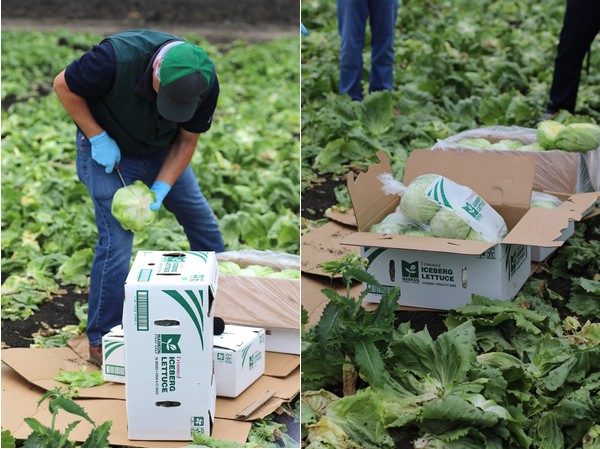
Markon’s John Galvez inspecting iceberg lettuce. Photos: Markon Cooperative.

Higher iceberg demand
In turn, these season-long issues have helped strengthen demand, particularly in Salinas Valley. “Although there are ample supplies being harvested in California, the additional orders that were being filled by East Coast and Midwest supplies are coming to an end and shifting that demand to Salinas and Santa Maria,” says Shaw.

Iceberg also seems to be drafting off of that general strengthening demand for fresh produce. “The two major trends right now are wellness (healthy diners looking for ingredients that carry a health halo) and comfort foods (where things like burgers are a popular indulgence). These trends will keep consumption climbing along with all of the lettuce categories,” says Shaw.

Market crept up
Not surprisingly, prices are higher than a year ago, a time when volume/head weights were also higher and growers weren’t fighting climate issues such as the heat, humidity and multiple soil-borne diseases like they have this year. “The market has been steadily creeping up through August due to the elevated temperatures and quality disruptors like INSV and Sclerotia,” says Shaw. “Although growers can cut away some of these damaged leaves, it lowers head weights.” (Although overall industry iceberg lettuce head weights have fallen, Shaw says that Markon First Crop Premium Iceberg weights have consistently remained three to seven pounds heavier on average than packer labels.)

So for now, iceberg prices look to be plateauing though they are expected to remain elevated until early November when production begins in Yuma, Arizona for fall and winter.

Meanwhile, growers continue to contend with the labor challenges that have persisted since the pandemic and are expected to remain a major issue in the produce, as well as all other industries. “Our grower/partners are using innovation to create solutions, whether it be advanced harvesting machines, robotics or more traditional harvesting approaches. It remains a pain point for everyone,” says Shaw.

From Fresh Plaza

Good Winter Rains In Chile Will Help Coming Table Grape Crop

“Increased input and freight costs together with low prices of the past season a concern”

The last few months saw heavy rain in the North and Central regions of Chile, which bodes well for the coming table grape crop. However, the increased input and freight costs together with prices of the past season that did not cover these costs are a concern for table grape growers, according to Jose Ureta, commercial and quality manager at grape and mandarin growers Exser in Chile.

“The grape market has been very difficult during the last season. The prices of last season in some varieties did not cover the costs, due to the increase in inputs and freight costs. The last months in Chile were good in terms of weather, because we have had huge rains in the North and in the Central region, it will help the production for the coming years. Also the increase in input and freight costs has meant that many growers cannot cover their break-even point. If these costs continue increasing, I think there will be a significant volume adjustments for the coming seasons.”

Exser is located in IV, V and VI regions in Chile. They mainly produce table grapes and mandarins. The company has farms that cover 1 200 ha and owns four cold stores, located in all the regions where they operate. During the season they have around 1 000 workers active in all the regions.

“Last season we exported 3.5 million boxes of table grapes. Our target is to produce a conformed bunch with full colour and green hard stems so it can travel in good condition to every market that we send fruit. The harvest starts in the beginning of January and it ends at mid-April. Our key markets are North America, Europe, Asia.

“The challenge for the future is to have the minimum days of transit time with the difficulties that we have been facing in logistics and we’ll try to minimize our labour and packing costs. Demand looks good, but we will have to make volume decisions once we are aware of input and freight costs for the coming season,” concludes Ureta.

From Fresh Plaza

Kicking Off Fall Onion Season In The Northwest

Syracuse, Utah-based Onions 52 has officially kicked off its fall onion season in Washington state and Utah. With demand for new crop onions exceedingly high, it has been a busy start to the season.

“Harvest is in full swing in Washington state and we will begin storing onions in early September for our robust storage season. Storage onions have a significantly lower water content than summer onions, making them easier to store in climate-controlled sheds from early fall until the following spring. It is not unlikely for September-harvested onions to ship to stores late into May and even early June,” said director of marketing Falon Brawley.

The Onions 52 team out in the field.

“We are a one-stop onion shop with a plethora of options for retail packs, private labeling, foodservice offerings and everything in between for all color onions,” said Shawn Hartley, owner/VP of sales. “We are encouraged with the crop in the Northwest, including Idaho/Eastern Oregon. It has been a crazy start to the growing season in all areas.”

“Partner sheds in Eastern Oregon will start harvesting in late August and early September,” said Tiffany Cruickshank from the newly established Vale, Oregon office. “The crop looks variable due to a dry, cold and windy spring coupled with multiple heat waves during the growing season. Some fields have certainly fared better than others. We are hopeful the growing conditions will allow the onions to put on a bit more size before harvest takes off.”


More of the Onions 52 team.

The Onions 52 farms will supply customers across the country with top-quality red, yellow, white, sweet, USDA-certified organic onions and tearless Sunions® from late August through early June.

From Fresh Plaza

Washington Apple Crop Assessment Still Being Determined

This year’s Washington apple crop is a difficult one to predict. “The initial estimate is for 108 million cartons. That seems to be within the range of what the field staff is thinking,” says Donna Feltrup of L&M Companies Inc. 

The challenge comes following cold weather and snow that happened during bloom earlier this year. As Feltrup notes, on the same tree there is fruit that was pollinated before the freeze/snow and there’s also fruit that bloomed out 10 days later when things warmed up again. “This is going to create some challenges with maturity, picking, etc. In addition to that, we had a cold spring and a hot summer,” she says.

Collectively, this has also pushed back the start of the crop by about two weeks. The combination of warm days and nights has slowed the color development growers look for. “Also, at this point, the fruit looks smaller than normal. However, as we are two weeks behind, all these things may change in the next couple of weeks,” adds Feltrup.

Kyle Mills, packing house manager at Apple King, looks at new crop Gala apples.

Some variety gaps
In terms of varieties, Wildfire Gala apples have just begun being harvested and packed and Premier Honeycrisp will start in another week or so. Regular Gala apples will start, at the earliest, towards the end of next week. “We are also coming off a short crop from last season and with the two-week delay, we are seeing some varieties with gaps– Fuji, Golden and Pink Lady in particular,” she says.

At the same time, on the other side of the country, there are reports that both Michigan and New York states have good apple crops for the 2022-2023 season. “Movement on apples has been very good this month,” says Feltrup. “With the high cost of freight, we will see some buyers shift to these local production areas to keep costs down.”

As for pricing, the gap on some varieties is behind the strong pricing on those particular varieties given there’s currently high demand and little supply.

From Fresh Plaza

California Lemon Acreage Experienced Biggest Increase Of All Citrus Types

The California Department of Food and Agriculture (CDFA) has released its 2022 California Citrus Acreage Report. The report includes detailed data on acreage broken down by bearing and non-bearing, type, variety, location, and year planted.

The overall statewide bearing acreage is up 1.7% or 4,297 acres in 2022 compared to 2020. This is an increase from 251,231 total acres in 2020 to 255,528 in 2022.

Lemon acreage experienced the biggest increase of all citrus types, increasing by 3,765 acres or 8.8%. Acreage in 2020 was 42,929 and has now increased to 46,694 acres. All three citrus districts saw increases in lemon acreage.

Mandarin acreage jumped from 59,422 in 2020 to 63,282 this year, an increase of 3,860 acres or 6%.

Navels and Valencias both decreased in acreage from 2020 to 2022. Navel acreage dropped 2% from 112,592 to 110,509, a decrease of 2,083 acres. In 2020 total Valencia acreage was 26,924 but has since dropped to 25,528. This is a decrease of 1,396 acres or 5%.

From Fresh Plaza

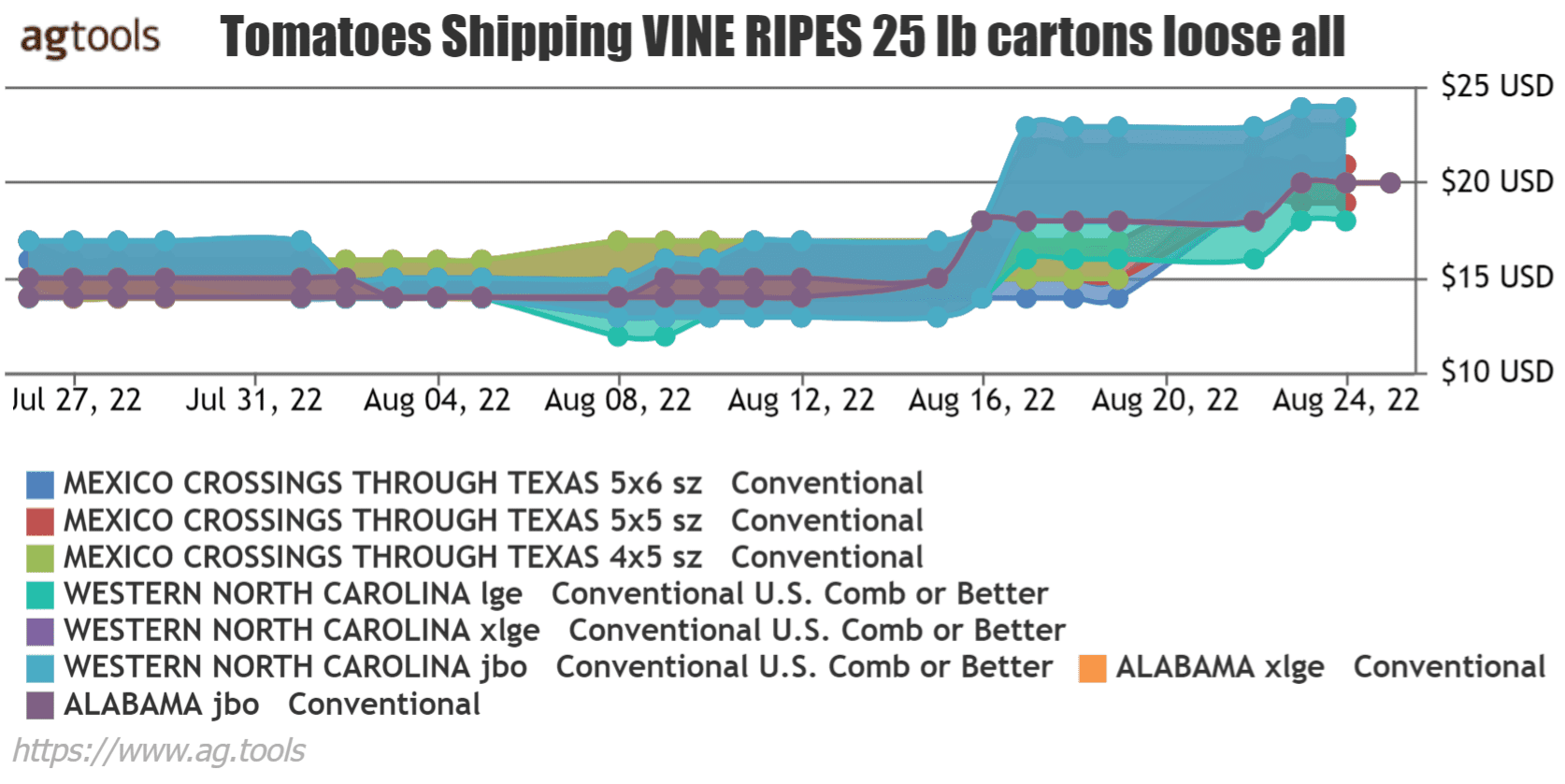
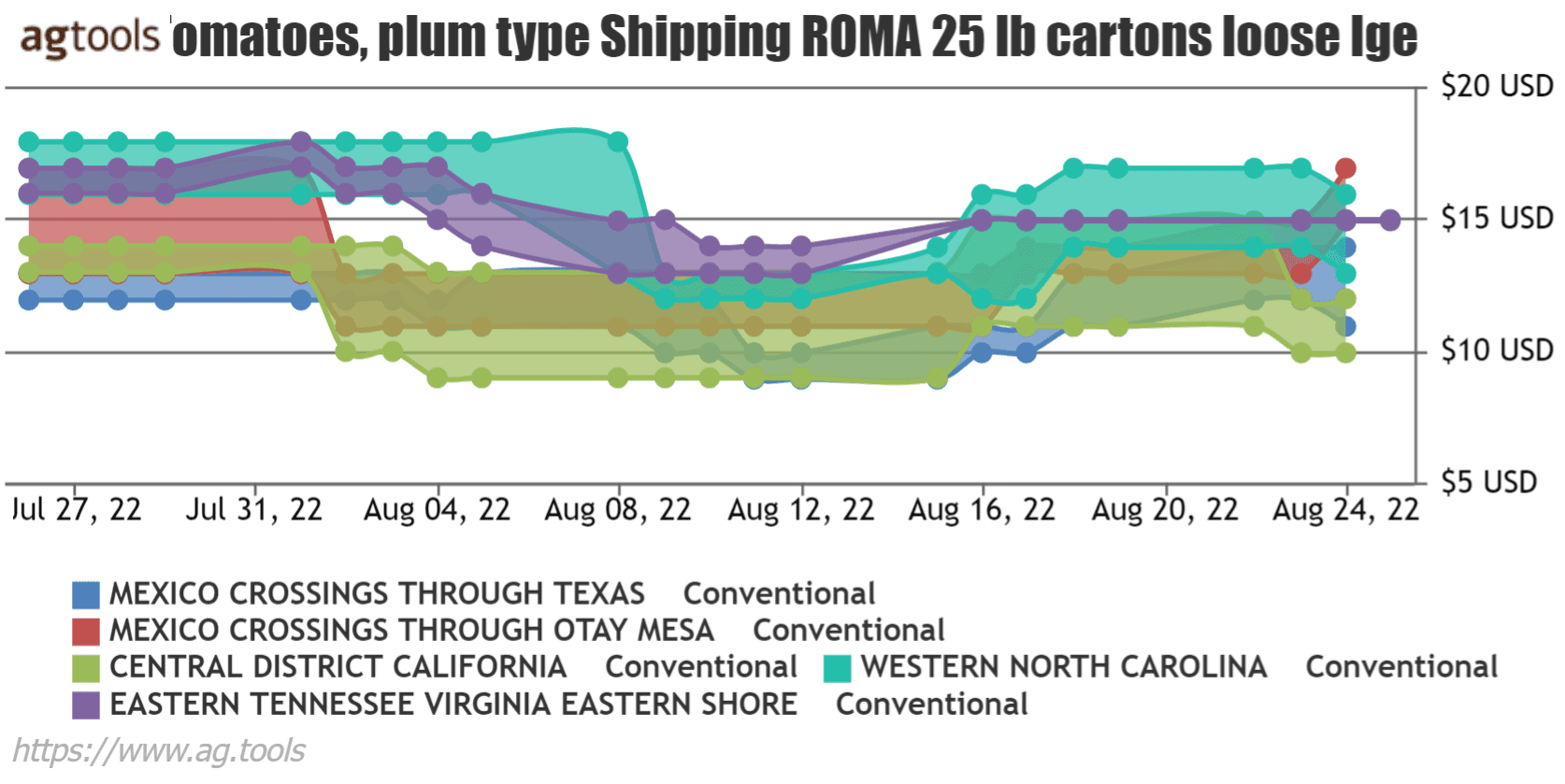
Tomato Prices Likely To Rise

Rain in the Northeast and Southeast U.S. and Mexico has slowed tomato harvests, and water restrictions in California have led to less volume.

Expect prices to rise over the next two weeks.

In a crop update August 25, 2022, Markon Cooperative BB #:123315 noted that markets are rising and should continue to rise until mid-September when early fall production starts.

“Alabama, Tennessee, and the Northeast region have seen significant rain this week, hampering the harvest of round and Roma tomatoes,” the report said.

“Previous heatwaves and rain this season have reduced quality and yields. Virginia is seeing excellent grape tomato quality.”

Demand has remained strong for California tomatoes, but water restrictions led growers to plant fewer Roma and mature green tomatoes this year, Markon said.

“Lower priced Roma tomatoes are an attractive option,” the report said. “Overall quality is good.”

Meanwhile, in Mexico, Roma, cherry, and grape tomatoes are very limited as farmers assess and recover from monsoon rains and flooding last weekend. Trucks dealing with delays and closed roads have posed transportation challenges.

“Quality is good, especially on grape varieties,” Markon said.

From Produce Blue Book

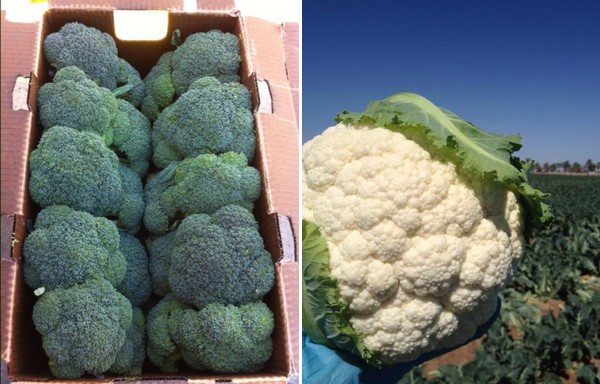
Low Prices Lead To Unharvested Acreage Of California Broccoli and Cauliflower

It hasn’t been an easy season for cauliflower and broccoli out of California. Currently, production is in the Central California region.

Broccoli
Supplies of broccoli are below normal right now compared to supplies in the last several weeks. “This is in response to heat spikes that have affected the quality of the California acreage,” says Mark McBride of Coastline Family Farms. “Many growers are noting discoloration of bud clusters (heads) and those crowns cannot be packed and sold.” On top of that Mexican production of broccoli crowns is also down, though that’s due to recent rainy weather. Meanwhile, East Coast growers are also currently harvesting.

McBride says broccoli demand and pricing have both been depressed since the start of the deal out of Central California. “Prices have been well below the break-even point and many growers have elected to leave unharvested acreage behind rather than pack more product that they can sell effectively at or above cost. This has been the case for several weeks,” he says.

Cauliflower
Cauliflower has also seen some reduced production thanks to those high temperatures. “Production has exceeded demand for most of the Central California production season and low prices have plagued the season,” says McBride. Like broccoli, poor demand and poor prices have led many shippers to curtail harvest and leave unharvested acres behind.

Generally, both demand for cauliflower and prices have been below expectations for the majority of the deal in this region. “Overall demand has been lackluster more days than not,” says McBride. “However, cauliflower is a very temperature-sensitive crop and we’ve experienced some reduced production. But weeks of excessive production have finally given way to a lighter volume and improved FOBs.”

Looking ahead, McBride notes that the outlook on these two commodities remains uncertain. “This is as we continue into the warmest weather of the Central Coast season. This weather typically results in variable quality, sizing and yield,” he says.

From Fresh Plaza

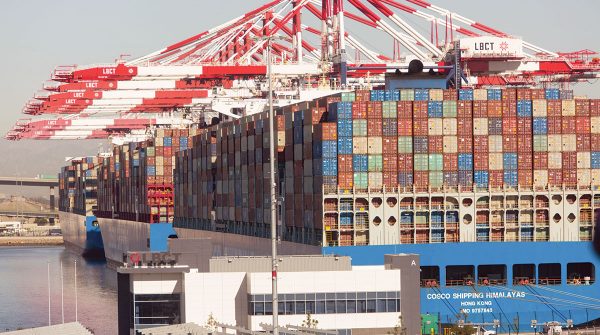
Many Ports Report Record Volume Numbers In July

Record-setting container volumes continued flowing through some of the nation’s major ports in July, while industry challenges compelled declines at other facilities.

The Port of Los Angeles saw a 5% increase in the number of twenty-foot equivalent containers processed for the month, rising to 935,423 TEUs compared with 890,799 a year ago. Los Angeles has set monthly records in five of seven months in 2022.
“Remarkably, we continue to move record amounts of cargo while working down the backlog of ships almost 90%, a huge accomplishment by all of our partners,” Port of Los Angeles Executive Director Gene Seroka said. He noted these cargo volumes were moving despite continuing challenges with freight railroads that serve the port.

Seroka

The adjacent Port of Long Beach also eked a new record, processing 785,843 TEUs, or 998 more than last year’s 784,845 containers.

Long Beach on Aug. 17 welcomed Pasha Hawaii’s MV George III, the first containership powered by liquefied natural gas to refuel on the West Coast. The ship’s LNG engines are far cleaner than those of a traditional cargo ship. Another LNG-powered ship is set to begin West Coast operations between Hawaii and the U.S. mainland in the fourth quarter.

Cordero

“Reducing ship emissions will have a significant and positive impact on the region’s air quality,” said Port of Long Beach Executive Director Mario Cordero.

While Los Angeles and Long Beach set records, protests over a controversial new California law took a toll on the Port of Oakland. The central California facility saw container volume drop 28% in July to 116,629 loaded TEUs, compared with 162,898 in July 2021. Port officials cited the port’s weeklong shutdown during protests over implementation of the state’s Assembly Bill 5 as the main reason for the decline.

“The port was closed nearly a week last month due to the trucker protests voicing concern over AB 5,” Port of Oakland Maritime Director Bryan Brandes said. “This congestion reduced our overall July volume.” Brandes noted the protests slowed the unloading of inbound ships and delayed imports from leaving the terminals.

The Northwest Seaport Alliance, which operates facilities in Seattle and Tacoma, reported a 15.9% year-over-year decline in July, processing 260,572 containers compared with 309,722 a year ago. Officials said reduced vessel calls, resulting from vessel delays at other ports and ongoing service suspensions, negatively impacted July volumes.

In Texas, Port Houston reported a 10% year-over-year increase for July, processing 323,823 TEUs compared with 297,621 in 2021, and making it the fourth-busiest month in the port’s history.

“Port Houston continues to build capacity and adjust to the changing market by providing more yard space, more equipment and more hours of service to our customers,” Port Houston Executive Director Roger Guenther said. The facility recently expanded gate hours, and is encouraging importers and exporters to move freight on Saturdays.

Georgia’s Port of Savannah complex moved an all-time record 530,800 containers in July, up 18% from last year’s 449,916 TEUs. It marked the second-ever time Savannah has topped the 500,000 TEU mark in a month, and helped position the facility to shatter last year’s record of 5.6 million boxes moved.

“The Port of Savannah has clearly become a preferred East Coast gateway for shippers globally, including cargo diverted from the U.S. West Coast,” Executive Director Griff Lynch said.

To better accommodate truck drivers, the port is now opening two hours earlier; gates are now open from 4 a.m. to 9 p.m. without interruption.

The Port of Virginia posted an 8.4% year-over-year increase, processing 317,691 containers compared with 293,126 last year. It was the best July performance in the port’s history.

“We’ve brought on 10 new vessel services in the last 12 months — and five of those in the last five months — so our growth is attributable to the reworked and new ship line services that are calling here,” Virginia Port Authority CEO Stephen Edwards said.

The South Carolina Port Authority, which operates the Port of Charleston, reported an 11.7% year-over-year decline in July container volume as it processed 216,097 containers, compared with 244,821 last year. However, the port is in growth mode; it recently completed a $500 million upgrade which includes the addition of 15 new ship-to-shore cranes that stand 155 feet above the wharf deck at Wando Welch Terminal. The cranes will permit the complex to handle three 14,000 TEU ships simultaneously.

The Port Authority of New York/New Jersey typically runs one month behind the other ports reporting container figures. In June, the giant East Coast facility processed 14.8% more TEUs than in 2021, moving 859,953 TEUs compared with 749,400 in June 2021.

From Transport Topics

South African Table Grape 2021-22 Season Sees Increases In Production, Exports

The 2021-22 South African table grape season finished with marginal increases in both production and exports, despite numerous challenges.

A total of 77.7 million cartons (4.5kg equivalent) were inspected and passed for export (intakes), a marginal increase of approximately 4 percent, in comparison to last season. 

Good weather conditions during the season as well as new cultivars coming into full production supported a large harvest, according to a recently published South African Table Grape Industry (SATI) report.

Despite numerous challenges, such as difficult market conditions and logistical constraints which impacted the quality of arrivals in export markets, exports have continued to rise. The compound annual growth rate stands at 6 percent since 2017-18 and compared to the 2020-21 season alone, exports have risen by approximately 4 percent. 

Contrastingly, SATI’s latest vine census indicated that national table grape plantings decreased marginally by 1 percent (185 hectares) to 20,379 hectares compared to the previous year. Currently, the six most planted varieties comprise 50 percent of national hectares planted, with the smaller varieties decreasing further.

The top 5 export markets: European Union, United Kingdom, Canada, Middle East and South East Asia all saw increases in exports, but the Russian Federation saw significant decreases of 29 percent, which can be attributed to the ongoing war between Russia and Ukraine.

Some challenges for the industry included shipping delays in the Cape Town port over the December 2021/January 2022 and Covid-19 lockdowns in Shanghai. Global container shortages and unsustainable increases in shipping costs placed further financial strain on the industry. The combination of these factors resulted in prolonged shipping times.

In addition, Macro-economic factors placed significant downstream pressure on the industry value chain this season. In March 2022, Euro Zone inflation was reported at 7.4 percent – up from 1.3 percent at the same time a year earlier; whilst UK inflation was reported at 7 percent – up from 0.7 percent a year earlier (Trading Economics, 2022).

Moreover, increased production from Southern Hemisphere countries (such as Peru, whose exports increased from approximately 383,000 tons in 2018-19 to 531,000 tons in 2020-21) tightened market competitiveness in our traditional markets. 

Finally, producers faced profitability challenges due to other factors such as rising input costs, maintaining the cold chain, and rolling power outages.

Given the current state of the industry, SATI pointed out that it is expected that going forward emphasis will be placed on cold chain monitoring, applying production practices that will support product longevity during the export journey and ensuring that market access is preserved within current markets.

From Fresh Fruit Portal

close
Loading…