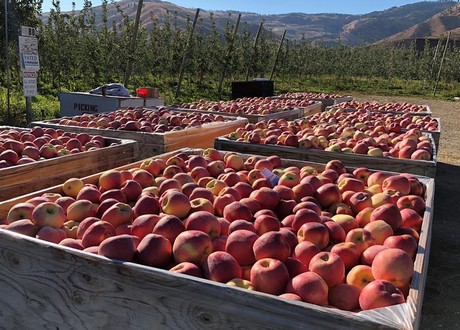
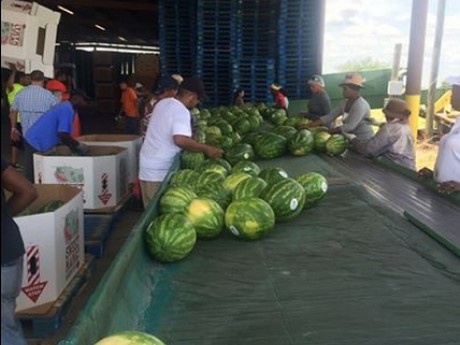
As the apple harvest in Washington state is in full swing, increasingly orchard owners are worried if they can afford to pick all the ripe fruit. Growers like Rob Valicoff, owner of Valicoff Fruit Company which grows 680 ha of apples, peaches, cherries, apricots and pears, relies almost entirely on temporary foreign guest workers. Of his 220 employees this fall, 200 were brought in from Mexico through the H-2A Visa program.
Valicoff calls the program expensive and inflexible, yet he’s forced to use it because otherwise he would not have enough workers to harvest his fruit.
A record 250,000 H-2A Visa holders are working this year on U.S. farms. The 25,000 of them working in Washington state are making at least $15.03 per hour. That’s $3.03 above the state minimum wage. Additionally farmers had to pay for their visas, provide housing and transport them from their homes to the farm and then back home when the season is over. Valicoff figures his cost is $1,500 per H-2A worker before he’s picked a single apple.
“At some point enough has to be enough,” Valicoff says, and the Trump Administration apparently agrees. The Department of Labor has proposed several significant changes to the H-2A program which will make it less expensive and more flexible for farmers. Currently, guest workers’ pay is set as the average farm wage paid in a given state.
The goal of the so-called adverse-effect wage is to not undercut prevailing wages for farmworkers who are already in the U.S. It’s a domestic workforce made up largely of illegal immigrants. According to the Department of Labor, half of all farmworkers surveyed admitted they are unauthorized to work in the U.S. Twenty-nine percent said they are U.S. citizens with another 21 percent claiming to be legal permanent residents.
Export growth “impossible” unless water situation eases, agriculture minister says
The severe drought affecting several regions of Chile will affect fruit production in the coming season, according to Jorge Valenzuela, president of producer association Fedefruta.
Speaking to El Diario de Cooperativa, Valenzuela said that the impact would vary according to the fruit and locality, he believed late season fruit would be particularly hit.
“I believe that early fruit, such as early cherries, will not be so badly affected but we are evaluating the situation to see what will happen from January to March, when later fruits such as kiwifruit apples and grapes come through. These are the ones that will probably be worst hit,” he said.
“As 80-85 percent of a fruit is water, we can expect to see smaller sizes and, as a consequence less productivity.”
Last month, Agriculture Minister Antonio Walker said in an interview with Emol that unless the water issue was resolved, the sector would not see the increases in production that it had experienced in previous seasons.
The government has declared an agricultural emergency in Coquimbo and Valparaíso, and is reportedly close to applying the same measure to other regions including Biobío.
Walker said that in spite of strong international demand, it would not be possible for Chile go on increasing its planted area as the water requirements are too high.
Asoex president Ronald Bown added that climate change was here to stay and that the country must learn to change its way of doing things.
Walker called on companies to improve their management of underground and surface water resources, adding that the country must urgently address the need to modernise its irrigation infrastructure.
The government is already working on a national water programme that includes the construction of 26 new reservoirs, as well as the promotion of desalination plants.
The growth of Hong Kong fresh fruit imports has benefitted most suppliers except for the US
Hong Kong is a re-export hub for the fruit trade in China and may have presented backdoor for US fresh fruit exporters, but figures show the US-China trade war is having a significant effect on indirect trade.
According to a USDA report, Hong Kong has seen growth in its fresh fruit market with the value total fruit imports in the first half of 2019 increasing 17 per cent compared to the same period last year.
Despite its position as the third-largest supplier of fresh fruit to Hong Kong by value in 2018, the US is one of the few suppliers to see a drop in exports to Hong Kong.
Between 2017 and 2018 US fruit exports to Hong Kong dropped 14 per cent in value and the trend looks to be continuing into 2019. Between January and June 2018 and the same period in 2019, exports declined 18 per cent, while most of the US’s competitors’ exports to Hong Kong grew.
The USDA report said the figures reflect the negative impact of China increasing tariffs on US fruit. This is further supported by the dramatic decline in US fruit re-exported from Hong Kong.
In 2017, 59 per cent of US fruit exported to Hong Kong was re-exported, this dropped to 37 percent in 2018 and has now reached 26 per cent in the first six months of 2019.
This has opened the market and allowed other countries to increase the value of their exports to Hong Kong from 2017 to 2018. Chile is leading the way, up 28 per cent, and Japan (up 18 per cent) and New Zealand (up 27 per cent) have also improved off smaller bases.
Chile’s growth in this market originates from its cherries. Chile supplies Hong Kong with 88 per cent of its cherries and Hong Kong imported 87 per cent more cherries in 2018 than in 2017.
Oranges (up 10 per cent) and durians (up 18 percent) were two other categories which saw major growth from 2017 to 2018.
Ventura County farmers have begun removing more than 200 trees after their dogs – used as detector dogs, an early-warning system – alerted them to the presence of the bacteria that cause the deadly citrus disease Huanglongbing.
Huanglongbing -also known as HLB or citrus greening- has been found in residential citrus trees in Southern California but has not yet been detected in a commercial California grove. The disease has damaged and killed trees in Florida and other citrus-growing regions.
During the summer, the Farm Bureau of Ventura County hired a Florida-based company, F1K9, to bring four of its detector dogs to check some of the county’s citrus farms. The dogs are trained to find HLB bacteria.
“And they found it,” county Farm Bureau CEO John Krist said. “It wasn’t like they hit solid blocks of completely infected trees, but we had them run perimeters because that’s the most likely place that HLB will start when it reaches a grove.”
According to agalert.com¸ the dogs alerted on 211 trees out of 3,500 scouted, Krist said, and the affected trees are being removed.
The Midwest is seeing its first apples being harvested for the season. Growers in the warmer parts of the region have commenced their harvest, while those in areas with long winters, such as northern Michigan and Minnesota, will start a bit later, according to Bill Dodd, President of Midwest Apple Improvement Association (MAIA).
“The Midwest apple harvest has begun, depending on where you are in the Midwest. In those warmer climate areas, we’re on the front end of the harvest and the uptick starts for the whole region soon.”
Dodd added that growing conditions have been good during the summer. “Once we got past the record rain totals from the spring, we had decent weather and a similarly decent growing season,” he said. “We’re not expecting a huge bumper crop but it will be an above average year in both quality and quantity.”
EverCrisp the highlight The focus is currently on harvesting the early season varieties like Gala and Honeycrisp, which Dodd noted are coming in strong right now. By the end of October, the region will start on what is considered the highlight of the season – EverCrisp. The EverCrisp apple was developed by the MAIA and is a cross between Honeycrisp and Fuji.
“For Midwest Apple Improvement Association, we most look forward to our MAIA-1 variety, marketed as EverCrisp,” Dodd shared. “Growers harvest EverCrisp near the end of October, and we are once again thrilled to bring to the market a delicious apple arriving at farm stands and grocers late in the season just as most other newer varieties are leaving the shelves.”
He said that production is increasing steadily each year and expects to see a continued increase in retail and consumer demand. There are also some other projects that MAIA are currently working on.
“As a whole, MAIA thinks very long term, and there are varieties we are working on now that are very exciting to us, but of course aren’t yet visible to consumers and most of our growers,” Dodd said. “It’s all part of our commitment to supporting growers in the Midwest and beyond with new, creative varieties that will be competitive in the marketplace, not to mention absolutely delicious.”
MAIA website homepage.
New website Last month, MAIA launched its new website. The revamped website contains more thorough profiles of each variety as well as varieties entering into the market in the near future. It also contains an extensive gallery of photos along with stories, while including what is described as an “extensive directory of MAIA members”.
“I know we’re based in the Midwest and are supposed to be modest, but – wow – we’re really proud of the new site,” Dodd said. “In the past two years, we have hit a major milestone with the successful roll-out of EverCrisp® at grocers nationwide. Our new website puts us in the right place online in terms of helping growers, distributors and retailers understand who we are, what we’re offering and where we’re heading.”
The global mango market is currently in a transitional period. Mexico is finishing earlier due to excessive rainfall at the end of the season and Senegal also saw its campaign ending abruptly. Brazil has been on the market for a few weeks and is likely to become the most important exporter of mangoes in the coming weeks. In the meantime, Israel is supplying the usual volumes, mainly to the European market.
Since the stocks are limited at the moment and the demand for mangoes is increasing, prices should increase. However, this trend will be limited somewhat, as more and more mangoes are arriving from Brazil. In the coming weeks, the mangoes from Spain and Italy will also hit the shelves again, although the yield is expected to be lower than in the previous season.
The Netherlands: Exceptionally good time in the mango market After a somewhat difficult period, the mango market has been going through an exceptionally good time in recent weeks, say Dutch importers. “After an abrupt end of the Senegalese season, Brazil has been on the market for a few weeks. Spain is only just starting up and Israel is supplying its usual volumes. This has resulted in a limited supply, and prices even reached a peak two weeks ago. There are no longer any such peaks, but the prices for Brazilian mangoes are still good. The yield in Spain appears to be a little lower this year, and Israel won’t be flooding the market either. Consequently, there are good prospects for the coming weeks. The market situation will undoubtedly change again, but there are no signs of that yet.”
Belgium: Little supply results in high prices The situation on the mango market is very unusual. The Senegalese season ended two to three weeks early. In addition, the start of the Israel season also took place two to three weeks late. As a result, there are currently few mangoes available. The prospect is that from this week on, more Israeli mangoes will become available. Moreover, the Brazilian mango season is also starting. Due to the low volumes on the market, prices have been high for a long time and the demand is good.
Germany: Mangoes shipped by air available in the supermarket There is currently a sufficient supply of mangoes on the German market. Tommy Atkins mangoes arrive by ship for relatively low prices. This variety is very fibrous and the fruit is usually green, which is not really desirable. Due to the lack of quality, only small volumes of this mango are sold, according to a trader from Central Germany who also markets ready-to-eat mangoes. “The color and quality is not that good, so we have seen a sharp drop in the demand.”
The mangoes that arrive by air freight are the most popular, says the expert. “Israel is currently supplying the market with good varieties and the quality of this country’s mangoes continues to improve.” He also sees a growing demand for mangoes in the summer months, which is a period when the demand is mostly oriented towards local summer products.
The price for Israeli mangoes is very reasonable, so supermarkets are also able to include mangoes in their range. “The small sizes are cheaper compared to the fruit from Brazil or Peru,” says the expert. With the summer coming to an end, the trader expects the demand to rise further until the end of September.
France: Spain will follow after the Israeli season The Israeli season will come to an end within two weeks and a small volume of Kents is being shipped from Brazil by air. The Spanish campaign is also about to start. The Spanish mangoes that are already coming on the market are still too green. When it comes to the quality of Spanish mangoes, the prospects are good, but due to the weather conditions (little rainfall), a 20% reduction in the volume is expected.
Spain: Season kicks off with lower volumes Last week, the harvest of the first Osteen mangoes kicked off in the province of Malaga, the most important growing region in Spain. The harvest started a bit earlier this year, albeit with lower volumes. This is an OFF-year for the older areas, which means that the yield will be lower. The younger areas are delivering slightly greater volumes this year. The total production could therefore be 30% lower. Most of the production will consist of medium sizes, which is good for the trade. Also, growers report that the quality is good and homogeneous. The most important variety is the Osteen, but later varieties, such as the Keitt and Palmer, are becoming increasingly interesting for Spanish growers.
Despite Israel’s strong competition, the market is looking good for Spanish mangoes. The most important destination for Spanish exports is Europe, but distant markets, such as Canada, are also becoming more popular. This year, the South African market may also open to Spanish mangoes. The necessary inspections before an export protocol can be signed are still on-going.
Italy: Season delayed by 15 days The demand for mangoes in Italy and Europe is still growing. Italy is the number 8 in Europe when it comes to importing mangoes. The volume of domestic mangoes is also on the rise. The majority of the total of 100 hectares devoted to mango cultivation is in Sicily. The mango season has been extended. In addition to the Kensington Pride, the early Irwin and the late Kent, Keitt and Maia are also cultivated. However, research is needed with some varieties, such as the Gleen, in order to improve the production capacity. The yield is limited and the sizes are small. With other varieties, it is necessary to combat diseases that otherwise drastically reduce the yields.
The flowering and fruit set have undergone an evident delay due to the climatic instability in April/May: about fifteen days later than the previous seasons. Harvest began in the past seasons in the week 34/35, now there are small quantities available but plentiful volumes are expected in week 37/38 . It started 15 days later than the previous campaign, with the harvest kicking off in week 34/35. The volumes are now small, but there should be enough stocks by week 37/38. In spite of the delay, the supply remains stable thanks to imports from Israel and South America arriving by plane and by ship. The demand is also stable compared to last year.
South Africa: Growers concerned about dry weather in Limpopo After the blossom, the fruit of South African mango trees has started developing. The harvest is expected for December. Last season there was an increase in the volume compared to the previous year, although the official figures are not yet available. Dry weather in the Limpopo region is a cause for concern for growers and may have an impact on the fruit’s development. Water management is looking better in the Hoedspruit cultivation region. Last year, slightly more mangoes than normal were exported to the European markets, the Middle East and a little to India. Here too, the official figures are not yet known.
United States: Transition in the demand, supply and prices The mango market in the United States is in transition, with the switch from the Mexican season to the Brazilian one. The last mangoes from Mexico are still being shipped from the northern regions, but those will see a sharp drop in the production in the coming weeks. The Mexican season is coming to a close at a normal time of the year. California has a limited acreage devoted to mangoes. The season there runs from mid-September to mid-October.
The demand for mangoes in the US is also in a transitional period. “In the summer months, there are different types of fruit available. Suddenly, consumers then realize that there are fewer mangoes in stock,” says a trader. “The popularity of mangoes is on the rise, especially among the younger consumers. Furthermore, the sale of sliced, peeled and ready-to-eat mangoes is growing, as well. This is giving an extra boost to the demand.”
With both the supply and demand in transition, the price is also subject to changes. Prices were low in August, but given the shrinking stocks, they rose again at the end of the summer. Just like last year, the price is currently stable.
Mexico: Late harvest rained out The last mangoes of the season are currently being harvested. The next campaign is expected to start in the south of the country in February. Bearing in mind that last year’s production continued until October, this time the season has come to a close earlier than expected. This is due to excessive rainfall at the end of the season. Because of the earlier start of the campaign in Brazil, there is no gap in the market. In general, the season has gone well for the Mexicans, with a 2% increase in the volume compared to last year.
Brazil: The most important producer in the coming weeks The Brazilian season has started earlier than expected and will dominate the global mango production with the Tommy Atkins. Brazil will be the market’s largest supplier until early November, after which mangoes from Ecuador will also be available. Ecuador is expected to start around mid-September. Due to weather conditions, the season is expected to start late. The season usually ends in January, after which Peru comes on the market. The Brazilian product is expected to further penetrate in the United States, reaching the markets that are normally dominated by Mexico until well after the end of the season, such as Texas. The volume is expected to rise by 10% this year.
Australia: Low temperatures cause a delay in the harvest The mango season is about to start in the north of the country. Temperatures at night remain low in the Darwin region and that will delay the harvest of the mangoes. In the Katherine region, the temperature remains cool as the fruit develops. Because of this, the harvest is not expected to start until the beginning of October. In Western Australia, the temperatures are also lower than usual, slowing down the growth of the mangoes. In addition, strong gusts of wind are expected to cause the fruit to fall from the trees. The harvest in the west is expected to start at the end of September, with a peak in October and November. The season runs from August to the end of March with changing production regions.
By the end of June 2018, 83,315 tons of mangoes had been harvested in Australia. This was an increase of 36% compared to the previous year. Exports also increased by 8%, with half of them going to Hong Kong and Singapore. The most important varieties were the Kensington Pride (41 &), Calypso (29%), R2E2 (14%) and Honey Gold (7%).
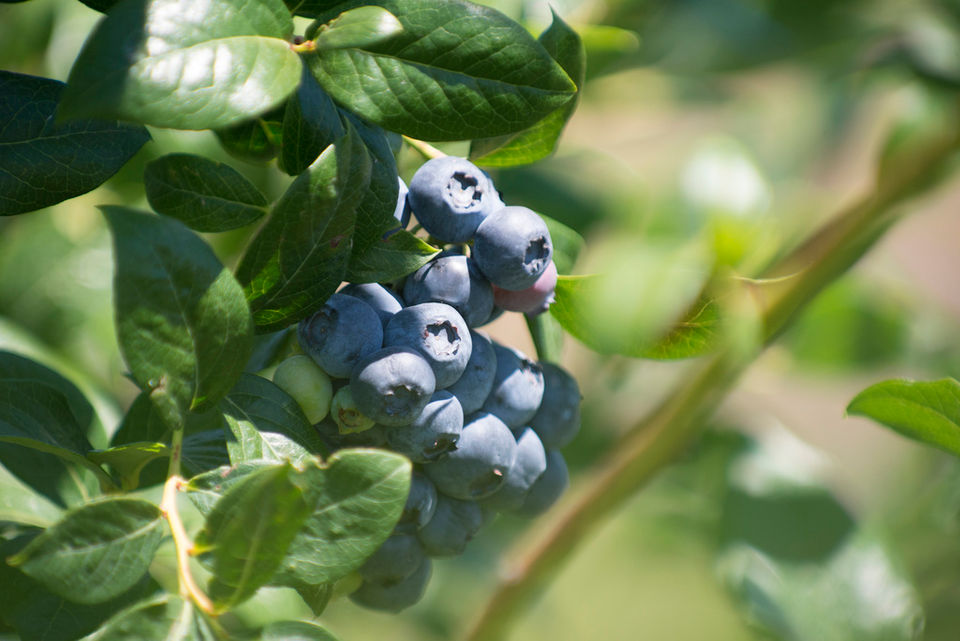
Colombia is aiming to position itself among the top ten leading blueberry exporters in the world, according to trade promotion body ProColombia. The country is looking fill the windows between the Chilean and the US harvests.
“We are building a strategy so that the country can take advantage of the full potential of this fruit, which is increasingly in demand in markets such as the US and in the European Union where there is access and tariff advantages for Colombia,” ProColombia’s director Flavia Santoro.
The first blueberry plants arrived in the country two decades ago from the US but commercial production did not get underway until around five years ago.
Blueberries are one of a number of products included in a government strategy to boost Colombia’s fruit export potential. Proplantas, Colombia’s leading importer and marketer of plant material for the soft fruit sector, estimates that exports could reach US$100m within four years.
“We also have the competitive advantage of being able to produce all year round whereas other suppliers have low seasons between March and May, as well as between September and November,” Santoro explained. According to a report by Colombian blueberry association Asocolblue and Proplantas, there are currently around 400ha of blueberry plantings in the country, mainly located in the central departments of Cundinamarca and Boyacá. Production is expected to reach 1,000ha in two years.
According to Asocolblue’s president Camilo Lozano, the high levels of investment from Chilean and North American companies will to propel Colombia into the top ten export rankings within the next five years.
Figures from the Food and Agriculture Organization of the United Nations (FAO), cited by ProColombia, show that in 2017 world blueberry production totalled 1.22m tonnes, an increase of 53.9 per cent compared to 2010. Planted area grew 40.5 per cent in the six-years to 2016, reaching 150,623ha in that year.
The third and final day of Asia Fruit Logistica 2019 has passed, and overall, the stand holders have been happy with the results. The traffic was noticeably lower than it has been in previous years, but it was much better than expected. At the same time, some of stand holders feel that closing the exhibition 2 hours early was a waste of the day, and they would have rather had the full day.
The Turks feel the exhibition has been a success: their figs are really picking up and the pomegranate season is about to start. The Egyptians were also very pleased with the exhibition. There is a huge demand for their citrus from China, Hong Kong and Asia in general. This means they are mostly competing with each other.
Spanish table grape growers who grow on an area of 100 hectares say that they are very optimistic about selling in China. The Chinese market shows a preference for grapes that are intensely black and very sweet. Next week they will also begin selling in Vietnam. The average cost for transport accounts for 0.25 euros per kilogram, meaning that it is more expensive to transport to Europe with TIRs than to Asia by sea.
The number of visitors on day three has decreased quite a bit. Similarly, a couple of stand holders did not show up for the third day, or otherwise left very early on in the day. Many Chinese companies with small booths left early saying that this was because today was not very interesting for them.
Still, the Chinese are quite positive about the show. They are saying that the number of visitors is down but that the people that did come are more willing to place orders. Amy Zhang from Jining Fuyan Fruits & Vegetables Co.,Ltd., who has attended the show multiple times before, also mentioned that while there were less visitors, the visitors that did attend were very interested in her products. Vietnamese companies have received many visitors in the past two days.
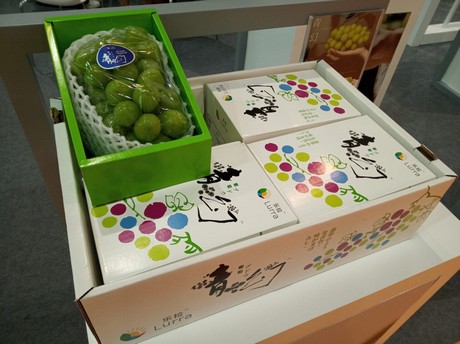
As is well known, food packaging is very important in China and this year the presented fruit packaging looks even more beautiful and detailed then it did in other years. Examples include New Frutti’s Disney packaging and Lurra’s special Korean grape packaging.
India is a very good market for Australian apples, pears and kiwis due to the high tariffs India has imposed on U.S. fruit. Thirty buyers have been brought in from India by the Australian trade and investment department there.
A German exhibitor said that he sells Gala and Red Delicious apples as well as apple juice in China. He said that the Chinese clients want very sweet apple juice . He also sells in Taiwan, India, and Singapore. The exhibitor is a little disappointed because he has seen fewer visitors than he did in past years.
One Italian apple-selling exhibitor said he is very satisfied with the contacts he was able to make this year; the fair was very positive for him. This Friday there were very few visitors but he had already met many buyers in the first two days.
One Costa Rican exhibitor shared that he connected with many promising potential buyers from Japan, China, South Korea. The Costa Rican company will begin shipping 60 containers of bananas per week to a Chinese company. In past years more and more northeastern countries know about the quality of Costa Rican bananas and pineapples. They are glad to be able to attend the show, and found that the quality of the visitors was very good.
Just like in previous years, many companies revealed new innovations this year. Reemoon, a sorting line specialist, introduced their new internal and external scanning machine. Shenyang Renhedatong showed their new potato variety this year. It is called the Elizabeth variety, and is white on the inside but much sweeter than the orange or purple variants. They said: “This is the first year we participated, but we received a lot of positive feedback on our sweet potatoes. We brought some with us to let the visitors try them.”
The after-effects of the spring rains and an extreme heat spell during summer are being felt by California grape growers. Suppliers say the industry has already adjusted the projected volume down twice, with a view that perhaps there are more reductions to come. Overall, growers maintain that quality and condition remain very good but total volume is down from last year.
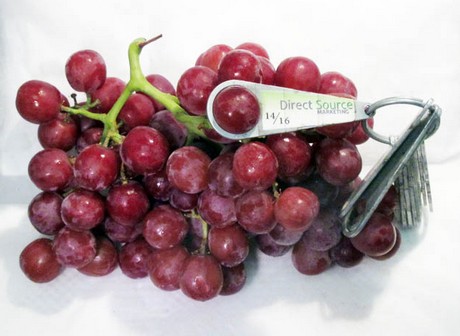
“According to the most recent USDA data, California table grape growers are shipping between 630k – 750k boxes per day from the Central San Joaquin Valley,” observed Ira Greenstein of Direct Source Marketing. “The industry has moved through close to 23 million boxes so far this season, which is about a million fewer compared to this time last year.”
He added that another bit of good news is coming from the retail front, with figures demonstrating that consumers are still showing support. “Marketers and US retailers have worked well this season to put California red, green and black seedless front and center in weekly circulars. With summer vacations behind us and schools back in session, growers are hoping for the uptick in business that’s needed to get them back to profitable FOB’s.”
Scarlet Royal in full production Growers continue to move through red varieties, with Scarlet Royal currently in full production, along with varieties like Timco, Krissy, Magenta and some proprietary varieties. Greenstein observed that growers are gradually replacing Scarlet Royal acreage with proprietary varieties and expects to see that trend continue. For now though, cooler nights will be welcomed as growers wait for more color.
“Although overall quality and condition of this year’s Scarlet crop has been very good, many growers are struggling to color-up,” he said. “Red and black seedless varieties require cool nights in order to achieve proper color, which hasn’t been possible with nighttime temperatures in the mid 70’s. Pricing on good quality red seedless currently ranges from $12.95-$13.95 on medium/large, $13.95-$14.95 on large and $15.95-$18.95 on x-large with the mostly market at $16.95. Marketers will continue to keep their foot on the gas in order to keep fruit moving through the system in a controlled fashion.”
Green seedless feeling effects of weather issues most As mentioned, the grape crop is feeling the effects of the wet spring and hot summer spell. This appears to be more pronounced in the green varieties, with reports of mildew scarring and discoloration being seen in current shipments.
“However, overall quality and condition on the majority of fruit hanging is still very good,” Greenstein mentioned. “Currently, the industry is working through good supplies of Sugraone, Ivory, Princess and other proprietary green seedless varieties. A few growers are even making their initial passes on Autumn Kings this week.”
He also shared the current pricing of good quality green seedless on the domestic market right now. “Pricing currently ranges from $13.95-14.95 on medium/large, $14.95-$15.95 on large and $15.95-$18.95 on x-large with the mostly market at $16.95. As we enter peak production there is the potential for on-hand inventories to build but growers and shippers will look to keep fresh packed fruit moving with aggressive FOB pricing through the month of September.”
Autumn Royals taking over from Summer Royals For black seedless grapes, Autumn Royals are increasing in volume over the next 7 – 10 days, while Summer Royals have all but finished harvesting for the season. There is still good availability remaining though, with pricing steady.
“Pricing on good quality black seedless currently range from $12.95-$14.95 on large and $15.95-$18.95 on x-large with the mostly market at $16.95,” Greenstein concluded. “Sunworld Midnight Beauty are also available, but are fetching a premium with pricing ranging from $17.95 – $20.95 with size being the determining factor.”
The harvest of the last marketable blueberries is underway in Europe and North America. In Europe, Poland is the largest player and expects its acreage to continue expanding in the coming years. After the harvest is completed, traders will switch to the production from South America. In September, the first Peruvian blueberries will arrive in the ports of the United States. Another country that benefits from the market gap is South Africa. Before Chile takes over the market, South Africa exports increasingly large volumes to Europe. Since estimates point to the European market still having plenty of room for growth, the blueberry sector is rapidly expanding in South Africa. The prospect is that this growth will continue over the next few years, as the newly planted areas are not yet in full production.
It appears that the demand has peaked in most countries and the supply is now more in balance with the demand. This results in lower prices on the market. This was especially the case in the summer months, when many regions are in production at the same time. Now that we are entering a transitional period between the seasons, the price on the market is stabilizing.
The Netherlands: Last blueberries being picked The harvest in the Netherlands will last for a few more weeks and then the blueberry season will be finished. A bumper crop of berries has been picked this season, although some of them suffered quality issues due to the warm weather recorded in July. The damage caused by the heatwave has remained reasonably limited and what now remains to be picked is in good condition. In terms of prices, there was only a slight dip in July, when they amounted to around € 4.00. Prices have since risen and now stand at € 5.50. Growers have noticed that Peru is very quickly becoming a major import market and expect those berries to arrive in a few weeks. Germany, the United Kingdom and Scandinavia are still the most important export markets. The season will come to a close in the coming weeks.
Belgium: Prices on the market again stable Belgian blueberry growers are currently working on the harvest of the last blueberry varieties. The late varieties have suffered some damage as a result of the heat recorded a month ago. 20% of the fruit is either dried or burned. In early August, prices were quite low and amounted to around €4.00. At the moment, they have stabilized at around €8.00. The prices are expected to remain fairly stable until the end of the season.
Germany: Domestic season is coming to an end The German blueberry season will soon end. The supply is currently rapidly declining, which means prices are rising every week, as reported by a North German wholesaler and supplier of regional products. In the Lüneburger Heide, one of the most important production areas, the campaign has already come to a close for various growers, simply because they are not producing the latest seasonal varieties (including the Liberty and Elisabeth). Other growing areas in the Federal Republic play only a minimal role.
Due to the declining availability of domestic production, Poland is now entering the market with large volumes. According to the latest reports, the wholesale prices amount to around 3 Euro per 500 grams. The wholesale price for the last German blueberries is considerably higher. According to the traders, the warm weather of recent weeks has hardly taken any toll on blueberry sales. “Blueberries are still a year-round product with very constant sales, regardless of whether the weather is good or bad outside,” says a trader.
France: Consumption is rising, but lagging behind other European countries The demand for blueberries has been rising over the last three years, but consumption is still far behind that of other European countries, such as Scandinavia. The supply in France is on the rise and prices are therefore becoming more affordable.
In France, blueberries are harvested in June and July. The products that are currently on the shelves come mainly from Poland. In September, the products from Peru, Argentina and Chile will follow until the end of December. Morocco and Spain will be back on the market in the new year.
Spain: Recovery of the season in northern Spain The current season is going well in northern Spain, which is the area in production during the summer months. The country’s most important growing region, Huelva, is currently not in production. The campaign started in June with the Duke; then the Aurora is picked in September and October, and from the end of October to the beginning of November it is time for the Centra Blue. After 2 years of poor harvests due to the impact of rains and a lack of sunlight, the blueberries from northern Spain have lost some market share. However, the fruit’s sales are now recovering thanks to the favorable weather conditions. Prices are stable at the moment. The productions from North Africa and southern Spain have already come to an end. The demand for blueberries is stable because the fruit has become a mass product. The acreage in northern Spain continues to slightly expand.
Italy: Current prices from 11 to 13 Euro The season in Italy runs from February to November, but most of the supply arrives in the months of July and August. 75% of the production is intended for export, with the largest markets being Germany, Switzerland, Austria and the United Kingdom.
On the wholesale market, class 1 blueberries are sold for between 11 and 13 Euro. Blueberry consumption is on the rise in Italy, but remains low compared to other countries where blueberries are labeled as a superfood. Due to this popularity, the acreage in Italy has been expanding, from 275 hectares in 2010 to 1,100 hectares in 2018.
Blueberries are mainly grown in the north (Piedmont, Trentino-South Tyrol, Venice and Lombardy), but there are also smaller production regions in Tuscany and Lazio and in the south (Calabria and Apulia).
Poland: The market recovered after bad weather There had been certainty about the Polish season starting earlier this year, but eventually, this wasn’t the case due to the weather conditions in the country. In any case, Polish traders report that the campaign has recovered in recent weeks due to the better weather conditions.
Although the yield per hectare has been reduced by the weather conditions, the total volume is greater than the 6,000 tons of 2018. This is mainly a consequence of the considerable expansion of the acreage. The largest share of the production is intended for export within Europe and a small part goes to the Middle East. The current season is lasting longer. As a result, prices are slightly lower than at the end of August 2018, because there is still supply on the market.
South Africa: Growing production that has yet to reach its peak Before Chile dominates the market in September and October, South Africa can take advantage of the market gap in between. The majority of South African exports go to the United Kingdom and the EU. A smaller volume goes to the Middle East and the islands in the Indian Ocean. Last year, 8,000 tons were exported. The strong growth in the production has yet to reach its peak, as many of the planted areas are still very young.
Until now, the blueberry sector has been dominated by three large companies with strict controls over the production and marketing. New players are now coming to the market with more flexible models. Their blueberries are exported to Europe because it is assumed that there is still potential to be untapped there.
Growers across South Africa are introducing blueberry varieties that are more resistant to the heat. The costs are high, but so far, the returns have been good. The blueberry sector is therefore the fastest growing sector in agriculture. Given that the work is labor intensive, the sector contributes to generating employment for many people. 4,000 jobs have been created in this sector in five years.
The high tariffs in some Asian countries and the fact that China is not yet open to South African blueberries are still a challenge for the blueberry sector in South Africa.
Peru: Increase in exports Peruvian blueberries have already been arriving in the ports of the United States for a month. The weather conditions have been good in the country and the season is expected to last until the beginning of March. In Peru, prospects point to a rise of exports to the United States and Canada, and shipments to China are also increasing.
North America switches from own cultivation to import season The stocks of blueberries from British Columbia are declining. 10% of the fruit is still on the bushes. The season in British Columbia kicked off 10 days earlier, in late June. The campaign usually lasts until mid-September, but in Canada it is likely to end around September 10. In Quebec and the Canadian maritime region, regional cultivation will continue for a few weeks.
Oregon’s blueberry harvest is now slowing down, since the peak season is over. In Washington, the stocks are also increasingly smaller. Michigan will still be in production for a few weeks, but has had to deal with a heat wave that has taken a toll on the quality and quantity of blueberries.
The demand for blueberries continues to grow, although this rise is no longer as spectacular as in the past. The supply is more in balance with the demand, which means there is sufficient supply on the market. In July, however, more and more regions are coming into production at the same time.
Now that stocks are shrinking, the price on the market is recovering. The start of the import season for the blueberries from Chile and Argentina is expected around mid-September. The season will continue until April. Peru has entered the market earlier and is already exporting blueberries to the United States.
Australia: Large supply, lower prices in the supermarket Due to good weather conditions, there are large stocks of blueberries in Australia. This can also be seen in supermarkets, where prices have dropped to 2.50 AUD for 125 grams.
Last year, there was a 42% growth in the blueberry production. However, exports fell by 38%. A large share of the imports comes from New Zealand.
Florida and Southeast citrus and vegetable grower-shippers are bracing for the first major hurricane of the season at a time when citrus growers are preparing for harvest.
Hurricane Dorian is expected to hit Florida and/or Southeast Georgia late Sunday or early Monday of Labor Day weekend, and the timing is terrible for produce industry there.
“We’re watching the same forecasts as everyone and hoping for the best,” said Lisa Lochridge, director of public affairs for the Florida Fruit & Vegetable Association, BB #:153753 on August 29.
“Right now, the cone couldn’t be much worse, but it’s still relatively early.”
“Citrus growers are just a few weeks out from harvest, so the timing is about as bad as it could be. It seems we just can’t catch a break from Mother Nature. Hurricane Irma plowed through the state just a couple of weeks later than this in 2017, we all remember the devastation there. Hurricane force winds blew the fruit off the trees, and there was deep standing water in groves, which posed additional problems.”
Eric Bolestra, sales manager with Ken Corbett Farms, LLC BB #:274653 Lake Park, GA, said everyone there is keeping a close eye on the storm.
The company grows and ships peppers and other vegetables, and Bolestra said the markets would definitely be affected in September and October, as the deal moves out of the Midwest and northern growing regions into the Southeast.
Lochridge said some vegetable crops have just been planted in South Florida, “but for the most part growers there are behind planting schedules because of the frequent heavy summer rainfall in that region.”
U.S. apple growers are bracing for another round of retaliatory tariffs from China, the U.S. Apple Association said. The country has said it will begin introducing new tariffs on a wide range of U.S. goods, including an additional 10 percent on apples for a total of 60 percent, beginning Sept. 1.
“Margins are already razor-thin or negative so this new round of retaliatory tariffs on apples only adds to grower uncertainty as we head into harvest,” said USApple President and CEO Jim Bair. “Growers are already feeling the loss of exports over the last year due to escalating tariffs. As the tariffs pile up, we’re watching what was an emerging market diminish.”
The U.S. apple industry finally achieved full—and reciprocal—access to the Chinese market in 2015, and in just three years it grew to be U.S. growers’ number six export market. Until the onset of trade tensions with the country in 2018, China was viewed as having significant growth potential for U.S. apples.
According to USApple, new data show overall apple exports for the 2018 crop were down 27 percent from the previous year. The value of apple exports fell by 22 percent, from $1.1 billion in 2017 to $854 million for the 2018 crop. Overall farmgate income is also down 16 percent, or $588 million, from 2017 to 2018. To help ease the loss, the Agriculture Department’s Trade Mitigation Program purchased $83 million of fresh apples this past year.
“According to USDA, the 2019 apple crop will be the ninth largest in history, reinforcing the need for access to top apple markets,” continued Bair. “With exports and income down significantly, and a large harvest already beginning, it is critical we begin to mend fences with our trading partners as soon as possible. There’s no time to waste.”
The season for blackberries in the Pacific Northwest is set to continue for another few weeks before tapering off for the year. It began back in July and now growers are on to the later varieties. It has been a challenging season with rain interrupting what was hoped to be a decent year.
“We are just starting on our Evergreen blackberry now,” said Jeff Peterson of Columbia Fruit. “We had a bit of challenging start to the season. The generally wet conditions during the summer meant we ended up with more rainfall than usual. Other than that however, everything is going well in terms of the season.”
He added that the expectation is for blackberry production to continue for another three, depending on the weather, while also describing the Evergreen variety. “The Evergreen is a thorn-less blackberry and we have a number of programs that it fits into well.”
Room for more in the future Demand for blackberries appears to be increasing, with the market enjoying a good consistent flow for the majority of the summer. Supply has not kept pace, prompting companies like Columbia Fruit to consider adding more in the future.
“We are hoping to plant more blackberries in the future,” Peterson shared. “Although this year has been a challenge, our blackberry program has proven to be a very good one. There is certainly not a surplus in the market, so we are looking to expand.”
Other berries winding down now Columbia Fruit is a grower, not just of blackberries, but also strawberries, raspberries, Marionberries, blueberries and other specialty berries. The company has a robust IQF and puree program for much of this volume. While the other berries have largely finished for the season in Washington, blueberries are still available, but not for much longer.
“Our blueberry season is starting to taper off now,” Peterson said. “We are into some of the mid season and later varieties now, while the Duke and Blue crops have for the most part finished up now.”
Supplies of watermelons are limited in the United States right now. Although there are many regions in production at the moment, weather issues in all areas are causing a few issues with growing and harvesting. Growers have reported any number of conditions, including heat, rain and cooler temperatures, which have affected yields.
“Right now, our main crop is growing in Delaware,” said Mike Holzkopf of Sweet Mama Produce. “Watermelon is also being grown in the same horizontal line from Missouri, Indiana, Michigan, Virginia, and also in central California and some in New Mexico. Weather has had an impact on production in every region, with some of our fields producing 40,000 lb per acre, and some only 25,000 lb per acre. It hasn’t been an ideal season.”
Demand subdued, market steady Although production has been hampered and supplies are more limited, it hasn’t translated to a strong market. Demand is lackluster which has resulted in prices remaining steady. Overall, the market has been quite consistent.
“The market has been average, with not too many highs or lows,” Holzkopf observed. “Supply has kept up with demand so we haven’t seen any jump in prices. Quality overall is very good out of all regions.”
Sweet Mama Produce grows a number of different varieties of watermelons, including Sugar Fresh, Sweet Dawn, Captivation, and Fascination. Holzkopf shared though, that they all have similar characteristics. “The varieties that we grow are straightforward in the sense they are fairly standard across the board. We ship all our melons in 700lb bins and distribute to the East Coast and Midwest.”
China’s tariffs on U.S. apples, pears, cherries and U.S. commodities will increase an additional 10% Sept. 1.
The Aug. 23 move is another insult to the mounting injury caused by the more than year-long trade fight between China and the U.S.
In response to China’s decision, the U.S. announced planned tariff increases on a variety of Chinese goods, including vegetables, apples and mushrooms.
U.S. apples, pears and cherries are all subject to an additional 10% tariffs starting Sept. 1, said Todd Fryhover, president of the Washington Apple Commission.
That will brings the total retaliatory tariffs on U.S. fruit to 50% since last year, he said. Combined with the existing standard tariff of 10%, imports of U.S. fruit must pay 60% of the value of the fruit to bring it into China.
“We did talk to our representatives who went out and called customers in China, specifically retail accounts and importers, and their comment was that they expect to continue to buy till it becomes unprofitable,” he said Aug. 26. With the end of one season and the start of another, Fryhover said it is hard to predict what will happen next, but the high tariff will be a heavy burden to bear.
For the 2018-19 marketing season, Washington apple exports to China are off 22.1% compared with the previous year, Fryhover said.
India’s retaliatory tariff of 20%, added its existing tariff of 50%, will also limit export sales there this season, Fryhover said.
U.S. apple exports to India in June this year totaled 1,427 metric tons, down from 15,800 metric tons in June 2018.
Add to that the potential for an economic slowdown worldwide, and Fryhover said finding export sale gains won’t be easy.
“But we’re up the challenge,” he said. “We’ve got more Agricultural Trade Promotion funds and we’re going to do twice as much promoting and support for our industry than we’ve ever done in the past. and just try to help out wherever we can,” he said.
U.S. tariffs on Chinese goods Meanwhile, President Trump said U.S. tariffs on Chinese imports set to take effect Sept. 1 will be increased from 10% to 15% in response to new Chinese tariffs, A list of those Sept. 1 tariffs is available online
Meanwhile, U.S. tariffs on another set of Chinese goods, including a variety of fresh and processed fruits and vegetables, also will take effect Dec. 15 at a rate of 15%.
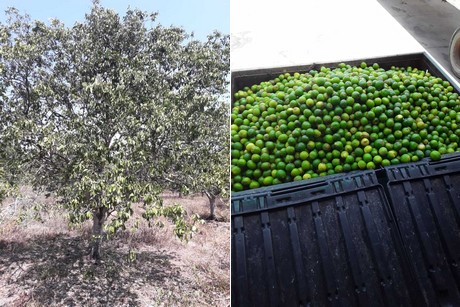
Lime supplies are being threatened by a devastating drought in the growing regions in Mexico. The persistent dryness means that growers are unable to harvest viable fruit, with a large portion of the crop being discarded.
“Mexico is experiencing a drought that is lasting longer than most people have expected,” said Bryanna Sanders of Maglio Companies. “We work with a supplier based in Monterey and they are reporting that the drought is causing long term damage to the trees and subsequent lime supply. Currently, 70 percent of the harvest is being dumped because the limes are damaged and turning brown.”
Wells are running dry It is being reported that very few growers have wells, and even these have already run dry. The trees are suffering stress which could lead to longer-term effects in the future. Sanders said that even if rain were to fall in the near future, it won’t improve the situation immediately, meaning the drought will have a lasting effect.
“The lime trees in Mexico are in desperate need of rain and as a result, they are becoming stressed,” she said. “Of all the growers, only three percent of them have water wells that they use in case of emergencies like this one. However those wells have now dried up as well.”
Larger sizes very scarce Not surprisingly, the market has reacted and prices are climbing. Additionally, the old crop is winding down and it will be several weeks before the new crop is able to maintain more steady volumes. Prices are in the mid $30s and approaching $40. Additionally, growers say there is practically no larger sizes remaining.
“As of now, there is no large fruit available and the 110 counts, 150s, 175s, and even the 200s will start to get tight as the weeks go on,” Sanders observed. “Because supply is getting tighter, prices are starting to become unstable. The soaring prices from Mexico are making it hard for the United States prices to keep up with.”
The U.S. and Japan have announced an agreement in principle on a new agricultural trade deal.
Japan Prime Minister Shinzō Abe and U.S. President Donald Trump jointly announced the agreement in Biarritz, France, on Aug. 25.
Trump said Japan would buy big quantities of U.S. corn, with the deal expected to be signed around the time of the United General assembly in late September.
The agreement will also benefit U.S. exports to Japan of beef, pork, wheat, dairy products, wine, ethanol, and a “variety of other products,” U.S. trade officials said.
U.S. and Japanese officials did not specifically mention fruit and vegetable commodities in their announcement.
“We still have some remaining work that has to be done at the working level, namely finalizing the wording of the trade agreement and also finalizing the content of the agreement itself,” Abe said in a news release.
Abe said pest issues in Japan have hurt production of some farm commodities, which opens the door for purchases of more U.S commodities.
“We believe that there is a need for us to implement emergency support measures for the Japanese private sector to have the early purchase of the American corn,” he said.
U.S. Trade Representative Robert Lighthizer said the agreement includes agriculture, industrial tariffs, and digital trade.
He said Japan the third-largest agricultural market for the U.S., buying about $14 billion worth of U.S. agricultural products.
The trade deal, he said, will open up markets to over $7 billion of those products.
“It will lead to substantial reductions in tariffs and non-tariff barriers across the board,” Lighthizer said. The National Potato Council welcomed the news.
“Creating a new agreement with Japan that preserves benefits previously negotiated under the Trans-Pacific Partnership has been a key objective of the National Potato Council,” Jared Balcom, chairman of the NPC trade affairs committee and a farmer from Pasco, Wash., said in a news release. “We’ve believe (this) announcement indicates that the White House, the Office of the Trade Representative and the Department of Agriculture share that goal and are committed to making it a reality,”
The release said Japan is the U.S. potato industry’s largest export market, with exports totaling $350 million in the past year. With better market access and more reasonable tariffs, the release said potato exports could grow by another $150 million.
The California Walnut Commission also welcomed the news.
“Today’s announcement by U.S. Trade Representative (USTR) Robert Lighthizer that a preliminary agreement includes agriculture is testament to the steadfast commitment of the Administration in bringing fair, equitable and reciprocal trade to our producers,” the commission said in a statement.
Japan is the fourth leading export market for the California walnut industry, accounting for $90 million in annual sales.
South Africa does not have access to key markets such as China and South Korea at a time when blueberry imports are growing phenomenally in Asia. This is because South Africa has not yet complied with the region’s export protocols for the fruit. But certainly its booming blueberry industry is looking to gain access to the Asian markets, with experts saying this will create an additional 12,000 jobs in the sector.
“If we gained access to the Chinese market, for example, we could create an additional 12,000 jobs in South Africa, increasing the industry’s projected employment numbers from 14,000 in 2023 to 26,000,” said Jean Kotzé, the chair of the South African Berry Producers Association.
Data compiled by the association shows that South Africa’s blueberry production is expected to reach a record high of 17,000 tonnes in 2019, up from 11,300 tonnes in 2018.
This will mean an exponential increase in jobs created from 1,000 in 2014 to 8,000 in 2019, said Kotzé. By 2023, the industry expects production to reach 50,000 tonnes which will translate into 14,000 jobs.
“Amid the doom and gloom of South Africa’s recently released unemployment figures, this is a very good story to tell. But the story can be so much better if South Africa’s blueberry industry can gain access to core export markets in the Far East.”
According to Kotzé, the potential to grow the export markets is huge. At present, approximately 70% of blueberries produced locally are destined for export markets. The value of blueberry exports grew from R133m in 2013 to just over R1bn in 2018.
Businesslive.co.za reports that Chinese blueberry imports grew from 2,400 tonnes in 2013 to more than 12,000 tonnes in 2017. It imports berries mainly from Chile and Peru.
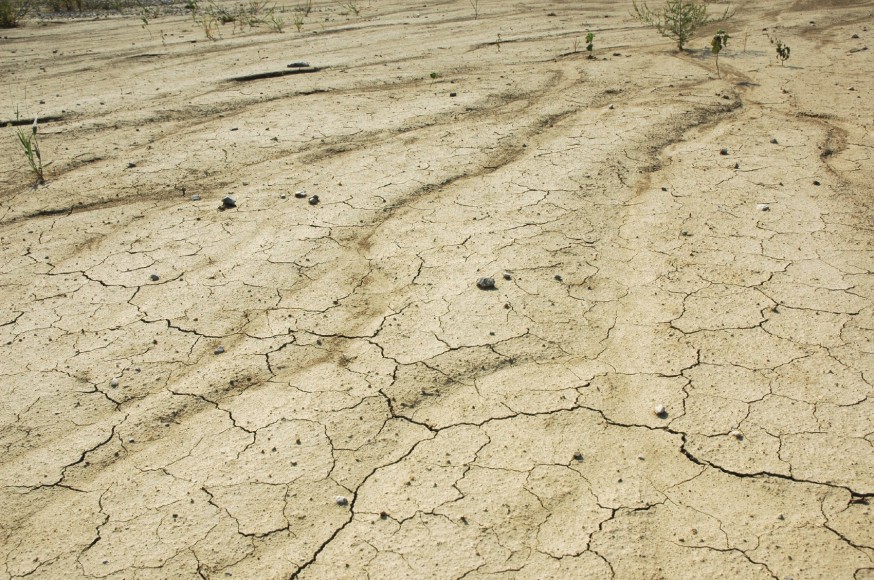
Central Chile is suffering its worst drought in 60 years. This includes the capital of Santiago, home to nearly half the country’s population of 18 million people, as well as the nearby region of Valparaiso.
Experts predict climate change, over-exploitation by agriculture and other factors mean the shortage of water will be permanent. Not only is this changing the lives of farmers and ranchers, but it’s also cutting into revenue from agricultural products sent on cargo ships from Chile to the US.
Santiago and surrounding areas are in the midst of what scientists have called a Mega Drought (MD) – an uninterrupted period of dry years since 2010. It encompasses a broad area with detrimental effects on water availability, vegetation and forest fires that have scaled into social and economical impacts.
Acuelo Lagoon was one of the main water sources for the afflicted areas, but it’s dried up for the first time in modern history. Many farmers’ wells are dried up, too, once able to irrigate crops twice a day. As a result, they’ve been going out of business and searching for new careers.
A WorldCity analysis of the latest US Census Bureau data shows Chile’s trade with the US rose to $13 billion through the first six months of 2019, but this is 4.13 percent below its total trade during the same time period in 2018. While, overall, Chile’s exports increased 4.07 percent, exports of drought-stricken agricultural commodities have taken a different course.
According to freightwaves.com¸ imports of grapes (fresh or dried) from Chile to the US fell 14.6 percent, to $659.91 million, for the same year-over-year period; strawberries, blueberries and raspberries combined fell 11.72 percent to $262.91 million. Among the top five US airports, seaports and border crossings that receive products from Chile, three of them – Port Everglades, Port of Panama City and Port of Philadelphia – had decreased volumes of imports.
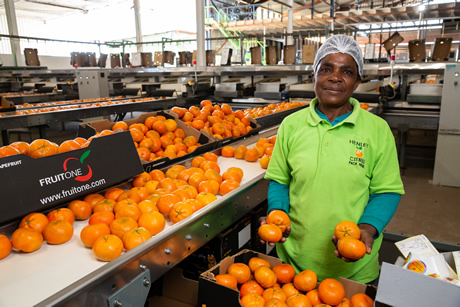
Rain in Argentina, delays from South Africa and Argentina and temperatures in Western Europe in July between 20 and 40 degrees Celsius: citrus sales haven’t been easy. Andres Ribas of Oosterom of Vientosur / FruitOne Europe sums it up.
“It was hard for Argentinian lemons to come in at the start of the season due to the large supply from Spain. There was more space for the lemons after that, but the loads were considerable lower due to the extreme phyto controls and rain,” says Andres. “The South African season is also a logistical drama due to strikes at the terminals and the port capacity with up to three delays per vessel. Of course this situation creates opportunities, but it also causes a lot of headaches trying to meet the programmes.”
“The South African grape fruit arrived on an empty market and went into its traditional decline in recent weeks. Less grapefruit was sent compared to last year, which we will notice over the coming weeks. The varied temperatures in Europe didn’t help the sales. One day was melon weather, while the next called for a hot mug of soup,” laughs Andres. “The stocks have now cleaned up and the consumption is pulling up towards the end of the school holidays. Prices are between 13 and 15 Euro, dependent on the size and the quality in particular.”
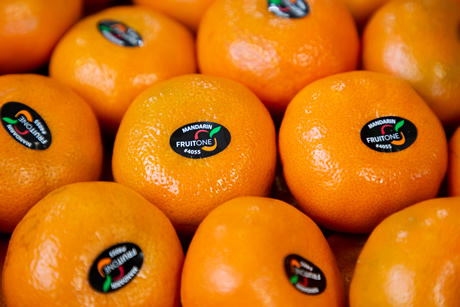
“Mandarin sales were difficult for a long time due to the weather. The sales of the nets was tough. We did sell a lot of Tango and Orri mandarins in the programmes. You see that a lot of people opt for the better varieties, even during the heart of summer. The sales of mandarins was ahead in consumption, but oranges like Navels were lacking, the internal and external quality wasn’t great and the old Spanish supplies were in the way. After a difficult period at the end of July the market is now pulling up a bit again.”
“With the varieties like Midknight and Valencia Late from Argentina and South Africa we expect sufficient pressing oranges of good quality for the programmes. Although the prediction is that the supply of South African pressing oranges will be a lot lower than last year with an even bigger demand from Asia than in previous years.”