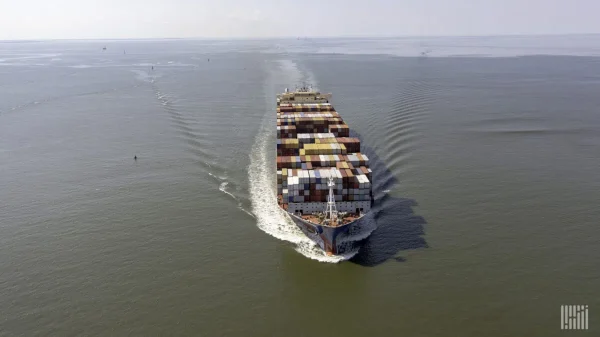
West Coast Port Strikes Remain Unlikely In No Deal Scenario – Report

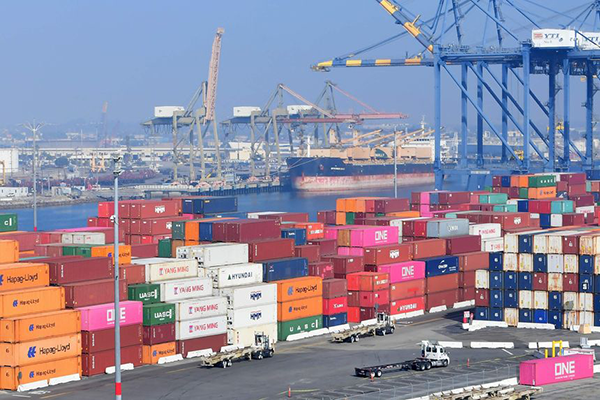
Although negotiations for a new contract for West Coast port workers which started over a month ago are still ongoing, neither side foresees supply chain disruptions.

According to a report by Bloomberg, employers and the union representing more than 22,000 dockworkers at 30 US ports on the West Coast are not predicted to reach a wage deal by the time the current contract expires next month. The negotiations began on May 10.

However, “neither party is preparing for a strike or a lockout,” assured both the International Longshore and Warehouse Union (ILWU), and the Pacific Maritime Association (PMA), which represents more than 70 terminal operators and ocean carriers, in a joint statement Tuesday.  

A collapse of the negotiations would risk a work stoppage during the busiest time of year at the nation’s largest ports of Los Angeles and Long Beach, one that would snarl US supply chains still suffering from an unprecedented crisis sparked by the Covid-19 pandemic.

At stake in the negotiations is no less than the recovery of the world’s biggest economy, already dealing with the most pernicious inflation in four decades, shortages of products ranging from baby formula to air-conditioner parts, and growing fears that another shock could tilt the country into a recession.  

In addition, the sides’ commitment to keeping cargo moving throughout the process would avoid a repeat of the delays and congestion that hampered ports from San Diego to Bellingham, Washington during the 2014 talks that extended into 2015.

President Joe Biden visited the port of Los Angeles last Friday, and officials from the ILWU and PMA met with him to discuss issues “including supply-chain congestion and their shared commitment to reach a collective bargaining agreement that is fair to both parties,” they said. 

The current collective bargaining agreement expires at 5 p.m. on July 1, the parties said, but talks will continue until an agreement is reached. 

From FreshFruitPortal

Peruvian Avocado Exports To Reach 515,000 Tons This Season

Peruvian Hass avocado exports should reach 515,000 tons this season, reflecting an increase of 6.6 percent compared to the 483,000 tons shipped the previous campaign, Juan Carlos Paredes Rosales, the president of the Association of Hass Avocado Producers of Peru (ProHass), told Agraria.

Paredes explained that up to week 17 (April 24) there was already a 20 percent advance of the total campaign projection, with 4,578 containers (each container stores 21.5 tons).

He said the main market for Hass avocado from Peru is Europe, where 70 percent of what is exported goes.

“The U.S. market has little Mexican avocado and little California avocado, so we expect Hass avocado shipments from Peru to grow between 10-25 percent in that country,” said Paredes.

The Japanese market is expected to grow around 30 percent.

In 2021, Peru had 50,699 hectares of Hass avocado, compared to 44,128 hectares registered the previous year (2020). In 2019 there were 38,041 hectares; in 2018, 33,064 hectares; in 2017, 31,563 hectares; in 2016, 29,063 hectares; and in 2015, 27,312 hectares.

From Produce Blue Book

GLOBAL OVERVIEW PEACHES, NECTARINES AND PARAGUAYOS

Peaches, nectarines and paraguayos have remained popular across the globe this season, which many markets reporting that this sustained demand has allowed prices to remain high enough to offset the higher production costs many growers are having to deal with. Only Switzerland seems to suffering from a lack of demand, although for many of the European production regions it is still early in the season and prices could drop as more supply comes onto the market. For now, however, the outlook for many is optimistic.

The Netherlands: Reasonable prices for Spanish stone fruit
According to a Dutch importer, Spanish stone fruit can look forward to reasonably good demand. “Last week it was a bit busier than now, but we can’t complain. Prices are at a reasonable level. Significantly lower volumes were announced. Now, that varies considerably per supplier, but I still foresee enough stone fruit on the market. There are enough peaches on the market. Prices are at a good level. Large sizes are not yet available so many peaches are packed in the 10×1 kg format. I think the prices are still reasonable with a level around EUR 6.50-7 for the large sizes, EUR 6-6.50 for size 28 and EUR 5.50 for sizes 30-32. The price of the packed peaches is around 11-12 Euros, but they come in at 14-15 Euros. The price of nectarines is a bit higher across the board, but they are also a bit less. For paraguayos, the prices for the best sizes (double A) are around 10 euros, the A’s around 9 euros and the B’s around 8.50 euros. The doughnut packaging (10×500 grams) sells for around 8.50-9 euros.”

Belgium: Good demand, but lack of larger sizes of stone fruit
On the Belgian market, there is enough volume of peaches and nectarines for the moment. “Despite the forecasts due to the stormy weather, there is still enough to come to Belgium,” says a Belgian trader. “However, these are mainly the smaller sizes. The number of large sizes is slightly more disappointing. The demand has increased significantly in recent weeks. The beautiful weather of recent weeks has done this extremely well, so that we can speak of good prices for both products”.

Germany: Noticeably higher prices than in previous years
The predominantly Spanish deliveries of nectarines and peaches to the German market have apparently increased this season. Italian batches followed in terms of importance, but overall they played only a small role. The first French offers were also entering the market at €4.- per kg in northern Germany, which means they were at the top of the range in terms of price. Turkish imports have so far only been found in southern Germany, the first Greek deliveries are expected in week 24. In general, demand could not keep up with the expanded availability. The prices were noticeably higher than in previous years.

Switzerland: Tough start to the season
According to a Swiss importer and retail supplier it has been a tough start for the Spanish stone fruit season so far. “Demand could be better, but what is bothering us most is the poor quality caused by heavy rainfall in the Spanish growing regions. The brix value of the first Spanish nectarines, for example, was far below the preferences of modern consumers.”

France: Large volumes and dynamic consumption
The French production of peaches and nectarines this year amounts to 200,000 tons, close to its normal potential and thus a marked increase of 20 % compared to 2021. In Languedoc and Roussillon, this year’s frosts had little impact. Roussillon was relatively spared. The orchard load is reduced, with light thinning. Yields are higher than last year. A replanting dynamic seems to be taking place in the basin. In PACA, the frost caused little apparent damage to the orchards. Production is higher than in 2021, but 8% lower than the five-year average, whilst the surface areas remain stable. In the Rhone Valley, the impact of the frost was less significant than last year, as it was mitigated by the wind and cloud cover. The Baronnies and the Eyrieu Valley in the Ardèche are nevertheless the areas most affected.

A level of production that should allow the French industry to achieve a good campaign 2022, a year marked by a strong earliness and an entry into the campaign with relatively large volumes. The range of the four colours (yellow and white peaches and yellow and white nectarines) is complete in all French regions.

On the market side, the weak Spanish competition benefits the French fruit and the good weather conditions have allowed a very good quality of the products while favouring the demand. Sales of peaches and nectarines accelerated last week and operations to boost sales will be set up next week in most French retailers.

Italy: Demand higher for peaches and nectarines higher than supply
A major Italian operator says that the quantities of peaches and nectarines are still low, especially the nectarines in both southern and northern Italy. The full harvest of the Big Bang variety started a few days ago, so volumes are expected to increase. Demand is currently high and not fully satisfied. With the arrival of larger volumes, the product should be able to be placed without problems due to low supply from Spain.

At the moment, prices are good. For peaches there is a good balance, nectarines have prices 20 cents/kg higher than peaches. The coming weeks will be confusing due to the fragmentation of supply and production areas. Northern and southern areas coincide in terms of ripening due to very high temperatures in the South that compromise size and firmness. There are good hopes for July and August.

According to data, 69.5% of Italian households have bought peaches at least once (fixed or variable weight) in the last 12 months ending April 2022. The purchase frequency is also interesting at 7.7 average purchase acts per year per household, with an average purchase per act of 1.34 kg.

Spain: Good prices outweigh increase in production costs for Spanish growers
The Spanish peach, nectarine and paraguayo season has already finished in the early producing areas such as Seville and Huelva. The campaign has been marked by good demand in European markets, so prices have remained at a good level, and the final result will be positive even though the production costs increased 30%. Murcia is now in the final weeks of its season, with a harvest reduction of around 20% and Extremadura is now in full swing with normal volumes. In this region growers tend to switch plums- the main crop in this area- for nectarines and paraguayos. So far, the growers and exporters from these regions report a good demand and prices that are covering the raise of costs and bringing good profits. The first peaches and nectarines are also starting to be harvested now in some early areas in Catalonia, where the production will be reduced by about 70% and stand at 166,910 tons. This will be the second consecutive year in which weather incidents have seriously affected the Catalan production. The frosts at the beginning of April ruined a large part of the production, as well as in the region of Aragon where about 60 to 70% of the harvest has been lost. This was the most severe frost in the last 40 years. Also, in April (on the 20th and 23rd), 2 hail storms damaged some productive areas. The first one did not cause significant damage, but the second one affected about 500 hectares in Catalonia. Both Catalonia and Aragon represent more than 70% of the Spanish production. Therefore, there will be for yet another year, an imbalance between supply and demand from mid-June onwards. There will be much less supply of peaches and nectarines and the price is expected to remain high. For this reason, large distribution operators should have been planned their orders well in advance this year in order to have enough product on their shelves.

North America: High prices to offset increase in production costs
Stone fruit supplies are strong right now as we head into the heart of the season out of California.

One grower-shipper is finishing up apricots in about 10 days but are continuing with production on yellow-fleshed and white-fleshed peaches and nectarines and plums.

“There are similar volumes to last year as an industry,” he says. “We are between seven to 10 days ahead of last year which is more in line where the normal timing should be.” The grower-shipper has a longer season which begins the last week of April and has fruit available until the last week of October. “We have a lot of late yellow peach varieties that come into production in September and October so it’s fresh fruit, not storage fruit,” he says.

Sizing also seems to be developing. The season started off with fruit approximately one size down from where the grower would normally like to see it. “But the sizing is improving as we get into the mid-season varieties. We’re now in line with where historic trends normally are,” he says, adding that sugar levels and flavor are also at optimum levels right now.

While California is the largest state that produces stone fruit, there is also regional production from Georgia, South Carolina, Virginia, New Jersey, Colorado, Washington and British Columbia, Canada. “Some regions like Georgia and South Carolina are producing some volume right now but their production is down due to weather impact that they had during the winter. That’s making our season a little bit more appealing,” says the grower-shipper.

That’s helping make demand stronger for California stone fruit. “Shipments have been pretty good versus historical so we’re happy to see people consuming stone fruit in general,” he says.

And while pricing has been stable since the start of the season, pricing is stronger than last year, partly to absorb the additional production input price increases that the industry has seen. “Pricing is maintaining some stability through the first few months of the season. We’re hoping to continue holding that pricing stability,” he says.

Looking ahead, he expects volumes to increase dramatically on yellow peaches and yellow nectarines in the coming weeks and says retail promotions will start building for the July 4th holiday. He hopes promotions continue from there throughout the season.

From Fresh Plaza

Industry Reacts To White House Ocean Shipping Bill Signing

In light of the final passage of the Ocean Shipping Reform Act, International Fresh Produce Association chief public policy officer Robert Guenther issued this statement: “The bipartisan Ocean Shipping Reform Act (S. 3580) provides much-needed relief for our nation’s ports, in particular for the fresh produce industry that relies heavily on reliable, efficient ocean transport of fresh produce.

President Joe Biden and IFPA’s Cathy Burns.

This legislation empowers the Federal Maritime Commission to broadly regulate ocean shipping and ensure the timely delivery of perishable goods at all levels of the fresh produce supply chain. At a time of rising costs and high inflation, we applaud the passage of the Act and relief it will ultimately bring.”  

Right: President Joe Biden with U.S. Apple President Jim Bair.

U.S. Apple President and CEO Jim Bair attended a signing ceremony at the White House for the Act. Apple leaders from across the U.S. have long advocated for an overhaul of ocean shipping laws to help clear port blockages and prevent foreign ocean carriers from leaving U.S. ports with empty containers rather than taking on U.S. export cargo.

“There haven’t been many export victories for apple growers during the past four years between the ongoing trade wars, the resulting retaliatory tariffs and our lost markets, so it was gratifying to see President Biden sign the Act into law,” said USApple President and CEO Jim Bair.  

According to USApple, year-to-date apple exports to all destinations are down 34 percent compared with 2018, with apple exports to India – then the number two market – down 98 percent.

The Ocean Shipping Reform Act, passed unanimously by the Senate and with a large bipartisan majority in the House, is the first time since 1998 that Congress has passed legislation to overhaul ocean shipping laws. The bill mandates the Federal Maritime Commission to complete rulemaking defining unreasonable refusal of U.S. exports. According to USApple, the bill’s language isn’t as tough as groups representing agriculture shippers would have liked. While work remains to ensure the act’s implementation brings the needed changes, the association says it is a step in the right direction.

“Congress has been spending a lot of time fighting, as we see in the daily news, so it’s heartening to see them come together and do something positive for U.S. agricultural exports,” said Bair. “Work remains to be done, but if this calms the headwinds even a little, our growers will benefit.”

From Fresh Plaza

State Of The Grape Market – June 2022

Decofrut presents the State of the Market for table grapes during April, looking at supply, demand and pricing for three markets over the last month- in the U.S., Europe and China.


China

Despite the continuation of the zero covid tolerance policy in China, there was a better outlook in Shanghai over the last month. The port and transport situation is returning to normal capacity, gradually lifting sanitary measures in the last weeks of May and hopefully back to normal by the end of June.

Approaching the end of the Chilean grape season, lower arrivals and openings of imported grapes in the Chinese markets were recorded during the month compared to April. The red seedless and Red Globe grape groups once again dominated the market, displacing the supply of white seedless grapes, which suffered a sharp decline, and black seedless grapes.

The Chinese grape market continues to be supplied predominantly by Chile, followed by Australia, with small lots from Peru and South Africa, among other countries. Sales remained good in general, varying from good to fair for Australian red seedless and black seekless grapes.

In Guangzhou, similar to the previous month, the varieties with the highest volumes available were Red Globe and Crimson Seedless, followed by NSS grape varieties such as Autumn Royal and Sweet Favors. For white seedless grapes, the group with the lowest volumes on the market, the dominant varieties were Autumn Crisp and Sweet Globe.

Looking at the last month (week 18 to 21), quotations of the white seedless grape group averaged US$4.29/kilo, showing a 3% increase compared to last month (week 14 to 17), and a 6% decrease compared to the previous season, in the same period. Red seedless grapes traded at US$2.91/kilo (-21% monthly; +3% y/y); Red Globe closed at US$2.18/kilo (-24% monthly; +2% y/y) and finally, the black seedless grape group traded for US$2.90/kilo (+1% monthly; -29% y/y).


United States

During the month of May, supply was mainly composed of Chilean table grapes, although Mexican table grapes were on the rise, with increases mostly towards the end of the month, especially in seedless white varieties.

In general, Chilean fruit recorded a wide heterogeneity in terms of condition, dividing the market and prices, amid continued delays. That said, logistical problems were alleviated somewhat with respect to last month in conjunction with lower arrivals.

Regarding the prices for the month, imported seedless white beans averaged US$3.37/kilo, with a monthly variation of +4% and annual variation of -14%; in seedless red beans the average was US$2.10/kilo, varying by +9% compared to April and -19% compared to 2021, same month; in black seedless the average price was US$2.23/kilo, increasing by 2% monthly, while registering 19% below the previous year; in Red Globe the average price was US$2.31/kilo, with a monthly difference of -5% and annual difference of -6%.


Europe

While India finished packing its fruit at the beginning of May, Chilean grape shipments decreased significantly. South Africa, on the other hand, completed its supply with fruit from the end of the season.

As the weeks went by, the market slowed down considerably, due not only to the fact that demand for this fruit dropped, but also to the fact that the fruit was not optimal in terms of quality and condition. Consumers favored purchases of seasonal fruit like stone fruit, which was fresher.

It was difficult to find good lots in the market, so buyers were willing to pay for them. The quality and condition of the fruit conditioned the market, putting pressure on sales and forcing the grapes to be sorted and repacked.

Poor fruit sold at a slower rate than better quality and condition, hampering sales overall. The main problems reported were grapes with rot and loose skin. Towards the end of the month, the market became clearer and grapes from Egypt began to appear, in a later start to the season. For the rest of the European countries, such as Spain and Italy, a normal start is expected within the estimated times.

Finally, as far as selling prices are concerned, as a reference, during week 21 of 2022 the good quality, general condition, seedless white and seedless red overseas varieties in the punnet format were offered at respective averages of €2.20/kilo and €2.45/kilo; while, in the case of Red Globe, quotations averaged €2.05/kilo (8.2 kilogram box) and €2.40/kilo (4.5 kilogram box).

Finally, regarding sales prices, as a reference, during week 17 of 2022 the white seedless and red seedless overseas varieties in punnet format were offered at respective averages of €2.20/kilo and €2.30/kilo; while, in the case of Red Globe, prices averaged €2.25/kilo (box of 8.2 kilos of grapes from Chile) and €2.10/kilo (box of 8.2 kilos of grapes from Peru).

From Fresh Fruit Portal

Western Growers Member Jack Vessey Details Fertilizer Challenges

CALIFORNIA – Fertilizer prices continue to fluctuate, as buyers of the commodity have seen startling highs. According to a report from Bloomberg, although fertilizer prices are dropping, we’ll still be feeling the market squeeze.

The news source noted that prices for certain fertilizers are still 87 percent higher than they were a year ago, and supply chain issues still dog global markets.

A member of Western Growers, Jack Vessey, President of Vessey & Company, spoke with me about the recent fertilizer shortage that has brought hassle to multiple growers across the States.

Jack Vessey, President, Vessey & Company

“We’re just completing our budgets right now from the desert winter vegetable season, and fertilizer is a big component of that budget. And budgets are looking anywhere from 15 to even 20 percent higher than last year. That also counts for our overall growing costs,” Jack explained to me, a situation that is all too common for suppliers these days.

Jack noted that riding the wave is par for the course in instances like this, remarking with a ruefulness I know too well that he has to feed the crops.

“No matter what we’re doing, we’re always looking at different options and different ways to do things to lower our cost per unit. But there’s only so much we can do on that end. We’re looking at different options. Can we get by using less? Can we apply it differently? Yeah, we’re obviously talking crazy and trying to figure out how to do the best job we can with less. But at the same time, you’ve got to make the crop. That’s our number-one goal, to make the crop and keep the cost per unit as low as possible,” Jack said.

Prices also shift per day, so planning is especially difficult. Jack commented that normally you could get a verbal commitment on what prices to expect come the fall, but no one is willing to do so.

Working alongside his production team, Jack is doing all he can to plan for the fall. He explained to me that he isn’t worried about having product—only what the price level will be.

From andnowuknow

“Encouraging Signs Of Normalization” For Shanghai’s Ports

On June 1, Shanghai started to lift travel restrictions and get people back to work. As a result, port operations appear to be going back to normal.

However, according to a report by The Maritime Executive, analysts are still concerned about the ripple effect in the global supply chain and the challenge ports in Europe and North America will face as a consequence of the increase in volumes.

In an analysis of port performance from June 1, VesselsValue said that “congestion at the port is almost back to normal”, citing “many encouraging signs of normalization”. Their analysts observed waiting times for containerships and tankers declining by more than half in comparison to peak congestion in April.

“At the height of reported Omicron cases, average waiting times stretched to 66 hours in late April,” reported VesselsValue. However, “waiting times have now shortened to 28 hours, just an hour longer than the top end of the range seen at this time of year over the past three years.”

Last week, Chinese officials stated that Shanghai, which normally handles nearly four million TEU a month, had a throughput of just over 3.4 million TEU in May. So, reduced volumes are likely to have caused some of the fall in waiting times. 

Windward’s AI data shows that the number of port calls made by container vessels to Shanghai in May dropped 16 percent versus May 2021, down from 1,263 to 1,062 containership calls in May 2022.

Furthermore, based on a snapshot of vessels waiting outside Shanghai on June 5, “the Shanghai area is far less congested (versus Ningbo), which is not surprising, given the relatively new development of the partial re-opening”, the maritime AI intelligence firm emphasized.

On the other hand, despite the decline in the number of vessels and with the congestion for tankers back to normal and for bulkers, below average, VesselsValue suggested that waiting times for containerships are still slightly above the norm.

“Average waiting times for containerships, having peaked at 69 hours in late April, are now down to 31 hours, still some 4 hours longer than the higher end of the range seen for the time of year over the last three years.”

Moreover, Bloomberg’s Shanghai-based reporters perceived that truck availability has improved, with traffic into the city improving, meaning that reopened factories will be able to send their export goods to the port.

Windward concluded that “assuming that trucking capacity returns to normal, we can expect congestion to pick up significantly during June, as factories are starved for raw material and a significant number of empty containers will need to be inserted into the Shanghai area supply chain to cater for further increases as the peak season sets in”.

From Fresh Fruit Portal

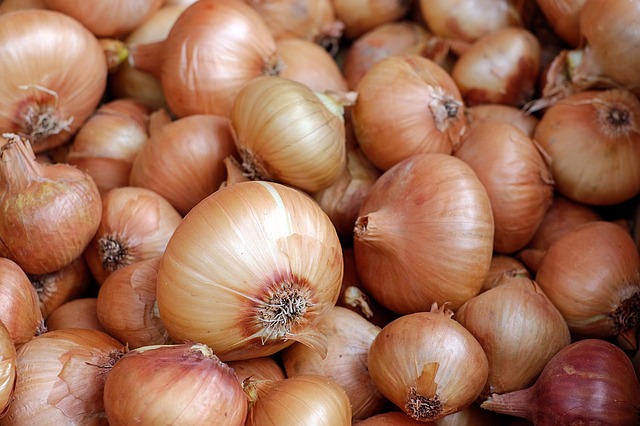
Onion Market And Crop Update

MARKET

CA Imperial/ Central Valleys/Texas/Mexico/Vidalia:

Dan Borer with Keystone Fruit Marketing in Walla Walla, WA, told us on June 1 that demand is typical for early June. “If you look at the numbers over the last couple of weeks, shipments are down,” he said. “That’s pretty typical for early June. Plus, there is transitioning going on and you might say a little bit of a gap with Texas and Mexico pretty much finishing up. Then you have the Northwest storage shippers finished, which makes more room for the fresh onion market.” He added, “We are moving up in California from the Imperial Valley to Central California, and we are moving good volumes of Vidalias, too. The major growers in Vidalia should have full storages that will provide good supplies for the summer, and that’s encouraging for East Coast customers.” Dan went on to say, “It does seem like buyers are making decisions based on freight costs, and that is no different from other produce categories. Once you weigh the costs, any produce buyer, including onion buyers, is going to try to reduce freight costs and try to get onions as close to the destination as possible.” On the market, Dan said it’s steady. “Pricing has been good, and we can’t complain if we can sell less for more money, right? So the market is steady now, and the pricing is good. As the summer goes along and more onions are available, that could flatten out some, but as I said, there really isn’t much to complain about.”

Imperial Valley:

John Vlahandreas with Wada Farms reported in from California on June 1. “Demand for Troy Caston’s Imperial Valley onions is good this week,” he said. “We have this week and next, and then we will be finishing up. We have about 20 acres of yellows in the field, and so we are moving jumbo and medium reds and jumbo and colossal yellows.” John continued, “We’ve been putting in about 10-hour days and packing at night to get through everything, only taking Monday off, so we’ve been able to keep up. Packing at night makes it easier for trucks, too, because lately trucks have been arriving late in the day. That way the timing ends up working out well for us.” On the market, John said it’s steady. “All season long we’ve had a good market, and the growers have been able to make some money, so we really don’t have any complaints – it really has been a great season.” He concluded, “We’ll just have to see how the rest of the summer plays out and then into the storage stuff. After we wrap it up here at Caston Farms, we’ll be moving up to Five Points and selling a little out of New Mexico too.”

Five Points, CA/New Mexico:

Jason Pearson with Eagle Eye Produce in Nyssa, OR, us on June 1 that demand is good this week. “We are moving quite a few jumbo reds and yellows out of New Mexico and all sizes and colors out of the Five Points/Heron region of California,” he said. “New Mexico is getting ramped up. We started there last week, and the quality out of both California and New Mexico is excellent.” He continued, “The market has remained steady, too. Knock on wood that we can hold it. And with more onions coming on, we need to keep from dropping our drawers just to sell onions. There isn’t any need to.” On freight, Jason said trucks are available. “You can get trucks, but they are expensive, and with fuel prices continuing to escalate, that’s not going to change any time soon.”

Idaho:

Rick Greener with Greener Produce in Ketchum told us on June 1 that his team is selling onions out of California, Arizona and New Mexico, with a few out of Mexico. “Well, we wrapped up Texas, and there is just a little bit coming out of Mexico,” he said. “We have good demand this week, and buyers are looking for all colors and sizes.” He continued, “The market is good, too – steady and holding. The quality has been ‘summer goodness.’ We are making good deliveries and inspections, but it never ceases to amaze me that when I send photos of summer onions every April, some buyers can complain about the skins. But they are summer onions, dude! The quality is good.” When asked about freight, Rick said it’s about the same. “Looks like rates might be trending up, but at this time in 2020, during the pandemic, the rates were higher, so I guess that makes it OK. You can still get trucks, and they are expensive, but this is nothing new.” Rick also noted that he is currently taking contracts for storage season.

New Mexico:

James Johnson with Carzalia Valley Produce in Columbus told us on June 1, “New Mexico is late and getting a slow start. Seems like sizes are smaller, too, because of it.” He added, “Quality is excellent in most lots, with only a few seed stem lots that I’ve seen. All three colors plus sweets are shipping.” James said he’s looking at finishing the New Mexico season mid-August.

CROP

Walla Walla:

Dan Borer with Keystone Fruit Marketing in Walla Walla, WA told us on June 1 that the Walla Walla sweet onion crop is progressing well. “Everything is so green and lush,” he said. “We have had a little cooler weather, and the moisture we’ve received has been good for the crop. It’s about as beautiful as I have ever seen it here, and the fields look really nice.” He went on to say, “We expect to have a very good crop, and we are looking forward to having the volumes necessary for the July 4th holidays. With buyers trying to avoid high freight costs, we expect we will have good movement on Walla Wallas in the West, so we are in good shape for mid-June to start up.” Many thanks to Dan for sending the beautiful Walla Walla crop photos.

Michael Locati with Locati Farms and Pacific Agra Farms told us on June 1 he expects to start harvest around June 10 and begin shipping by June 14, a bit later than he initially thought. “The cool weather set us back a little,” he said, noting the onions look great and quality is looking excellent. “It’s getting warmer now, and that’s what we need,” he said. In addition to the traditional Walla Walla Sweets, Michael also grows Rosé Walla Walla Sweets, a red variety of the famed onion. “They’ll be ready a little later than the others, and we’re hoping to have them by July 4,” he said. 

Idaho-E. Oregon/Washington

Jason Pearson with Eagle Eye Produce in Nyssa, OR, told us on June 1 that Eagle Eye’s Northwest growers’ crops are coming along well. “We are a bit behind due to the cooler weather, but with a few warmer days, we should be able to catch up quickly,” he said. “I will say that we have plenty of onions planted, and so we’ll have good availability. And we don’t anticipate any gap when we transition to the Northwest. So the summer is shaping up well for us.”

From OnionBusiness

Agronometrics In Charts: Spring Freeze Leaves California Blueberry Growers With Reduced Crop

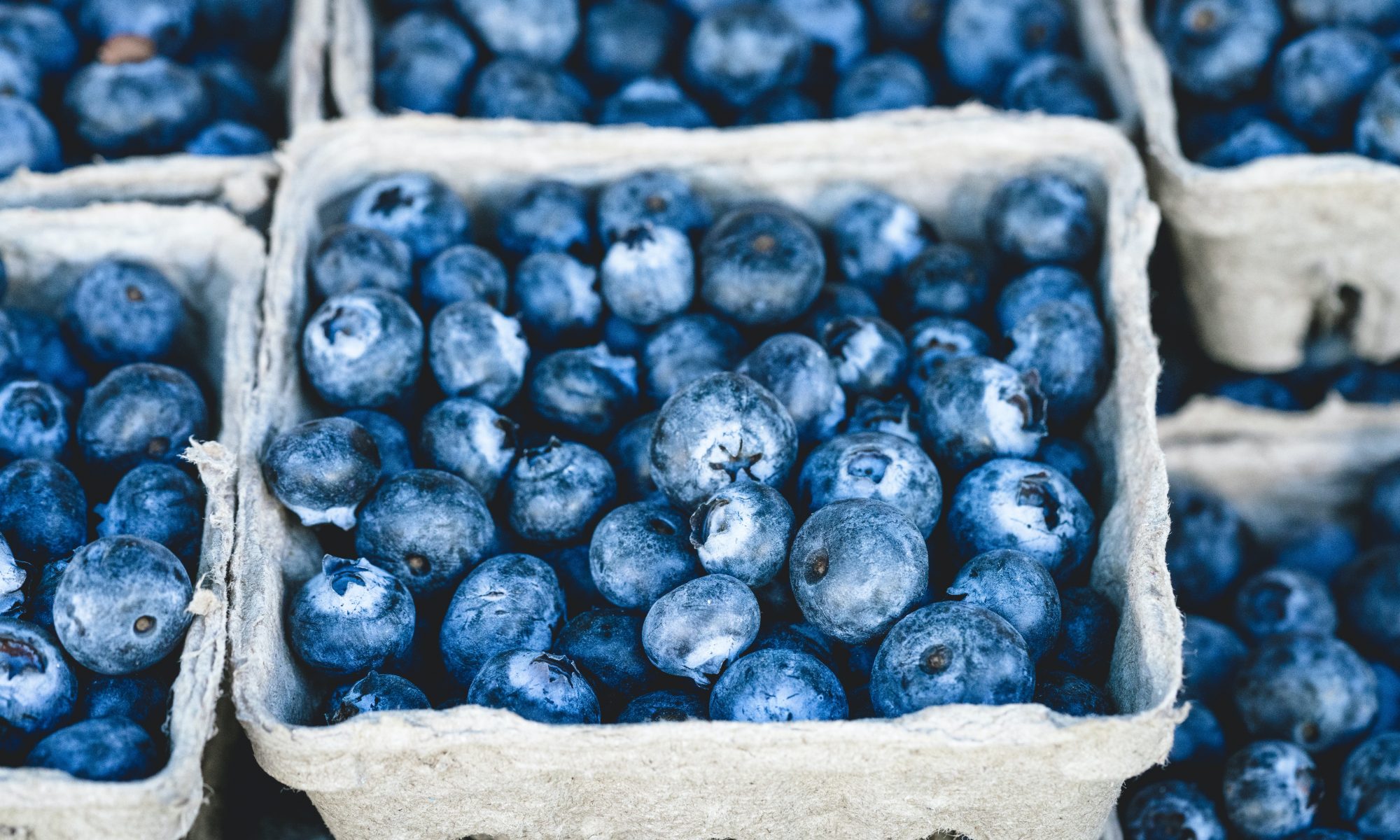
California blueberries are harvested from more than 5,000 acres in the state.Owing to spring frost and hail, some California growers are picking a smaller crop for blueberries this year. According to estimates by the California Blueberry Commission, farms will produce 55 million pounds of the fresh berries this year, 15 percent lower than its original projection of 65 million pounds. 

The U.S. Department of Agriculture reported the 2021 crop at 74.5 million pounds compared to 79.3 million pounds in 2020. The weather related damage hit some farms in some locations especially hard, with others escaping unscathed. 

Commission Executive Director Todd Sanders described the weather-related damage—which also affected other state crops—as sporadic. Farmers in Fresno County were able to dodge most bullets. In contrast, Butte County grower John Carlon, who farms organic blueberries in the foothills east of Chico, experienced a total crop loss from the freeze. 

He operates one of the oldest blueberry farms in the state, growing older varieties that came from the East Coast. For the first time in 32 years, he will have almost nothing to harvest. Because of the dry winter, Carlon said he did not have water from a pond that feeds overhead sprinklers for frost protection. 

Warm temperatures before the freeze advanced flowering, pushing his crop two weeks ahead of schedule when the freeze hit. Even though it was limited to one night and about an hour, he said it was “enough to literally take out our entire crop.” 

The projection for the total U.S. highbush blueberry market in 2022-23, which includes domestic and imported blueberries, is estimated at 1.5 billion pounds, according to Kasey Cronquist, president of the Folsom, Calif.-based U.S. Highbush Blueberry Council and the North American Blueberry Council.

That’s up 13.2% over the 2021-22 season. Including the lowbush projections, the total volume projected is more than 1.8 billion pounds in 2022, compared to 1.6 billion pounds in 2021. 

This season, peak recorded volumes for Southern California were 272 K Kgs in week 11. As for Central California, a peak volume of 2.4 K tonnes was recorded in week 21.


(Source: USDA Market News via Agronometrics. Agronometrics users can view this chart with live updates here)

(Source: USDA Market News via Agronometrics. Agronometrics users can view this chart with live updates here)

Pricing this season has ranged from $16 per package in week 19 to $20 per package in week 21. Owing to the lower incoming volumes, prices this season have been higher on average, compared to 2021. 


(Source: USDA Market News via Agronometrics. Agronometrics users can view this chart with live updates here)

To mitigate pressure from the domestic market, the blueberry commission is concentrating on expanding its opportunities globally. About 25% of the California state crop is now exported.

Canada and Taiwan have been top export destinations for California blueberries. 

The U.S. gained market access to Vietnam in 2019 and to the Philippines and China in 2020. California, Oregon and Washington recently received market access to Chile and are also hoping for market access to South Korea soon. 

Production wise, advancements in mechanization will help lower labor costs going forward.

From FreshFruitPortal

Shipping Operators Add New Containers As Port Delays Continue; Gene Seroka And Lars Jensen Detail

CALIFORNIA & SHANGHAI, CHINA – Last week, we reported delays were seen at the Shanghai port in China, causing a decline in cargo volume at the Port of Los Angeles in California. While the lockdown was expected to relax on June 1, news has surfaced that ship operators are trying to add millions of new containers as boxes are stuck on liners and at ports as shipping moves into its busiest period.

Gene Seroka, Executive Director, Port of Los Angeles “Importers are now bringing in cargo just in case, not just in time, and it makes up for more boxes sitting at the port,” said Gene Seroka, Executive Director of the Port of Los Angeles. “They will continue to be tight until early next year if we don’t increase the velocity of getting them off the ships and off the port.”

As The Wall Street Journal reported, ship brokers and consultants estimate about 12 percent of the world’s box ships are stuck outside congested ports for weeks longer than normal, and inland distribution—especially in the U.S.—is still hampered by a lack of trains, truck drivers, and limited warehousing space. Further along the supply chain, rail drivers and wagons are seeing a slowdown.

As pandemic shutdowns continue in China, news has surfaced that ship operators are trying to add millions of new containers as boxes are stuck on liners and at ports as shipping moves into its busiest period.

This increase in volume follows as big American retailers such as Walmart and Amazon see surging shopper demand for Asian imports, continued the source.

Lars Jensen, Chief Executive Officer, Vespucci Maritime“At export ports, the Shanghai ships wait longer to get loaded, and at import ports like Los Angeles, they are stuck because there is no space at container depots,” said Lars Jensen, Chief Executive of Denmark-based consulting firm Vespucci Maritime. “There were enough containers and a lot more were added, but it won’t help if every part of the supply chain moves slower.”

While there are still concerns about timing along the supply chain, there are some positives coming to light. For instance, noted the source, containers are easier to be obtained, and the line of ships waiting to dock at Los Angeles and Long Beach is around 30, which is down from more than 100 back in January.

Ship executives have also commented that the added container volume has helped keep freight rates this year at an average of $8,000 per box on a ship from China to the U.S. West Coast. That rate is less than half the freight cost from late last year.

From andnowuknow

GLOBAL OVERVIEW ORANGES

A look at the global orange market paints a varied picture. Generally speaking, there seems to be no shortage of oranges in most production countries, though both South Africa and Spain had a delayed start to their seasons, which hasn’t done prices any favours. The effect of the Russian invasion of Ukraine is also being felt strongly, particularly on the European market, with countries like Egypt and South Africa turning to this market after losing their markets in Russia and Ukraine, increasing volumes and driving down prices. Logistics and the rising cost of living have also affected sales in some countries, but not all is doom and gloom for oranges; Italy has experienced a good season, as has France, whilst Australia may be on the brink of accessing new markets for its citrus.

Netherlands: No shortage of oranges
The sales of oranges are particularly quiet at the moment. “Apart from the lemons, this applies to the whole range of citrus at the moment,” explains a Dutch importer. “At the moment there are still enough oranges from Egypt and Morocco on the market. There are quite a lot of coarse sizes from Egypt in the market, also because they are partially missing out on sales to the Ukraine and Russia. Spain is now sending the last Navel types and has started with Valencia. Spain has had bad weather and I can hardly estimate what impact this will have on the harvest, but it is of course never beneficial to the quality of the fruit. South Africa is also starting their harvest. However, we are reluctant to start because of the large supply, and moreover, the colour and taste of the South African oranges is not yet optimal. Only when they have a good colour and taste, will there be a market for them here. All in all, there is no shortage of oranges, and the prices reflect this.”

Germany: Stable prices for different varieties
A wholesaler from Southern Germany is currently sourcing oranges from Spain, Egypt and Morocco. From Egypt he has juice oranges, while from Spain he offers navel and navel late oranges with juicy and aromatic qualities. The Spanish season started in November and is slowly coming to an end, while the Egyptian orange season began in week 18/19. He is currently able to market two to three tons of oranges per week, which are delivered by truck. In terms of prices, there have been no significant increases compared to last year, with about 0.10 euros more per kilo, according to the wholesaler.

Compared to last year, the average price in week 20 for the Lane Late variety from Spain has hardly increased in Germany with 98.00 – 115.00 euros per 100kg, depending on size. The same is true for the variety Salustiana with prices ranging from 98.00 – 113.00 euros per 100kg, with sizes 5/6 and 7/8 also being offered this year.

While at the same time last year no blond oranges from Israel could be offered, this year average prices of 136.00 – 178.00 euros per 100kg can be found for sizes 1-6. Spanish blond oranges, meanwhile, are at 100.00 – 115.00 euros per 100kg.


Italian Tarocco oranges have remained stable in recent weeks at 195.00 euros per 100kg for sizes 1-2 and 188.00 euros per 100kg for sizes 3-4. At the same time last year, this variety has not been sold. Prices for Egyptian Valencia Late also remained stable in Germany and range from 73.00 – 87.00 euros per 100kg, with a comparable price development to last year.  

France: Good sales and stable consumption
The French wholesalers finished the Maltese orange from Tunisia at the end of April/beginning of May and followed up with the Valencia orange from Egypt. Today there are still some oranges from Morocco. The Spanish table oranges are ending and it is the turn of the late varieties. The orange from Portugal is also coming to an end. 

There are many origins on the market at the moment but sales are good and consumption is stable. Prices for Valencia on the Rungis market are between 0.80 and 0.85 cents and the oranges between 0.60 and 1.30 euros.

Italy: Favourable orange season
In Italy, the orange season was generally favourable, with volumes that weren’t exciting, but produced above-average prices. Performance was positive both in the Jonian areas for the Navel varieties and especially for the blood varieties of the Piana di Catania. The Sicilian Valencia campaign was more subdued, and it is coming to an end in the next few weeks.

77.4% of Italian households bought oranges at least once in the last year ending in February 2022, according to the permanent observatory of the GfK Consumer Panel. The frequency of purchase is very high at 9.8 average acts per year per household, although this is down from last year (-4.5%) and two years ago (-7.8%). Households spend about €3 per buying act to purchase oranges (down from last year’s peaks, but up significantly compared to pre-Covid: +11.8%) and the average purchase per buying act in volume is 2.23 kg (a fairly stable figure over the last 3 years). 18.6% of Italian households have bought organic oranges at least once in the last 12 months.

Spain: Tough season for Spanish oranges
The Spanish orange is now in the last stage of its campaign, with varieties such as Navel Powel, Navel Barnfield, Navel Chislett and the first Valencia oranges including Barberina, Mid-Knight and Valencia Late, which will last until the end of July.

The campaign started about a month late because Europe still had stocks from the Southern Hemisphere –mainly South Africa- until November. Growers had to sell their fruit and led by anxiety selling prices went down quickly. The orange yields have been high this year and the abundance of small sizes has also pushed and kept the prices down from the beginning. In general, it has been a disastrous campaign for the growers, with prices that didn’t reach the profitability levels. Many growers left the fruits on the trees as harvesting them meant losing money. In addition, the production of third countries from the Mediterranean area such as Morocco, Egypt and Turkey keep growing and so do their exports to Europe. The war between Ukraine and Russia and the logistic problems in East Asia have encouraged these countries to send even more fruit to the EU this year.

Meanwhile, pests and plagues continue to grow in the Spanish orange fields while the EU keeps banning phytosanitary products and doesn’t present efficient alternatives. Most of the Spanish growers and traders have borne the dramatic increase of costs while selling prices have dropped. As a result, Spanish citrus producers have so far experienced a 26% decrease in gross income in the 2021-2022 campaign over the previous campaign, which accounts for 618 million euro less. By citrus groups, the group of oranges (especially of the Navel type: Navelina and Lane Late) is experiencing the largest decrease in income, -58% and 361.4 million euro less in income. The prices paid to citrus growers in the fields have been very low. In fact, many of the late varieties were paid below 10 cents per kilo.

The total consumption in the European Union has fallen again by 3% over the previous year. In 2007, the consumption of oranges in Spain accounted for 15% of the total fresh fruit consumed, while in 2020 it had already fallen to 12%. In 2020, the per capita consumption of oranges in Spain stood at 17.35 kilos, i.e. 16% lower than five years before. In contrast, the consumption of products like avocados, pineapples, lemons, and bananas has grown the most.

Egypt: Egyptian oranges feel the effects of Russian invasion
The orange season is over in Egypt and it was a difficult season. Due to increasing costs and the war in Ukraine, demand was lower in some markets, while prices for the final product increased. Exporters were dealing with low demand in some markets, like the European market. This is due to the competition from Spain and the low price of Spanish oranges, compared to the price of the Egyptian oranges. There’s also low demand from China due to the local production of the Chinese citrus. The most difficult challenge to deal with is the Russian war against Ukraine, which has affected Egypt a lot, because the Russian market takes a lot of oranges from Egypt, meaning this war has affected their supply to the Russian market. Most of the shipping lines have stopped their services to the Russian ports and some of the exporters stopped their operations completely after the war started, as 80% of their production normally goes to the Russian market. The total quantity of oranges exported this year will likely be less compared to last year, because of these challenges.

South Africa: Late start and price pressure for South African oranges
The orange season has been running late, mostly due to rain, and the northern regions (Limpopo, Mpumalanga) are behind schedule in shipping navels (Valencias haven’t started yet).

In every production region an export increase in both navels and Valencias is expected, ranging from a slight increase in Eastern Cape navels to a jump of close to 1.8 million cartons in Valencias and a million cartons of navels in the northern areas.

The navel harvest is well underway across South Africa and a total navel crop of 28.7 million 15kg cartons is expected to be exported in total. In the Western Cape one grower notes that the yield is good, but sizes are on the small side. Most of the early navel crop has so far this year gone to North America (USA/Canada), followed by the Far East and South East Asia and the Middle East. Navels are unusually small in the Western Cape, peaking at count 88. Eastern Cape navel counts look better (counts 64/72).

A Valencia export crop of 58.2 million (15kg) cartons is estimated with the harvesting of the first Turkey and Delta Valencias starting in Limpopo Province from around week 23, peaking over week 30 to week 35. The northern parts of South Africa contribute most to the Valencia crop (whence 42.58 million cartons are expected, versus 40.856 million in 2021).

In the Hoedspruit region there is some concern (not universally shared) regarding uneven fruit set on seedless mid-season Valencias like Midknights and Gusocora, which is ascribed to temperature fluctuations during flowering and fruit set. Mid-season Valencias are primarily grown for China, the Far East and the Middle East. The orange market is looking relatively strong in the Far East with Egypt and the USA that ought to have exited by end of June, which will offer better opportunity for South African oranges, a trader specialising in the East says.

On the European market, a new cold protocol for South African and Zimbabwean oranges could inhibit the orange trade.

The Western Cape now concentrates on the USA and Canada with the expectation that California will end earlier, Morocco and Egypt’s increasingly extended orange seasons are reducing South Africa’s options and Russia’s logistics are definitely impacting on South Africa’s ability to ship early navels there.

In general, in-market prices on fruit are already under pressure and, says an exporter, certainly not compensating for the massive increase in freight costs.

China: Dramatically lower imports of Egyptian oranges
This year the import volume of Egyptian oranges is 70%-80% smaller than last year, with prices being pushed up on the Chinese market due to this smaller supply volume. The overall product movement of Egyptian oranges is rather slow.

The main buyers of Egyptian oranges in China are restaurants and beverage shops. First, they are not that eager to buy import fruit because the procedures and paperwork involved is rather troublesome. Second, beverage shops buy oranges to squeeze them for fresh orange juice, but the trend is currently for lemon-based drinks, so demand for oranges is limited. Third, supermarkets are not that eager to stock their shelves with Egyptian oranges. That is why product movement is slow. It is expected that the import volume of Egyptian orangs to further decline in the coming years. Egyptian exporters are currently looking for alternative markets, and Chinese importers are careful with the volumes they purchase.

This is the harvest season of the South African Navel orange and the product quality and production volume are both quite good. South Africa exports around 3,000 containers of oranges to Russia every year, but export to Russia is currently halted. China would only be able to absorb a fourth or a fifth of that volume at most, so the impact of this conflict on export to China is limited.  

Domestically, at present, the navel orange market is in the period of variety alternation. The supply of navel orange in Lunwan, Zigui is reduced. Towards the end of the sales season, the Zigui summer oranges gradually enters the market. Due to the overall reduction of domestic navel orange supply and the rebound of the pandemic situation in many places, the market demand for navel orange in Lunwan, Zigui is strong.

North America: Rising cost of living affects orange sales
Supplies of oranges look steady right now, with one shipper in New Jersey saying that California is busy finishing up with production of Navel oranges and should wrap up by late June.

Meanwhile import oranges are also well underway. “We have seen a large volume arriving of Moroccan Navels and the last vessel with Maroc Navels is unloading this week,” he says, adding though that there will be one more vessel arriving early in June with Maroc Late oranges, a Valencia-type orange. Uruguay will also begin shipping next month and have supplies until September.

While Navels are in production right now, Valencia orange varieties will follow which include Cara Cara oranges, a type of orange that’s seeing increased demand from consumers.

As for the quality of the fruit? “Overall fruit quality, coloring and brix look good with early fruit peaking on the medium sizes. Larger fruit is currently scarce and this is expected to continue into early July,” says the shipper.

In terms of demand, while it’s steady for oranges, the shipper is starting to see some shifts in consumer consumption of the fruit. “Changes are developing as consumers try to figure out how to stretch the dollars due to inflationary costs and increase costs in all consumer areas,” he says. “The rising costs and the threat of lower consumer consumption of fresh fruit and vegetables is one of the biggest challenges.”

With regards to pricing, no clear market prices have been establish for Southern Hemisphere fruit. “There is a lot of pressure to increase prices due to rising costs and how successful these efforts will be is to be determined. With California finishing late June we should have a good opening for the orange market,” he says.

Looking ahead, the first Navels from South Africa are expected in mid-June and will go through to October. “South Africa is getting off to a slower start but overall Navel volume should be similar to last year,” says the shipper. Then in July, Chile will begin with its supplies which will also go through October.

Chile: Export campaign is at the starting line
In just 6 years, between 2015 and 2021, exports of Chilean oranges rose from 66,611 tonnes to 103,161 tonnes, an increase of 54.9%, according to statistics. At the moment, there are only days left until the Chilean orange export season begins with the first shipments, after a slight delay of one week compared to last year.

“In general terms, this year will be a complicated season for all citrus species”, says an industry representative. “There is the issue of freight, which is much more expensive, and all the problems that go with logistics; in addition, the world has not yet recovered from COVID and its consequences. However, this season there is a greater availability of labour, which will facilitate the harvests as well as packing.”

“Specifically for oranges, this year we are going to have less fruit than last season, approximately 13% less, and we are expecting to reach 90,000 tonnes of exports. The fruit is looking very good, with good sizes and with brix degrees in line with the period”.

The main destination market for Chilean oranges is the United States. Europe has some very specific windows for Chile and Asia is not yet such a strong market for oranges. For Chile, China is a very new market that only opened up a couple of seasons ago and this year they have focused our promotional efforts in the country on lemons. However, Chile is not ruling out the possibility of including oranges in the promotions later on, when the logistical issue is solved.

“The North American market is also traditionally supplied from the Southern hemisphere with oranges from South Africa and Australia, although this origin is much stronger in Southeast Asia and China, due to their proximity. It is still too early to make forecasts about how the season will go and what the level of consumer demand will be; in recent years, COVID has increased the demand for citrus fruit a lot because of its vitamin C content during the pandemic, but we don’t know how demand will react this year”.

Currently in Chile there are around 6,300 hectares of orange trees planted between the IV and VI Regions. “Our export varieties are of the Navel type, although we also grow the Cara Cara, a very successful variety with pink pulp, to which around 500 hectares are dedicated in the country,” they indicated.

Australia: Possible new markets for Australian oranges
The Australian winter citrus season is underway, with the supply of Navel oranges ramping up, with the major retailers selling the variety for between $3.50-$5 at the major supermarkets, which is obviously down from previous months to match the increased volumes with the fruit in-season. Earlier this year, an industry body said it was expecting a “reasonably large crop” in 2022, although there is a chance that there will be a slight level of marked fruit due to unfavourable weather events during the Spring growing season.

But there are also some very good opportunities, for Australian growers and exporters. Federal Government funding for a major project aimed at tapping into the Indian market with exports of high-quality oranges (and mandarins) should start in the coming months. The peak citrus body says with recent years of positive industry growth, it has meant there has been a number of plantings going into the ground, and significant volumes are expected in coming years, and the organisation has been seeking out new premium markets for Australian citrus and says the sub-continent presents a great opportunity. While there are also opportunities stemming from the United States citrus production possibly being a little shorter than normal this year, which could provide markets in Asia and other regions for Australian growers if they can get the fruit there given current sea freight challenges. The Australian industry currently exports up to $540 million worth of citrus around the world, and according to statistics, for the year ending June 2021, out of that total export figure $285.1million (172,416 tonnes) were from oranges.

From FreshPlaza

Logistics Nightmare Dashes Hopes Of Recovery For Chile Table Grape Season

Table grape growers from Chile had hoped to wash away the bad memories of the 2020-21 season and damages associated with weather on that year’s crop,. But now in full swing, Chile’s table grape season harvest has looked better, but supply chain logistics have dashed hopes of a successful recovery. 

The 2020-21 harvest season suffered from rain and the ongoing effects of the Covid-19 pandemic. Estimates at the time put the losses to growers due to rains in the Chilean summer of 2021 at around US $150 million. 

EXPECTATIONS FOR A RECOVERY 

But there was hope that this season would see a recovery. According to projection figures from Asoex released before the start of the season, the harvest should rise by 29 percent over the previous year. Asoex President Ronald Bown said at the time that production should hit around 84.9 million boxes of 8.3 kg. 

“This projection reflects an increase of 14.9% in relation to the 2019-2020 season, and an increase of 29.3% with respect to the 2020-2021 fiscal year, in which production was impacted by unexpected summer rains.”

In terms of varieties, shipments of new varieties are expected to reach 35 million boxes, followed by traditional varieties with 32 million boxes, and Red Globe with just over 17 million boxes.

“Our estimate, as well as the results of previous seasons, clearly show that the Chilean table grape industry is betting on producing new varieties, which have a better reception in the destination markets and allow improving the competitiveness of the national sector,” Bown said.

STORAGE FACILITIES ARE FULL 

Carolina Cruz, President of UVANOVA told the Grape Reporter that “this has been very difficult for table grape growers because the increase in prices for sea shipping and transport has many consequences”.

According to Cruz, the cost increase from shipping has combined with delays and the amount of fruit that can be moved. Now she says that storage facilities are full of grapes, further complicating the season’s results. 

“We are worried about what could happen with the season because there are many factors coming into play. Adding to the problems that we already have from the drought, logistics have been added on, that will define the results in sales, in prices, both of which will be affected”, Cruz said. 

SIGNIFICANT DELAYS IN ARRIVAL 

Ignacio Bolumburu, commercial manager for grapes and cherries marketer  IFG finds himself in a similar position.

“The delays in the shipments have meant that the fruit arrives later, and arrives in worse condition. There is lots of wait time. They are talking about 15 days of delay and it can be even more, and without fail that impacts the condition of the fruit”, Bolumburu said.

Furthermore, Bolumburu said that Asia is also experiencing important delays, adding around two weeks to the regular 30-40 days of transit time. 

Production costs have also been higher. Traditional varieties like Thompson Seedless have been more expensive to produce, which Bolumburu says will also impact the season’s results. 

“This is the third season with problems, it started with Covid, which generated a huge problem in all the markets, then it was the rains. We need a normal season but it has not been that due to the logistical issues. This means losses. The results of the past seasons have been bad,” Bolumburu concluded. 

DELAYS LEADING TO A LOST MARKET WINDOW 

Heading into the season, an early exit of California fruit helped build expectations that the conditions would help improve returns for Chilean growers. This factor opened an attractive window for Sothern Hemisphere table grape growers.

Peru certainly was able to benefit from these market conditions, even with the logistical bottlenecks projected for this year. However following Russia’s invasion of Ukraine, the supply chain was further disrupted. 

“The U.S. market is reacting very attractively, prices in the US are between 30% and 60% higher than at the same time last year,” said  Manuel José Alcaíno, president of Chile-based marketing intelligence company Decofrut.

But in March, it had become clear that this was affecting the availability of shipping lines, and Asoex and other entities in Chile have called for help in alleviating this situation. It’s a scenario that is not just affecting Chile, but nearly all counterseason suppliers from the Southern Hemisphere. 

From FreshFruitPortal

Water Scarcity In The West Could Create Food Shortages

Water shortages that continue to plague California are increasingly affecting the number of acres devoted to growing food. Farmers are making tough choices on which crops and how much to plant in the face of crushing water supply cuts.

“New estimates are emerging on the number of acres without enough water to grow food and it doesn’t look good,” said Mike Wade, executive director of the California Farm Water Coalition. “We believe the state could see as much as 691,000 acres taken out of production this year, a 75% increase over last year and 151,000 acres more than the previous high in 2015.”

Fresh fruits and vegetables, along with strawberries, citrus, peaches, broccoli, rice and tomatoes, are among the crops impacted when farm water supplies are cut off. It’s estimated that up to 40% of California’s irrigated cropland will receive little or no surface water this year.

“When people talk about taking over half a million acres of California farmland out of production, those are just numbers,” said Bill Diedrich, president of the California Farm Water Coalition. “To put that into perspective, for every acre that is left unplanted because of a lack of irrigation water, there is the equivalent of 50,000 salads that will not be available.”

In addition to less food in our grocery stores, it’s expected that the number of job losses on the state’s farms will approach 25,000, with an economic hit to California of about $3.4 billion.

Data from the USDA shows that 80% of U.S.-produced fruits, nuts and vegetables are grown West of the Rockies.

“It is not an accident that so much of our food supply comes from the West and, in particular, California,” Diedrich said. “California’s Mediterranean climate lends itself to abundant food production. If we abandon that, we’re accepting food shortages, higher prices and more imports from foreign countries.”

From The Packer

Mexico’s Expected Heavy And Late Grape Season Raises Question About Transition

Mexico appears to be on track for a repeat of the 2019 season in which the vast majority of table grapes were shipped during June, but with even higher volumes.

Mexico’s Sonora Grape Growers Association (AALPUM) has estimated that there is a record crop of 25.5 million boxes, putting it well above last year’s 21.3 million and a few percentage points up on the 23.6 million exported in 2019 – the current record.

With less than 600,000 boxes of Sonora grapes exported by the end of week 19, the region’s growers are now entering into the peak shipping weeks, which should last until the beginning of July.

“Sonora has the potential to harvest 23 million boxes in seven weeks (weeks 20-26),” says John Pandol, Special Projects Director of Pandol Bros. and the current grape division chairman of the Fresh Produce Association of Americas.

The heavy and condensed volumes raise questions about how trade will handle the supplies as they overlap into the start of the California season and what the impact on the market may be.

“There are differing opinions whether Mexico will export all of that to the USA & Canada, plus 1 to 2 million in July. Operationally and logistically, can Nogales take four 4-million-box weeks in a row? Is the market capable of absorbing that many grapes that fast? Desert grapes don’t have the shelf life or later areas, so grapes stored too long will run into market resistance,” Pandol said.

“It’s going to be an interesting transition.”

A delayed start

An industry representative in Mexico told a local publication in mid-May that the country’s grape season could see a slower-than-expected start due to weather conditions which have slowed the ripening process.

Marco Antonio Camou, president of a Sonora based local grape growers association, told Diario de Hermosillo [in Spanish] that parts of the region had yet to see the warmer days needed to properly harvest the grapes.

“Usually, the beginning of May is when the harvest starts, and it depends much on the weather, lately nights have been cold, days have not been very warm, and this means that the grape ripening is delayed along with their harvest,” Camou was quoted as saying.

He also said he believes that the crop could be even higher than officially forecast by the AALPUM.

But it of course remains to be seen how much is actually harvested and can be successfully sold in the U.S. in good condition.

Mexico following industry trend

According to AALPUM estimates released on May 17, Mexico is expected to ship 6.9 million boxes in the second half of May, 16.6 million in the whole of June, and 1.4 million in July.


A comparison of Mexican grape shipping volumes during different periods


The grape industry in Mexico has been following a similar trend to that seen in other major growing regions – including Peru, Chile and California – of increasing volumes in the second half of the season.

This change is driven largely by two key factors, Pandol explained.

One is the preference of retailers not to rush to be first to market in new zones but stay with well matured late season grapes from the prior origin, like Chile in the Mexican season.

The other is the reduction of early season varieties like Perlettes and Flames and limited new varieties with which to replace them.

“The halfway point for the Sonora season has typically been June 4. Now it’s more like June 12, in part due to the elimination of some of the early volumes,” Pandol said.

The changes means that the Mexican season now runs much more in line with the early California grape deal out of Coachella, and sees increasing overlap with the Central Valley, where volumes ramp in un mid-July.

“Sometime in June retailers will decide the last week of desert grapes and the first week in Central California. The transition should occur sometime during weeks 28 and 29.  By week 30 it’s 100% Central California,” Pandol said.

California season outlook

As for the outlook for the California season, while official estimates have not yet been released by the California Table Grape Commission, he said the industry had been forecasting just over 100 million boxes, but following some freeze events it was looking more like 96 million.

The reduction is mainly expected in the latter two-thirds of the season, with July and August largely unaffected. Most of the crop is harvested over August through November.

Last year 102 million were forecast in the pre-season, but volumes ended up closer to 96 million.

From FreshFruitPortal

Lower Early Flame Volumes And Costs Challenges For Mexican Table Grapes

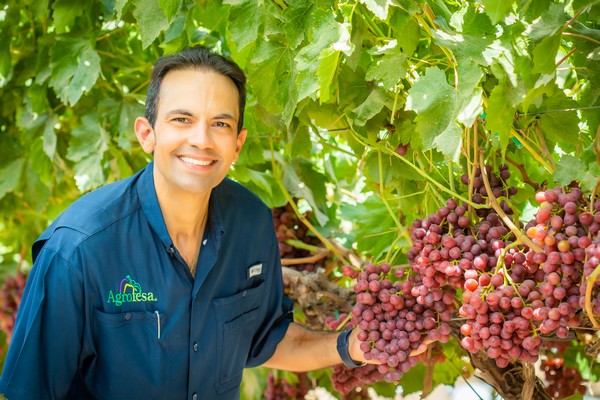
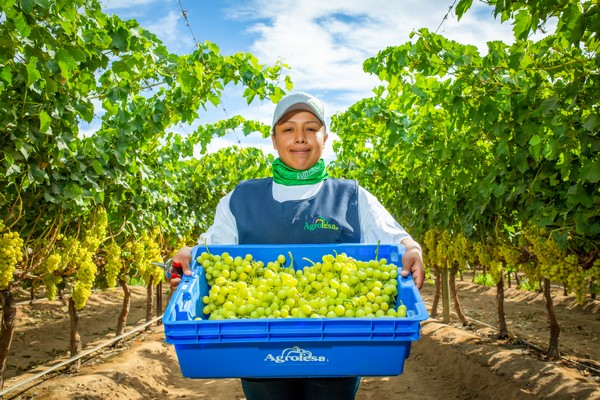
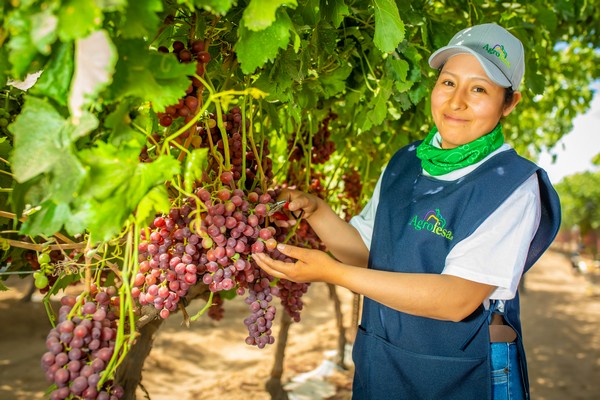
The Mexican 2022 table grape season, currently underway, is proving to be challenging due to growing costs that increase by the day. The early red seedless variety Flame volumes are lower than estimated on a few farms, including that of César Ortiz, CEO of Agrofesa based in the North-West of Mexico, while the overall quality of the grapes are good.

César Ortiz, CEO of Agrofesa

“It´s a challenging season since our growing costs, compared to last year, have increased at least 25% and are continuing to rise every day. For most, if not all, inputs, inflation is very concerning. We expect strong promotions coming in the last week of May until the end of our deal. There are still deals being made while we are actively communicating to the industry about being aware of this important increase in our production costs, so promotions are set at reasonable pricing for the given circumstances. Quality this year is outstanding and the crop looks fantastic. The first Flame blocks are finishing shorter than what we anticipated. Our estimation on that variety will definitely be lower. We are currently harvesting early and mid-season green and red varieties, both organic and conventional, along with black seedless grapes. Our grape season goes from mid-May until the end of June,” states Ortiz.

A few other growers in the region are also seeing lower than estimated early Flame volumes. Agrofesa, with 550 acres (222 hectares) of table grapes, started harvesting at the beginning of last week. Some of their varieties include Sweet Globe, Ivory, Timpson, Flame, Candy Snaps, Sweet Celebration and Summer Royal. They also grow a range of vegetables in Hermosillo, Sonora, Mexico where the business started 60 years ago. “We are not expanding, we are transitioning from traditional varieties to proprietary varieties. By 2024, about 60% of our production will all be proprietary grape varieties,” says Ortiz.

Fortunately for Mexican table grape growers like Agrofesa their main market in the USA does not require much shipping compared to other table grape growing countries with far away destinations. While they are spared from these large shipping increases, the cost of trucking across the USA has increased substantially. “We export mainly to the USA and Canada. We occasionally send grapes to Asia, but only one or two containers as negotiations with buyers are still underway. Most of our grape shipments to Asia are from our later varieties.”

“All of our land logistics to the USA are taken care of by our subsidiary, with a Customs-Trade Partnership Against Terrorism (C-TPAT), certified vehicle trucking fleet, equipped with tracking systems, which allow us to plan our transportation logistics to ensure the highest quality and freshness of our products,” explains Ortiz.

From FreshPlaza

China’s COVID Crackdown Hampers Oakland’s Cargo Flow

China’s recent COVID-19 crackdown is having a ripple effect on ocean carrier scheduling and hurting volume at the Port of Oakland, officials say.

Port of Oakland cargo volume is down in 2022, and port officials said in a release that the decline was mainly caused by China’s crackdown.

Total volume through April at the port dropped 7% from the same period a year ago, according to the report, and containerized import loads through Oakland fell 17 %.

Meanwhile, exports from the port dropped 18% in March, according to the release.

Factory and port shutdowns in China, Oakland’s largest trade partner, have slowed both imports and exports, the release said.

Disruptions at Shanghai, the world’s busiest port, are delaying U.S.-bound import shipments, wreaking havoc on ocean carrier scheduling, according to the release.

“U.S. exports have been hampered by vessel schedules thrown into disarray in China,” Port of Oakland Maritime Director Bryan Brandes, said in the release. “Most of Oakland’s business depends on the Asia-U.S. trade route.” 

The Port said Oakland cargo flow has been hurt by additional factors, including: 

· A drop in the number of ships stopping in Oakland;

· Importers slow to retrieve shipments, thereby crowding container yards and slowing cargo   discharge from ships; and     

· A container shortage making it harder to load export shipments. 

Relief may be on the way, the release said. 

Shanghai cargo activity has recently picked up and port officials are talking to shipping lines about increasing the number of Oakland vessel calls, the release said.

The pace of cargo operations should accelerate as vessel schedules normalize, according to port officials.

The Port of Oakland is preparing for peak shipping season, which industry experts cited in the release say will begin earlier this year.

Retailers are likely factoring in more time for receiving their goods based on the shipping delays they have been experiencing during COVID, according to the release.

During the peak of port congestion in 2021, as many as 30 ships were waiting to enter an Oakland berth. As of late May, the number of containerships waiting to enter a berth was down to a handful or fewer, according to the release.

The pandemic era, with resulting disruptions in container availability and schedules, has witnessed lower-trending exports of some major fresh fruit commodities shipped from the Port of Oakland.

Statistics from the USA Trade website at the Department of Census showed that fresh citrus exports from the Port of Oakland totaled $274.7 million in 2021, down 8% from $299.5 million in 2020 and down 7% from $295.9 million in 2019.

Exports of fresh grapes from Oakland, according to USA Trade numbers, totaled $254.9 million in 2021, down 24% from $336 million in 2020 and 19% lower than $316 million in 2019.

From The Packer

Mexican Table Grape Industry Challenged To Ship 25 Million Boxes In 10 Weeks

Table grape harvest in Northern Mexico has started, in Hermosillo and Guaymas in the state of Sonora. The first grapes crossed the border with Nogales, AZ ten days ago, on May 9. The start date is similar to last year, but it is a few days later than the average start of May 5. “The great majority of grapes crossing the border at the moment are the Early Sweet variety,” says Miky Suarez with MAS Melons & Grapes. “It is a good variety for the region.”

In the past, the early varieties crossing the border were a combination of Early Sweets and Perlettes, but the volume of Perlette keeps going down. The reason the Perlette variety tends to disappear is because of the manual labor involved in trimming the bunches. “The bunches need to be trimmed by hand and trimming down 500-600 little pieces of fruit until there are 100 left on the vine, is very labor intensive and expensive,” commented Suarez. “It is important to work with well-trained people to prevent over-thinning and under-thinning.”

The reason Perlette lasted so long is that for a long time there was no other variety that matured as early. About eight years ago, the Early Sweet variety entered market and since then, Perlette has gone down in volume. Last year, 700,000 boxes of Perlette crossed the border between Mexico and the US and Suarez thinks the volume crossing this year may be 500,000 boxes at most. This is a small number compared to Early Sweet that is estimated to make a big jump to 4.5 million boxes.

Despite Early Sweet’s growing production numbers, traditional varieties still make up the bulk of the volume that’s coming in from Mexico. Flames are the largest variety, but Sugraones and Red Globes are significant as well. Last year, 60 percent of grapes that crossed through Nogales were traditional varieties.


Record harvest
Mexico’s grape harvest is expected to be up 25 percent from last year. According to the Mexican Table Grape Growers Association, exports will amount to 25 million boxes this year. “It would be a record season, up two million boxes from the record currently standing,” commented Suarez. “Although it is a big number, it doesn’t scare me too much as long as we have the full ten weeks to sell them. It is important to move the fruit as soon as possible,” he said. Currently, there is still fruit arriving from Chile, but Mexico needs to get going. “The month of June will be a very big month and all of us need to be prepared. Hopefully, California’s harvest doesn’t start too early. If we have two full weeks in July, we are going to be fine, and I think that will happen.” The first grapes for MAS crossed the border earlier this week, on Monday, May 16.

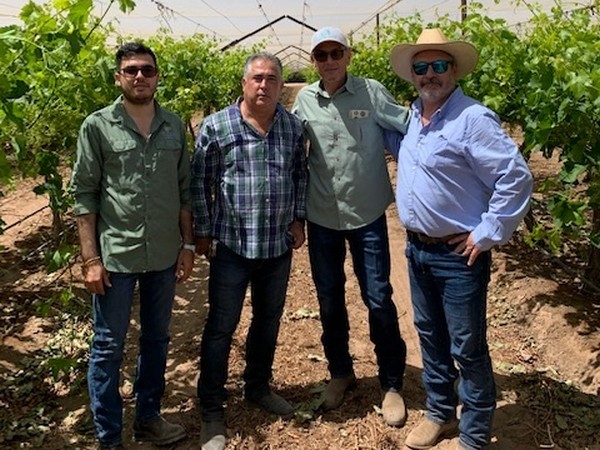
From left to right Alfonso Ruysanchez Jr., Alfonso Ruysanchez Sr. , Alberto Vanegas, and Miky Suarez, visiting a vineyard in Caborca, Sonora. 

Exports
The majority of MAS’ grapes are consumed in the US and Canada, but the company also exports to the Caribbean islands, New Zealand, as well as Japan. “Every year, Japan increases their grape imports.” Despite the shipping challenges, MAS Melons & Grapes has been able to continue their export program, but the company has been forced to ship out of different ports due to severe backlogs. “It is a bit more expensive, but these alternative ports have proven to be more reliable, which is key.”

From FreshPlaza

Cosco To Invest US$3 Billion In New Peruvian Port

Cosco Shipping Ports (CSP) reportedly plans to invest around US$3 billion to build a container port in Peru, as the Chinese government advances the Belt and Road initiative to South America.

Phase 1 of the port construction in Chancay, 55km north of the capital city Lima, is underway and set to open in 2023.

Plans for the port construction began in 2019, when Cosco Shipping Port bought a 60% stake in Terminales Portuarios Chancay from Peruvian mining group Volcan Compania Minera, a subsidiary of Swiss commodity trading group Glencore, to develop the Chancay port. It is the Cosco group’s first Deepwater port in South America.

China Railway, China Communications Construction Company and the latter’s subsidiary China Harbor Engineering Company are involved in the port construction.

According to the plan, the new port can accommodate the world’s largest container ships, handling up to 1 million TEU annually. The port will be part of an industrial complex that includes a 1,100-ha logistics park.

CSP is said to be envisioning Chancay as a hub for the South American region. The logistics park is located 78 km from Lima and connects to the Pan-American Highway, which is emerging as a complement to Callao, Peru’s main container port.

Cosco Shipping Lines is currently lagging behind Maersk Line on the Asia-South America west coast. Maersk Line has a market share of 21%, while Cosco Shipping’s is around 14%.

From Container News

Giant Container Ships Are Ruining Everything

I hate big boats, and so should you.

In 2006, Maersk stunned the global shipping community with the introduction of Emma Maersk, a container ship that could carry nearly 15,000 twenty-foot equivalent units. (TEUs translate to about half of a standard forty-foot shipping container.) 

Emma Maersk set off an “arms race” with its introduction. Ocean carriers ordered bigger and bigger ships, believing that they could reach economies of scale if they could jam all their shipments into one big boat instead of a few small ones.

Today, we’ve appeared to reach peak Big Boat Era. The Emma Maersk is now wimpy next to 2022’s true megaships. The largest container ships to be delivered this year have a maximum capacity of 24,000 TEUs. (This class of ship is named — I am not making this up — the “Ever Alot.” The Evergreen shipping company, the very same that blocked the Suez Canal last year, ordered the record-breaking ship.)

Each year brings a new, larger-than-ever megaship. The largest ship class of a given year has increased by 50% from 2012 to today, or nearly sixfold from 1981 to today. 

A chart showing the largest ships ever delivered
We are living in the Big Boat Era.

Massive container ships have helped wreak serious chaos on global trade. I spoke with four experts this week to learn how megaships are the sneaky reason for much of our ongoing shipping crisis. 

Here are the three reasons I hate big boats:

1. They underpin the global shipping oligopoly.

Global shipping is dominated by a few giant firms. But it wasn’t always this way.

In the 1970s, there were so many ocean carriers that no single company controlled the industry. Since then, the market has consolidated into just a few large firms. 

Up to 60 of the 100 largest ocean carriers have vanished from the 2000s to today, thanks to a wave of bankruptcies and acquisitions. The top 10 largest ocean carriers in 2000 commanded 51% of the market; today, they dominate 80% of it, according to a White House fact sheet. All of these companies are based outside the U.S. 

Smaller ocean carriers began forming alliances with each other in order to compete with larger carriers, said Campbell University professor Sal Mercogliano. Megashippers decided to copy the strategy. Today, the largest ocean carriers are organized into three major container shipping alliances: 2M, The Alliance and Ocean Alliance.

To ship something from, say, China to Los Angeles, you book space on a container ship operated by one of these alliances. Each company shares space on the container ship with other members of the alliance. But these alliances may cancel — or have “blank sailings” — if demand has slumped. 

This system has been great for the carriers’ own financial performance. Some claim this consolidation and the alliance system lead to inflated rates. 

The Loadstar, a global logistics publication, reported on April 22 that the 2M alliance was blanking at least three Asia-North Europe sailings. New Chinese COVID lockdowns were one reason for the cancellation, but Loadstar also pointed to 2M’s desire to “halt the slide in rates” amid a slump in volume from China. More canceled sailings mean less capacity for cargo, and likely higher rates.

A chart showing the cost to move a container ship
The cost to move a container ship was steady and low for much of the 2010s, then exploded from 2020 onward. Now, rates are somewhat softening. (FreightWaves SONAR)

Container ships have been steadily increasing in size since they were created in 1956. But it wasn’t until the 2000s that the Big Boat Era truly began, Mercogliano said. Ocean carriers believed they could reach economies of scale if they built giant ships. The idea was to put all of your cargo on one massive ship instead of two or three smaller ones. 

Such megaships were expensive. Emma Maersk, for example, cost an estimated $145 million. But banks were happy to provide the cash, said Capt. John Konrad, CEO of maritime website gCaptain. 

Konrad told FreightWaves that ocean carriers are ideal lending targets. If an ocean carrier defaults on its loan, you can simply repossess any of its ships. And, conveniently, many receive hefty subsidies or other support from the governments of the countries they’re based in. Before the financial crisis, banks were happy to provide massive loans to ocean liners to build the megaships of their dreams. 

Then 2008 happened. As Mercogliano said, “The freight dried up.” 

Big ocean liners were stuck with massive ships and not much to put on them. Many went bankrupt, and the ones that remained formed alliances. 

“Firms started to say, ‘Well, these ships are tremendous investments and there’s too much money on the line,’” said University of Vermont professor Richard Sicotte. “‘Let’s share the capacity among different companies, who would ostensibly be our rivals.’”

Through the 2010s, consolidation accelerated. Eight large carriers, including No. 6 largest ocean carrier Hanjin, either went bankrupt or were acquired by other large firms. 

The ‘cartel’ no one noticed?

Crucially, this lack of competition didn’t bother anyone through the 2010s, when ocean rates were absurdly low and carriers were barely turning a profit (if at all). Alliances and consolidation were the only way to make the economics work. Bizarrely, companies continued to build even larger megaships, still chasing those economies of scale while sinking them further into debt. 

“Because so few of them were left, they formed these alliances to stop underbidding each other,” Mercogliano said. “The U.S., EU, China, everyone signed off on the idea that these are not cartels. They are not trusts. The reason we did it is because we all benefited from it: We love cheap freight. It cost nothing to move goods across the Pacific.”

That all changed in 2021, when carriers were raking in cash. 

The Biden administration called these shipping companies a “cartel.” Some importers have recently claimed that ocean carriers have price gouged them and failed to fill their contracts amid sky-high ocean rates. On the other hand, FreightWaves’ own Greg Miller recently argued that competition among ocean liners increased as rates spiked. 

Whether or not these carriers are price fixing is hardly something we can settle in today’s newsletter, but what we can agree on is that this consolidation — driven by the inability of individual companies to fill their own megaships — probably wouldn’t be so stark without those big darn ships.

2. They cause port congestion.

The more obvious reason that big ships are helping cause our ongoing supply chain chaos is that they’re literally too big to fit into most ports. Even the Suez Canal struggled to accommodate one of these megaships, causing the crucial global conduit to be clogged for days last year. 

Matt Stoller, who is the director of research at the American Economic Liberties Project, told FreightWaves these megaships are great for moving lots of cargo across oceans. The problem is once you get to your destination. Ocean carriers (and the financial institutions that bankroll them) aren’t paying for updated ports, increased dredging, new warehouses, highways and so on to accommodate these ships. That cost is getting off-loaded to the public, Stoller said. 

Indeed, as Mercogliano pointed out, the Port Authority of New York and New Jersey spent a whopping $1.7 billion to raise its Bayonne Bridge to accommodate the shipping scions’ new megaships — a cost that was paid by taxpayers, not ocean carriers or shippers.  

An aerial view of a container ship
A relatively uncrowded Port of Houston. Can’t it always be like this? (Photo: Jim Allen/FreightWaves)

One complex is remarkably adept at accommodating those ships: the ports of Long Beach and Los Angeles. As a result, it claims 40% of all U.S. seaborne imports. Before the U.S. saw historic imports in 2020 and onward, this system worked well enough. But over the past year, it’s been remarkably backed up, causing unprecedented supply chain crunches as importers struggled to offload their containers and load empty ones back on to make the trip back to Asia. 

If these ships were not so giant, we likely wouldn’t see this kind of congestion. Ocean carriers could bring their normal-sized ships to other ports around the U.S. Stoller pushed for more competition among ocean carriers, which would perhaps mean more diverse types of ships. 

“We have a lot of ports in this country but we don’t have enough ocean carrier firms,” Stoller said. “The ocean carrier firms’ boats are too big for most ports.”

3. They’re quietly the reason for the ocean carriers’ financial struggles.

By engaging in the megaships “arms race,” ocean carriers really just played themselves. 

One 2016 study by business advisory firm AlixPartners pointed out “the irony of megaships.” In 2016 and 2017, global ocean carrier capacity increased by 4.5% and 5.6%, respectively. But demand only upticked by 1% to 3% those years. The panic to build bigger and bigger ships resulted in depressed rates:

Ironically, says the study, the resulting overcapacity — and corresponding negative effect on profits — is in part the result of the industry’s drive in recent years to correct its chronic supply-and-demand imbalance by building these more efficient but mammoth ships.

Months after that report, the No. 6 largest container shipping company went bankrupt. Hanjin, which had ordered more and more megaships before its insolvency, was in $10.5 billion of debt. 

By continually flooding the market with capacity, ocean carriers drove down their own shipping rates. That left them with crushing debt and no way to pay it back. COVID and the influx of trade helped many carriers pay off their massive liabilities, but the good times will eventually run out for these companies.

Praise be! The megaship’s choke hold on our oceans appears to be loosening.

Brilliantly, ocean carriers seem to be reading my mind and hastening the end of the Big Boat Era. Of the thousands of container ships in the pipeline for these next few years, the biggest category is ships ranging from 3,000 to 7,999 TEUs, according to a recent report from Clarkson Research. 

As for deliveries scheduled or already made from this year to 2025, 53 are ships with a capacity of 17,000 TEUs or larger, compared to 230 ships with a capacity of 12,000 to 16,999 TEUs. 

The Big Boat Era may finally be going away. (Clarkson Research)

Perhaps I shouldn’t speak so soon. One 2016 article in the Financial Times, covering a Drewry Shipping Consultants study, claimed that if ships reached 24,000 TEUs, the costs of running such a ship would overtake the profit made from being able to hold so many containers. That would mean losses for the ocean carrier.

And yet, dear reader, shipping magnates have gone ahead with the 24,000-TEU ships: At least a dozen may be sailing as you read this. (Or perhaps, they’re waiting outside of the Port of Long Beach to be unloaded.) 

From FreightWaves

GLOBAL OVERVIEW STRAWBERRIES

The global strawberry market is currently going through some ups and downs, depending on where one looks. The excellent weather during the growing season in Northern Europe has led to an abundant domestic supply in countries such as the Netherlands, Belgium, Germany and the United Kingdom. The UK even expects to see a 50% larger harvest compared to last year. The traditionally warmer European countries such as Italy and Spain, however, have seen their production volumes affected by poor weather conditions at the start of the growing season. This slower ripening of the berries has meant more fields than usual have ripened at once, which combined with good domestic supply in the northern markets has driven prices down significantly. Larger supplies are also expected in South Africa and North America as the weather heats up.

Benelux: Lower consumption and abundant supply of strawberries led to price pressure
At the moment there are many strawberries available for low prices. Partly because large outdoor productions from several countries are coming on the market at the same time, the middle price has dropped to a low level. “Spanish strawberries have lasted longer than in recent years,” according to an industry representative. “Also in Germany the open field production has started early. In addition, a lot of strawberries are offered there from Eastern European countries. For example, Greece is currently sending a lot of strawberries that went to Russia in previous years. At the same time we see that in Scandinavia the supply of Spanish strawberries has lasted longer. This creates extra volumes on this market in combination with the good volumes that are already available in the Netherlands and Belgium due to the nice weather. At the same time, we hear from our domestic retailers that the current economic situation and the high energy prices have reduced the general purchasing power. They see consumers reverting to the basic products in fruit and vegetables and that is at the expense of our strawberries,” says a strawberry seller.

Germany: Ups and downs in supply and demand for strawberries
Local strawberries dominated ahead of Dutch and Italian products. There were only small deliveries from Greece, Belgium and Spain. The previously complementary unloadings from Portugal have vanished. In general, availability had increased, however demand could not always keep pace. Particularly at the beginning of the week, it was not possible to clear all the cargo, even though the quality was very good. Concessions had to be made if larger surpluses were to be avoided. Mother’s Day then brought new momentum into the business, the clearance accelerated and the traders were sometimes able to raise the demand again. In some cases, however, not all the supplies could be sold.

In general, growers are complaining about high production costs and relatively cheap imports from southern Europe and the Netherlands in the domestic retail. Meanwhile they are hoping for better prices in the second half of the season as well as an increase in demand for domestic product.

UK: Growers face labour and transport challenges
It has been a very difficult import season for Spanish strawberries in the UK, as there have been multiple challenges through the season.

Firstly, the growing season was tough due to the weather: prolonged rain, sandstorms and low sun hours held back production. The cost of production increased due to higher costs on fertiliser, plastic, cardboard, fuel and labour. This was compounded by border issues at Dover, with long queues and waiting times, as well as Spanish haulage companies going on strike protesting about high fuel costs. 

There has also been less demand for strawberries as the cost-of-living increases and consumers choose staples over ‘expensive’ soft fruit. This has resulted in no growth in imports from Spain this season in a category which has seen rapid year on year growth.

Meanwhile UK production is well underway and volumes are building nicely in early production areas, with peak production expected in late May. UK growers also face challenges and one grower commented that demand for UK fruit was subdued by Spanish imports. In addition to this they have the same increased input costs and not much movement on prices from retailers. The difficult labour situation in the UK continues with growers saying they understaffed and ‘just getting by’. This year’s crop of British strawberries is predicted to be 50% larger than last year’s.

France: Drop in consumer purchasing power affects sales
The French strawberry campaign started in March. Although some producers suffered losses of nearly 20% due to frost, overall from April, production volumes increased due to the sunshine. So there are large volumes of strawberries on the market, in all French production basins. But producers are quickly feeling the drop in consumer purchasing power on sales. French strawberries have to face competition from Spain, which is much cheaper; distributors want to maintain their margins and import a lot from Spain. Faced with a massive French production and a lower demand, the purchase prices of wholesalers and supermarkets are not very good for producers.

Italy: Prices up to 40% lower compared to last year
In the south of Italy, the 2022 strawberry campaign was marked by decidedly adverse climatic events. Temperatures, especially in the first three months of the year, were not mild and light was very low, thus affecting both yields and fruit quality. In April, with the delay of the medium-late varieties, there was a higher than average concentration of supply, which led to a depreciation of the product. Another factor making the campaign complex is the acute shortage of labour, which, especially in Basilicata, is leading to a gradual abandoning of the fields, well in advance of previous years. At the moment, there is no price difference between varieties on the markets. Prices remain low, with peaks of -40% compared to the same period last year.

A trader in Emilia Romagna says that the season started about ten days late. This is causing sales to slip forward, with local produce also being present on European markets at the same time. Strawberry prices have slowed down in recent days. The trader adds that one of his Swiss customers was offered strawberries from Belgium at a lower price than Italian ones, which had never happened before. This is a sign that there is high production even in countries that are not quantitatively important. But there are reports that there is also good production in Germany and therefore Italian exports are slowing down. Emilia Romagna (Cesena area) and Veneto (Verona area) are currently in full production. Many producers have a production surplus and therefore have had to sell off their production to some discount stores. This has further contributed to lower prices.

A wholesaler from northern Italy says that at the moment strawberries are quoted at wholesale between 2.50 and 3 Euro/kg. Most of the production comes from Emilia Romagna, but there is no shortage of produce from the south of Italy, from Basilicata in particular.

Spain: Rocky start to Spanish strawberry season
Strawberry prices at origin have slightly increased over the previous weeks and are average for this time of year. However, supply has fallen. Around 85% of the expected volume in the total campaign has usually been marketed by the end of week 17. However, the cumulative production in the current campaign is about 6% lower than in the previous campaign, due to the losses caused by the rains of March and the first half of April, which led to lower production on the plantations and more fruit being discarded. In addition, the low temperatures recorded in Europe led to lower consumption of strawberries in households.

Another important factor why Huelva’s strawberry did not reach the same volume as in previous years in Europe in March and April it has been the competition it’s faced from Greece, according to Huelva’s sector representatives, who stated that Greece is significantly increasing its production and its hectares of strawberries without providing much information because the EU does not ask for it. They claim that the strawberries that Greece usually transports to Eastern European countries and those closest to its own territory now end up on the Central European markets due to Greece not being able to export to traditional destinations due to the war between Ukraine and Russia.

March has been the best month so far because, at certain moments, the price was almost 30% above the previous campaign. The lower volume allowed demand and supply to equal out. During that month Spain was the only country exporting fruit to the United Kingdom, as Morocco couldn’t do it due to the impact of the weather on its plantations. “We could have sold more strawberries if we had had more to sell,” an exporter said.

The acreage in Huelva, the province that represents more than 95% of the Spanish production, amounts to 6,167 hectares, almost 1% more than the 6,105 hectares planted with strawberries in the previous campaign. The most common varieties have been the Fortuna and Rociera, just like last year; however, the trend towards greater varietal diversification continues, especially with early varieties that have made it possible to enter the markets earlier than usual.

The demand in these last weeks has been good but from these days on it’s expected to go down due to the arrival of larger volumes of local produce in the countries of central and northern Europe.

South Africa: Good quality but fear of oversupply as weather heats up
The domestic strawberry season has just started in the North West and Limpopo provinces, with a number of new farmers and new cultivars. In the Southern Cape there are growers who produce strawberries year-round.

The quality is looking very good with nice new varieties coming in this year, says a strawberry trader at the Johannesburg municipal market, expecting another bumper crop this year. There could possibly be a glut of strawberries when weather gets warmer towards the end of winter and start of spring when it ripens simultaneously.

Strawberry imports from predominantly Egypt have stopped for the season. As volumes are still low, strawberries are still packed into 250g punnets; later growers will move over to larger 400g and 500g punnets when they get more volumes.

Prices are good at the moment, R22 (1.3 euro) to R30 (1.76 euro) for a 250g punnet on the Johannesburg municipal market.

North America: Incoming warm weather to boost strawberry supplies
Heavy supplies out of California. That’s the scene for strawberries coming out of the state. “Strawberry supplies are going to get pretty heavy this week. It looks like we’re going to get into a good-sized pick,” says one Salinas, California grower-shipper. “And the quality overall is good and size is also very good in Salinas-Watsonville.”

In Watsonville, California, another grower-shipper notes that recent cooler and overcast weather, including a few light rain events over the past two weeks, meant that any damage to the strawberries was very short term. “And in the long run it benefited the plants more than harmed the fruit,” says that grower-shipper.

She notes that a lack of warm sunlight slows down the ripening process of strawberries, which is a contributing factor to lower daily harvest numbers than originally estimated, especially for this time of year. “Thankfully, the plants are healthy, strong and loaded up with green fruit primed for quick ripening when the temperatures rise,” she says. “We’re expecting a warming trend to arrive at the end of this week that will boost harvested volumes and kickstart the next six to eight weeks of large, promotable supplies of strawberries.”

All three key strawberry growing regions are currently going in the state, which has also seen approximately 1,800 more acres of berry acreage added this year. Overall, that’s made for generally greater volumes of strawberries compared to last year at this time. The Salinas grower-shipper notes that Santa Maria is peaking now on strawberries while Oxnard typically moves fruit to processing after Mother’s Day. Meanwhile Salinas-Watsonville will probably peak on strawberry supplies in June. 

As for demand, it looked stronger than last year for Mother’s Day. “Mother’s Day is one of the biggest promotions of the year for strawberries,” says the Salinas grower-shipper. He adds that in turn, with that large volume coming, pricing is aggressive to move the fruit. “It’s more aggressive pricing than I’ve seen in a couple of years. They then usually get the pricing under control pretty quickly and can stabilize pricing.”

China: Domestic strawberry production on the rise
Demand and production of strawberries is steadily growing in China. In 2019 China’s production area was estimated to cover 125,000 hectares, with a steady growth of 5% per year in the years before. Most production is located in the East of the country, with Shandong, Jiangsu and Liaoning as main production areas. In the first three quarters of 2020, 2,600 new companies registered as strawberry-planting related business, a 5% growth compared to the year before. Most businesses are small, with only 3% having a registered capital of more than 10 million yuan (1.5 million USD). This year, although strawberry sales were affect by the epidemic, the overall sales have not declined too much. Early season saw high prices, from 200 Yuan (30 USD) per kg to 160 Yuan (23 USD) per kg. Just before and after the Spring Festival, prices stabilized around 90-120 Yuan (15 to 18 USD) per kg.

From FreshPlaza

close
Loading…